


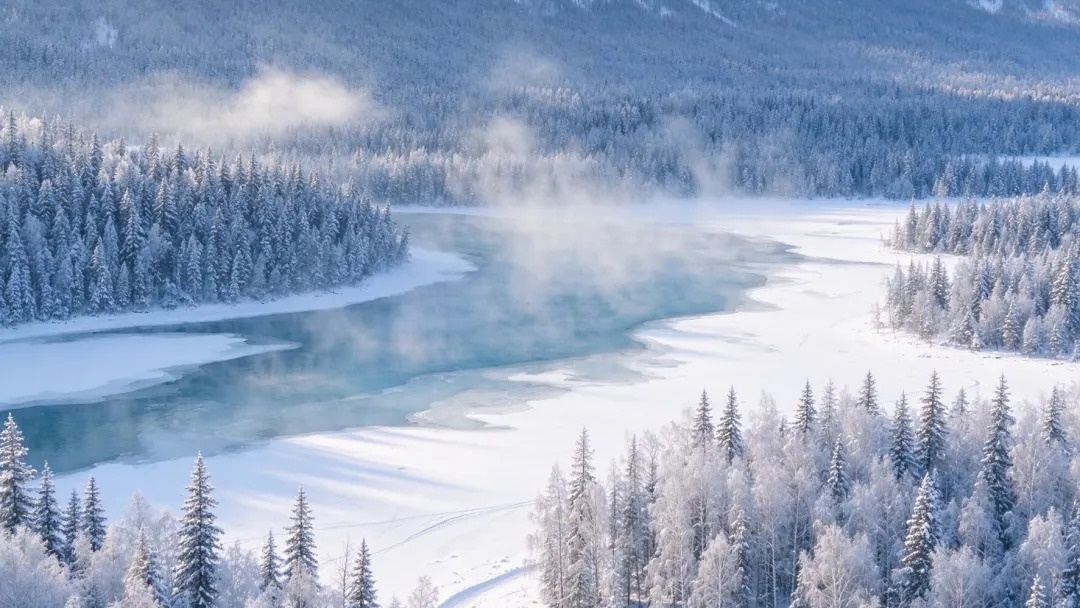
Winter in Xinjiang can mean two entirely different holidays. In Hemu, snow covers wooden rooftops and forests in the Altai Mountains. Far to the southwest, Kashgar’s old streets are often dry and cold, with bakeries and bazaars offering a different kind of winter experience.
Xinjiang is enormous, so the key is choosing the right region rather than trying to see every famous place. This guide covers where to go in winter 2026–2027, which mountain roads may be restricted, and what international and Muslim travelers should check before booking.
1. Northern Snow or Southern Silk Road Culture?
Northern Xinjiang has the region’s best-known deep-snow destinations, while southern oasis cities generally have less persistent snow. High-altitude areas, including the Pamir Plateau, have their own severe winter conditions.
| Region | Winter experience | Main planning concern |
|---|---|---|
| Altay, Kanas and Hemu | Snowy villages, forests, mountain scenery and ski resorts | Long road transfers, snow closures and rural lodging |
| Urumqi and the Tianshan Mountains | City stays, skiing and high-mountain sightseeing | Different locations for ski slopes and Tianchi |
| Sayram Lake and Ili | Lake ice, snowy mountains and selected winter experiences | Wind, exposed roads and seasonal access |
| Kashgar and southern oases | Old City walks, Silk Road culture, bazaars and food | Cold but often dry weather; long distances from the north |
| Pamir Plateau | Snowy high mountains and dramatic road landscapes | Altitude, winter road conditions and possible permit checks |
Simple choice: Go north for reliable winter-snow scenery; choose Kashgar for cultural travel; combine the two only if you have time for major intercity journeys.
2. Best Places to Experience Xinjiang in Winter
Altay, Hemu and Kanas: Snow Villages and Forests
Hemu Village is known for snow-laden wooden cabins and sunrise views over a forested valley. Kanas has wider mountain, river and lake scenery. They are separate visiting areas with different road approaches and internal transport, so an overnight stay in Hemu can be more useful than a rushed visit from a distant town.
For the 2026–2027 winter season, the Kanas scenic-area system published an operating period of 16 October 2026 to 30 April 2027. Its regional winter admission is listed at RMB 100 for three days, covering Kanas, Hemu and Baihaba admission, but not every shuttle or activity. Individual roads and viewpoints can still close. Baihaba’s border-area access may involve additional document requirements.
Altay also has major ski areas including Jiangjunshan, Koktokay and Jikepulin. On 20 October 2026, Koktokay began its new ski season with selected runs open; that does not mean every beginner slope and lift is available. Check the current trail map and lessons before booking.
Sayram Lake: Ice, Mountains and Strong Wind
Sayram Lake is famous for dramatic alpine scenery and changing winter ice formations. Clear or blue-looking ice is not guaranteed on a particular day. Strong winds and icy roads can restrict lakeside viewpoints even when the main scenic area is receiving visitors. Never step onto lake ice unless a managed area explicitly permits it.
Urumqi and Tianshan Tianchi: A More Convenient Base
Urumqi offers an international-airport gateway, city hotels and access to ski areas in the surrounding mountains. Tianshan Tianchi (Heavenly Lake), near Fukang, is a separate scenic destination rather than a city park. Check the day’s scenic-area transport, weather and access. Urumqi is a useful base for shorter mountain outings, not a practical base for daily trips to remote Hemu.
Kashgar: Old City, Crafts and Winter Food
Kashgar’s Old City offers Uyghur architecture, bakeries, handicraft workshops and markets without requiring deep snow. A winter visit can be rewarding for travelers who prefer food and history to skiing. Nearby Karakul Lake and Tashkurgan belong to a separate high-altitude Pamir journey, with winter roads and route-specific document requirements to check in advance.
3. When Should You Visit?
December to February is generally the strongest period for a classic northern Xinjiang snow trip. November and March can still work, but snow cover, ski-run openings and village-road access are less predictable. In southern Xinjiang, winter is better planned around urban culture rather than guaranteed snowy scenery.
Xinjiang’s 2026–2027 winter tourism season includes ski events, cultural activities and selected scenic-area promotions. These programmes do not guarantee that a particular attraction, lift or festival will operate on your chosen date. Check the actual operator and its cancellation terms before buying non-refundable travel.
4. Getting Around: Flights, Trains and Winter Roads
For long distances, consider flying through Urumqi or using intercity rail where appropriate. Kanas and Hemu still need a final road transfer after the nearest airport or railway station. Ask where your vehicle will stop and whether the last section to your guesthouse uses a scenic shuttle.
- Duku Highway (G217): The Dushanzi–Kuqa mountain section closed to ordinary vehicle traffic from 8 October 2026 at 20:00 for winter. Do not use a summer Duku road-trip route in winter.
- Altay–Hemu (Ahe) Road: Winter controls began 16 October 2026. The published Altay–Hemu two-way passage window is 10:00–14:00, for four-wheel-drive off-road vehicles with winter tyres and no more than seven seats; all vehicles must leave the road by 20:00. Weather can cause further closures.
- Yizhao Road: A mountain section between Yining and Zhaosu closed from 20 October 2026, with reopening to be announced. Check designated alternatives rather than trying to bypass a closure.
If you do not have experience driving on snow and ice, arrange a properly equipped winter transfer. Confirm the exact pickup point, Chinese hotel address, any scenic-vehicle change, luggage handling and what happens if a road closes.
Time zone tip: Flights, trains and official tickets use Beijing Time (UTC+8). Some residents informally use “Xinjiang time,” two hours behind. Confirm which clock a driver is using; winter sunrise can also be much later than visitors expect by Beijing Time.
5. Hotels, Halal Meals and Prayer Planning
In Urumqi and Kashgar, travelers generally have a wider choice of restaurants and hotels. Remote Hemu guesthouses and mountain resorts may have limited winter menus, early closing times and difficult deliveries. Check the accommodation’s heating, hot water, bathroom, distance from the vehicle drop-off point and foreign-passport check-in arrangements.
For Muslim travelers: Xinjiang has strong Muslim culinary traditions, but do not assume every kitchen serves verified halal meals. Ask about meat sourcing, preparation, pork products, cooking wine and cross-contact if these matter to your standards. For remote village stays, request meal arrangements in advance and carry suitable snacks for long transfers.
Prayer facilities are not guaranteed at scenic overlooks, ski resorts or village lodgings. Ask your hotel about a clean, private and heated space, and schedule prayer around the available daylight and road transfers. Follow access rules at functioning mosques and ask before photographing worshippers or residents.
For additional advice, read Traverse China’s Muslim travel guide.
6. Winter Clothing, Safety and Booking Essentials
- For northern snow: Pack moisture-wicking thermals, insulating mid-layers, a windproof winter coat, a hat, insulated gloves and grippy waterproof winter boots. Skiing also requires suitable snow-sport equipment and a properly fitted helmet.
- For southern cities: You may need fewer layers during daytime walking than in Hemu, but cold evenings still require a warm coat. The Pamir Plateau should be treated as a separate high-altitude environment.
- For remote transfers: Carry medication, water, suitable food, dry gloves and a charged phone or power bank. Download addresses and key travel details for times when connectivity is poor.
- For mountain safety: Never enter a closed road, walk onto unmanaged lake ice or attempt unmarked snow routes. Allow flexibility around storms and avoid tight onward flight connections after remote drives.
For a first winter visit, choosing one main part of Xinjiang usually gives more time to enjoy the destination than trying to rush between the Altai Mountains, Ili and Kashgar.
Explore Xinjiang at Your Own Pace
Winter in Xinjiang offers more than one kind of trip: snowy Hemu rooftops, Kanas forests, mountain skiing, wind-sculpted lakes and the Silk Road streets of Kashgar. Decide which experience matters most, then build your travel around realistic winter transport and accommodation.
For other snowy destinations, see Traverse China’s guide to the best places to see snow in China. You can also explore the Altay, Hemu and Kanas winter private tour or contact Traverse China for private travel arrangements that consider transfers, accommodation and dietary preferences.
Information reviewed: 11 November 2026. Seasonal offers, road access and attraction operations may change. Sources: Xinjiang’s 2026–2027 winter tourism programme; Duku Highway winter closure; Ahe and Yizhao road restrictions; Kanas winter admission notice.