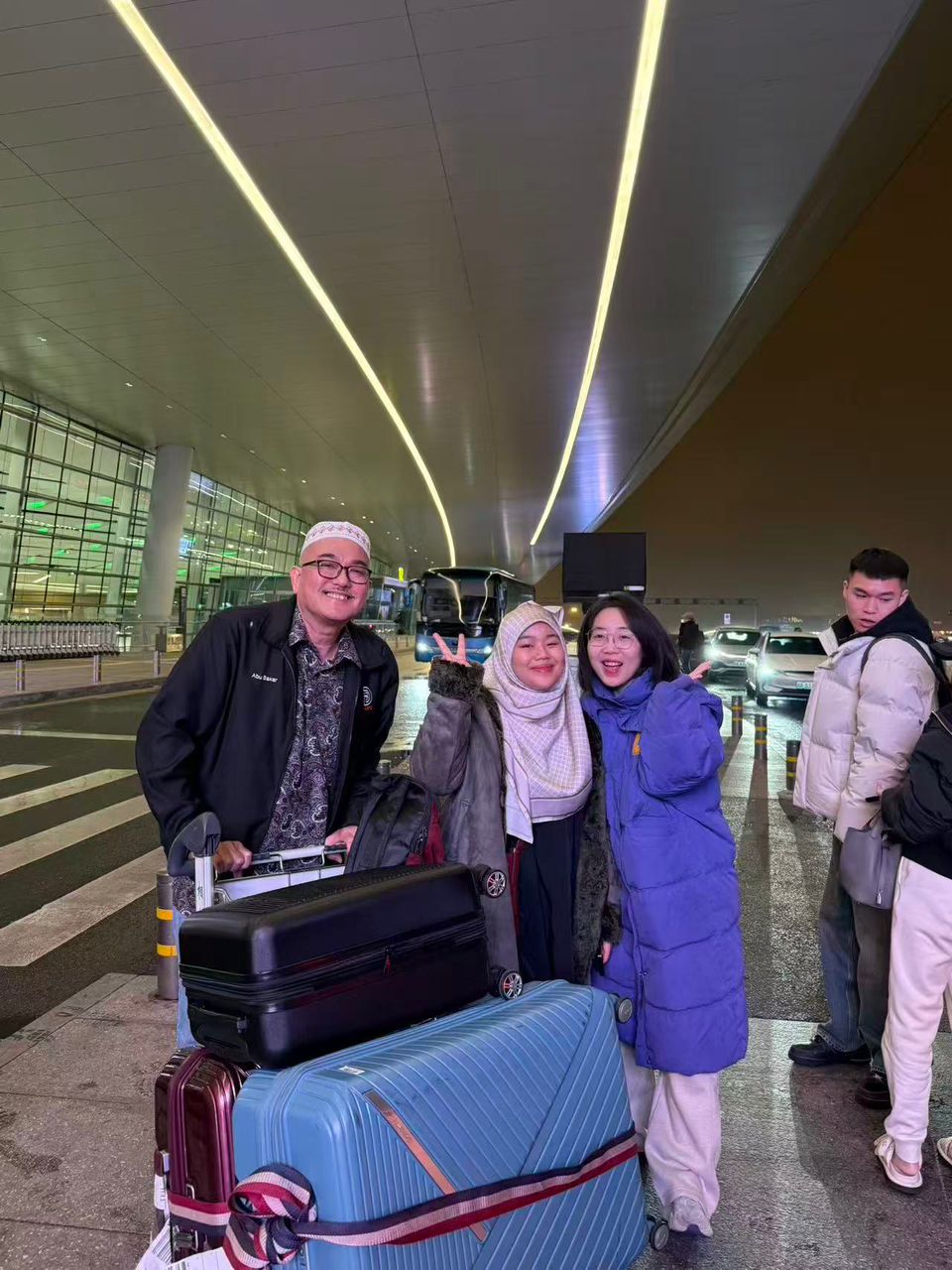
China can be an amazing destination for Muslim travelers, but it is also a place where a little preparation makes a big difference.
One of the questions we hear most often is simple: “Is it easy to travel around China as a Muslim?”
The short answer is yes. But the experience varies considerably from one city to another.
In places with established Muslim communities, finding halal restaurants and mosques can be surprisingly easy. In other destinations, especially smaller towns and remote mountain areas, you may need to plan meals and prayer stops ahead of time.
That shouldn’t put you off visiting China. It just means your trip works much better when you know what to expect.
This guide covers the practical side of Muslim travel in China, including halal food, mosques, prayer, hotels, transportation, destinations and what to prepare before you arrive.
Is China Muslim-Friendly?
Yes, Muslim travelers can travel around China, and many cities have established Muslim communities, mosques and halal restaurants.
However, we prefer to use the term “Muslim-friendly” carefully.
It does not mean that every hotel provides prayer facilities or that halal food is available on every street.
The experience can be very different depending on where you travel.
In cities with established Muslim communities, arranging halal meals and visiting a mosque can be relatively straightforward. Once you travel into remote mountain areas or smaller tourist towns, you may need to plan more carefully, particularly for meals and prayer.
So instead of asking only, “Is China Muslim-friendly?”, we think a more useful question is:
“How Muslim-friendly are the places I want to visit?”
That is something worth checking destination by destination.
Finding Halal Food in China
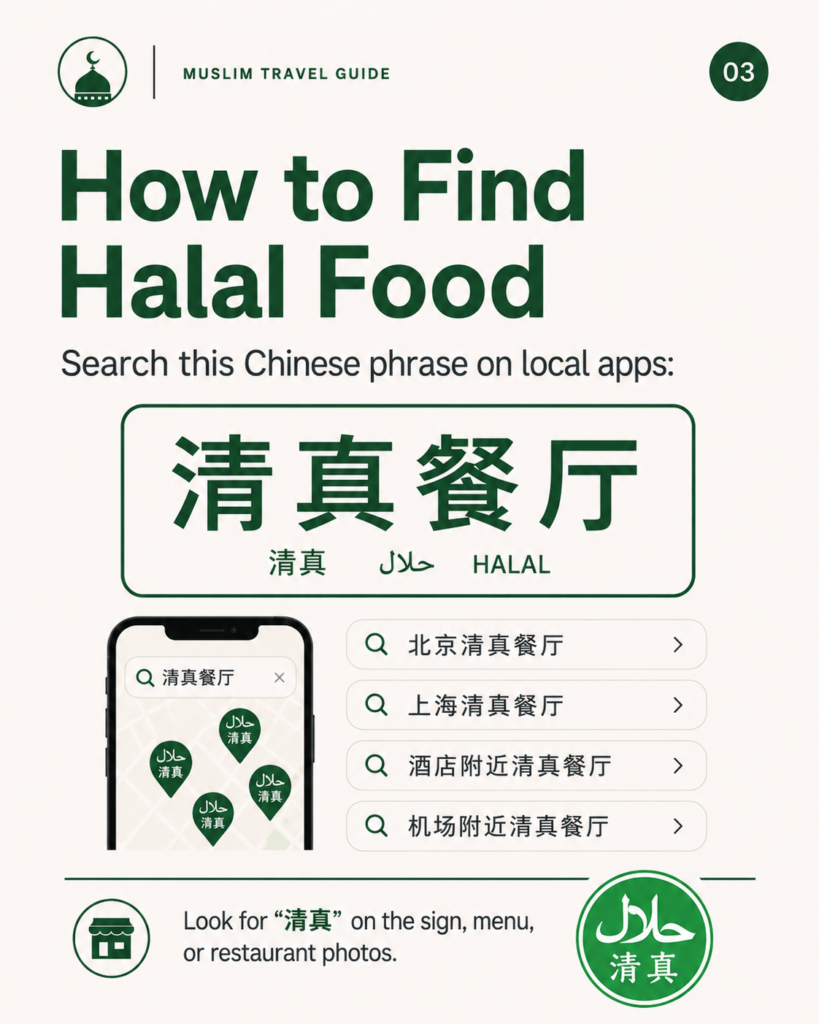
For many Muslim travelers, food is the first concern when planning a trip to China.
One Chinese word is particularly useful:
清真 — Qīngzhēn — Halal
清真 (Qingzhen) is the term commonly used to identify halal food, restaurants and Muslim food businesses in China.
You will often see these two Chinese characters on restaurant signs.
In cities with sizeable Muslim communities, you can find everything from noodles and dumplings to lamb dishes, barbecue and regional Muslim cuisine.
One thing surprises many first-time visitors: halal food in China isn’t one single cuisine.
A Muslim restaurant in Xi’an can feel very different from one in Gansu, Chengdu or Xinjiang. Trying these regional differences can become one of the most interesting parts of the journey.
Don’t Rely on the Restaurant Name Alone
This is where we’d be a little cautious.
A restaurant serving beef or lamb is not automatically halal. Likewise, a restaurant that looks Middle Eastern or advertises “no pork” should not automatically be treated as halal.
If halal preparation standards are important to you, check before eating.
A useful phrase to save on your phone is:
这是清真的吗?
Zhè shì qīngzhēn de ma?
Is this halal?
Don’t worry too much about perfect pronunciation. Showing the Chinese sentence on your phone can be easier, especially after a long flight.
Mosques and Prayer While Traveling in China
China has historic mosques as well as active local Muslim communities.
Depending on your itinerary, it may be possible to arrange sightseeing around nearby mosques or include prayer stops during the day.
Another useful Chinese word to save is:
清真寺 — Qīngzhēnsì — Mosque
Searching for 清真寺 on Chinese map apps can sometimes give you better results than searching only for “mosque” in English.
What About Prayer During a Day Tour?
This requires a little more planning than meals.
On a city sightseeing day, there may be several possible places to stop.
On a long journey through mountains or rural areas, there may not be a mosque conveniently located along the route.
This is why we recommend discussing prayer requirements before the trip rather than waiting until you are already halfway through a remote scenic area.
If you are traveling with a private guide and driver, let them know your requirements at the beginning of the trip.
A small amount of planning can make the whole day much easier.
Where Should Muslim Travelers Go in China?
There isn’t one perfect destination for every Muslim traveler.
The right itinerary depends on whether you are interested in Chinese history, Muslim heritage, food, landscapes, big cities or somewhere completely different from the usual first-time China route.
Here are several destinations worth considering.
Xi’an
Xi’an is one of the most interesting Chinese cities for travelers who want to experience both famous historical attractions and Muslim heritage.
The city has a long-established Muslim community and a distinctive food culture. It can also be combined with major attractions such as the Terracotta Warriors and the ancient city walls.
For first-time Muslim visitors to China, Xi’an fits naturally into a classic itinerary.
And come hungry. Food is a big part of the experience here.
Beijing
Most travelers choose Beijing for the Great Wall, Forbidden City and China’s imperial history rather than specifically for Muslim tourism.
Muslim travelers can nevertheless find mosques and halal dining options in the capital.
The bigger challenge in Beijing is often distance.
Beijing is enormous. A restaurant that looks “nearby” when searching online may not fit conveniently into your sightseeing route at all.
When planning meals in Beijing, look at the entire day’s route rather than simply making a list of highly rated halal restaurants.
Chengdu
Chengdu is our home base and one of the main gateways to Western China.
Most international visitors come for the giant pandas, Sichuan culture and food, and access to destinations such as Jiuzhaigou and the mountains of Western Sichuan.
For Muslim travelers, Chengdu requires some meal planning because mainstream Sichuan cuisine should not automatically be assumed to be halal.
However, halal restaurants and mosques can be found in the city, and arranging the day’s sightseeing around suitable meal options is possible with a little preparation.
Chengdu is particularly useful if your trip continues west toward Jiuzhaigou, Gannan or the mountain regions of Sichuan.
Planning to combine Chengdu and Jiuzhaigou? See our 8-day Muslim-friendly Chengdu & Jiuzhaigou itinerary.
Gansu and Gannan
Gansu shows visitors a very different side of China.
The region combines Silk Road history, dramatic landscapes and significant Muslim communities.
Southern Gansu, including Gannan, adds another layer to the journey with highland landscapes and Tibetan cultural areas.
For travelers who have already seen China’s classic big-city destinations—or simply want something less conventional—this part of Western China can be fascinating.
Distances can be long, though, so a realistic itinerary matters much more than trying to squeeze too many places into one trip.
Xinjiang
Xinjiang is known for enormous landscapes, distinctive regional food and strong Central Asian cultural influences.
It is also huge.
This is one of those places where looking at a map can be misleading. Two destinations that appear relatively close may still involve many hours on the road.
If Xinjiang is part of your China trip, allow enough time and check the latest travel and entry requirements before departure, as local conditions and regulations can change.
What About Jiuzhaigou and Western China?
This is where Muslim travel in China becomes more interesting—and where good planning matters more.
Jiuzhaigou, Western Sichuan and other mountain destinations offer some of the most spectacular scenery in China.
But a destination can be spectacular without being particularly easy for Muslim travelers.
Once you leave larger cities, halal restaurants become less predictable. Driving distances can also be long, and there may not be a suitable restaurant exactly when everyone gets hungry.
That doesn’t mean Muslim travelers should skip these places.
It means the itinerary needs to be planned differently.
Instead of deciding where to eat at the last minute, it is better to identify realistic meal options in advance and consider them together with the day’s sightseeing and driving route.
This becomes even more important during winter.
Shorter daylight hours, mountain weather and road conditions can affect the schedule, so trying to fit too much into one day usually makes the experience worse, not better.
For Western China, we would rather build a slightly slower itinerary that actually works than an impressive-looking itinerary that leaves everyone exhausted.
Muslim-Friendly Hotels in China
“Muslim-friendly hotel” can mean very different things to different travelers.
Some guests simply want a comfortable hotel located near halal restaurants.
Others may want enough room to pray comfortably, easy access to a mosque, suitable breakfast arrangements or additional privacy.
Don’t assume that an international hotel automatically provides all of these.
Before choosing your accommodation, think about what actually matters to you.
Is a halal breakfast essential?
Would you prefer to stay close to a mosque?
Do you need enough room to pray comfortably?
Would you be comfortable arranging breakfast separately if the hotel buffet does not meet your requirements?
Is being close to the main attractions more important than being close to a particular restaurant?
There isn’t always one hotel that ticks every box.
For that reason, we prefer to choose accommodation based on the actual itinerary rather than relying on a generic list of “Muslim-friendly hotels in China.”
Getting Around China as a Muslim Traveler
China’s high-speed rail network makes traveling between many major cities relatively straightforward.
For routes between large cities, trains can be comfortable and convenient.
Once you head further into Western China, things change.
Destinations such as Jiuzhaigou, Gannan and remote mountain areas may require a combination of flights, trains and road transfers.
For Muslim travelers, private transportation can have one additional advantage: flexibility.
If you need additional time for prayer or want to stop at a particular halal restaurant, adjusting a private day’s schedule is generally easier than changing the timetable of a large group tour.
That flexibility becomes particularly valuable on longer journeys through Western China.
Practical Tips for Your First Muslim Trip to China
A few small preparations can make your trip considerably easier.
Save Important Chinese Phrases on Your Phone
English is not spoken everywhere in China, particularly once you travel outside major international tourist areas.
Save important addresses, hotel names, restaurant names and useful phrases in Chinese before you need them.
Don’t Leave Every Meal to Chance
Spontaneous travel can be fun.
Trying to find an appropriate meal when you’re hungry, tired and two hours into a mountain drive is less fun.
If halal food is essential for you, identify realistic options before heading into remote areas.
Tell Your Guide What You Actually Need
“Muslim-friendly” is not a universal checklist.
One family may require every meal to meet strict halal requirements. Another traveler may have different priorities.
Tell your guide or travel planner what matters to you before the journey starts.
It is much easier to design the right itinerary when everyone understands the requirements from day one.
Allow Some Flexibility in Western China
Mountain weather, traffic and long driving distances can sometimes change the day’s timing.
Don’t build an itinerary where every hour has to go perfectly for the plan to work.
A little breathing room makes a big difference.
Keep Chinese Names and Addresses
Save your hotel, mosque and restaurant names in Chinese.
Showing a driver 清真寺 is often considerably easier than trying to explain where “the mosque I found online” is.
Is China Safe for Muslim Travelers?
This is another common question from people considering their first trip to China.
It helps to separate general travel safety from the practical questions involved in traveling as a Muslim.
Before departure, check the latest official travel advice issued by your own government as well as current Chinese entry requirements for your nationality.
Travel regulations can change, so an old blog article—including this one—should never be your only source for information that could affect your ability to enter or travel around the country.
For everyday travel, the usual precautions still apply: keep your passport and important documents secure, use reputable transportation, follow local laws and make sure your itinerary is properly planned when visiting remote areas.
For many Muslim travelers, however, the questions we deal with during trip planning are much more practical:
Where can we eat?
Where can we pray?
How far is the mosque from today’s attractions?
Can the day’s schedule accommodate prayer time?
Those are usually itinerary problems.
And itinerary problems can usually be planned for.
Do You Need a Private Muslim-Friendly Tour?
Not necessarily.
If you’re comfortable researching restaurants, navigating transportation, using Chinese apps and organizing everything independently, it is absolutely possible to explore many parts of China on your own.
We don’t think every Muslim traveler automatically needs a private tour.
Where private travel becomes particularly useful is when the itinerary gets complicated.
Spending four nights in one major city is one thing.
Traveling from Chengdu to Jiuzhaigou, continuing through Western Sichuan or Gannan, changing hotels several times and coordinating halal meals, prayer and transportation along the way is quite another.
Once long road journeys and remote destinations are involved, having one person coordinate the moving pieces can save a lot of time and unnecessary stress.
At Traverse China, we design private China itineraries around the travelers themselves rather than asking Muslim guests to fit into a standard group-tour schedule.
That means starting with a few simple questions:
Where do you want to go?
How many days do you have?
Who are you traveling with?
What are your halal food requirements?
What prayer arrangements are important to you?
Then we build the route around those answers.
Frequently Asked Questions About Muslim Travel in China
Is it easy to find halal food in China?
It depends heavily on the destination. Major cities and areas with established Muslim communities generally offer more choices, while smaller towns and remote destinations may require advance planning. Look for the Chinese characters 清真 (Qingzhen) and verify preparation standards when necessary.
What does halal mean in Chinese?
The word you will most commonly see is 清真 (Qīngzhēn). These characters are widely used on halal restaurant signs and Muslim food businesses in China.
Are there mosques in China?
Yes. Mosques can be found in many Chinese cities and in regions with established Muslim communities. In remote tourist destinations, however, a mosque may not be conveniently located along your sightseeing route, so prayer arrangements are worth planning in advance.
Can Muslim travelers visit the Great Wall?
Yes. Muslim travelers can include the Great Wall and China’s other major attractions in their itineraries. The practical consideration is usually how to coordinate sightseeing with halal meals, transportation and prayer.
Is Chengdu suitable for Muslim travelers?
Yes, with some preparation. Chengdu has halal dining options and mosques, but mainstream Sichuan cuisine should not automatically be assumed to be halal. The city is also a useful starting point for journeys toward Jiuzhaigou and other parts of Western China.
Planning a winter trip from Chengdu? See our Chengdu Snow & Muslim-Friendly Winter Travel Guide for Xiling Snow Mountain, Mount Siguniang, Bipenggou and Jiuzhaigou.
Is Jiuzhaigou suitable for Muslim travelers?
Muslim travelers can visit Jiuzhaigou, but halal dining options are less predictable than in major cities. It is better to plan suitable meals and the day’s route in advance rather than relying on finding something spontaneously.
Can I travel independently in China as a Muslim?
Yes. Independent travel is possible, particularly in major cities. A private itinerary becomes more useful when traveling through multiple destinations or remote regions, or when halal meals and prayer arrangements need to be coordinated carefully.
Can halal meals be arranged throughout a China tour?
Halal dining can be considered when planning an itinerary, but availability varies considerably by destination. If you have strict requirements, discuss them before booking so realistic arrangements can be made instead of simply assuming suitable restaurants will always be available.