


China Winter Travel Guide · 2026–2027
Where is the best place to see snow in China? It depends on whether you want to admire it, play in it, or actually learn to ski.
Harbin is hard to beat for enormous illuminated ice structures. China Snow Town and Hemu are the places to consider if you’re dreaming of wooden rooftops buried beneath thick snow. Yabuli and Chongli offer a different kind of holiday built around skiing.
And if your family is already visiting Chengdu, you might not need to travel all the way to northeast China for your first snow experience.
But there’s a catch: snow-covered mountains, snow you can play in, and attractions built from ice are three different experiences.
Choose the wrong destination, and you could spend a considerable amount of time and money getting somewhere that doesn’t offer the winter holiday you imagined.
Here’s how I’d compare eight places across China, including their real advantages, travel complications and the details worth checking before you book.

Nico Chen
China Inbound Travel Specialist | Traverse China
We help international travelers plan private journeys across China, including family snow holidays and Muslim-friendly travel arrangements.
Where to See Snow in China: The Quick Answer
- For illuminated ice castles: Harbin.
- For thick snow on wooden rooftops: China Snow Town.
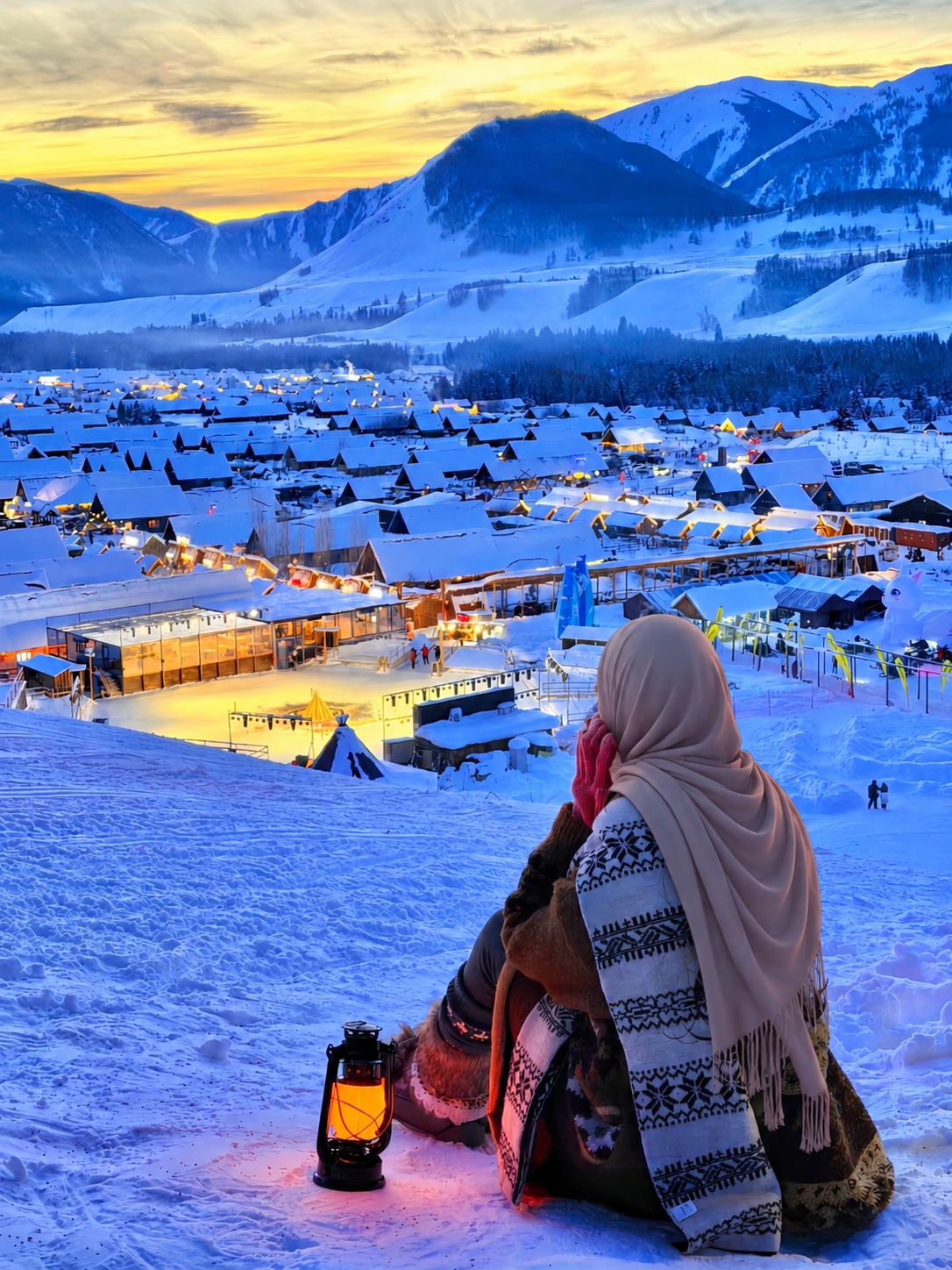
- For a remote winter village: Hemu in northern Xinjiang.
- For a proper ski holiday: Yabuli or Chongli.
- For snowy forests and mountain resorts: Changbai Mountain.
- For a first snow day near Chengdu: Xiling Snow Mountain.
- For striking blue lakes and frozen waterfalls: Jiuzhaigou.
My general recommendation: January is a strong starting point for a classic northern China snow holiday. But always match the dates to the actual attraction and its operating season.
Where Does It Actually Snow in China?
China’s most established natural snow destinations are concentrated in the northeast, northern Xinjiang and high-elevation mountain regions.
That doesn’t mean other Chinese cities never receive snowfall. Beijing, for example, can experience snow in winter, but I wouldn’t plan an entire trip around finding thick natural snow in the city.
The important distinction is between somewhere that occasionally gets snow and a destination where winter snow is a central part of the visitor experience.
If snow is the main reason you’re coming to China, check conditions at the actual resort, village or scenic area.
When Is the Best Time to See Snow in China?
December: Check the Attraction, Not Just the Weather
By December, parts of northeast China, northern Xinjiang and higher mountain areas can already have substantial snow.
But a place having snow doesn’t mean all its winter attractions have opened.
For example, Heilongjiang’s tourism authorities announced on November 11, 2026, that the 28th Harbin Ice and Snow World was planned to open in mid-December. The exact opening date had not been confirmed in that announcement.
If visiting the ice park is the main reason you’re traveling to Harbin, confirm its opening before making non-refundable bookings.
January: My First Choice for a Classic Northern Winter Trip
January is generally a sensible month for planning a journey combining Harbin, Yabuli and China Snow Town.
The winter tourism season is usually established by then, subject to actual operations.
But don’t underestimate the cold. Visitors arriving from warm-weather countries may find several consecutive hours outdoors much harder than expected.
Plan indoor breaks rather than arranging one exhausting outdoor attraction after another.
February: Still Winter, but Pay Attention to Holiday Dates
February can still offer excellent winter conditions in northern China.
However, Chinese New Year falls on February 6 in 2027, so flights, rail tickets, hotels and popular attractions may face additional demand.
Outdoor ice attractions also depend on the weather. If you’re traveling late in the month, check whether the ice park you want is still operating.
March: Consider Selected Ski Resorts and Mountain Areas
Some northern resorts and higher mountain destinations may continue operating in March.
However, I wouldn’t plan a March trip around Harbin’s main ice festival without confirmation that it remains open.
For any winter date, check three things separately: current snow coverage, attraction operations and actual transport access.
8 Places Worth Considering for a Snow Holiday in China
There’s no useful way to rank these eight places without knowing what kind of winter holiday you want. Each is worth considering for a different reason.
1. Harbin — For the Famous Ice and Snow Festival
Suggested stay: 2–3 days
Best planning window: Late December–January
Harbin is one of China’s most recognizable winter destinations, but its main attraction isn’t simply snow on the ground.
The spectacular ice buildings at Ice and Snow World, snow sculptures at Sun Island and winter atmosphere across the city make it a distinctive experience.
For first-time visitors, I’d arrange Ice and Snow World in the late afternoon and evening so you can see the illuminated structures without spending an unnecessarily long day outdoors.
Central Street, Saint Sophia Cathedral and the Songhua River area are also worth allowing time for.
The main booking risk is confusing the city’s winter season with the official opening dates of individual ice attractions.
Best for: Travelers who want giant ice installations, winter city photography and a lively seasonal festival.
Check first: Confirmed opening dates, ticket arrangements, cold-weather preparation and your hotel’s location.
2. China Snow Town — For Thick Snow and Wooden Village Scenery
Suggested stay: 1 night
Best planning window: December–February
China Snow Town, locally called Xuexiang, is famous for thick layers of snow covering traditional-looking wooden rooftops.
After dark, red lanterns and illuminated buildings create the winter atmosphere that makes this destination so popular with photographers.
But it’s not an isolated village untouched by tourism.
Expect a busy scenic area, commercial activities and high demand for conveniently located accommodation during popular periods.
The biggest practical consideration is travel time from Harbin. Road journeys often take around five to six hours or longer, depending on conditions.
That’s why I would generally recommend staying overnight rather than making a rushed same-day return.
Check whether your accommodation is inside the main scenic village, what heating and bathroom facilities it offers, and how luggage will reach the property.
Best for: Snow-covered rooftops, village photography and evening winter scenery.
Think twice if: Your family only wants a few hours of snow play and doesn’t enjoy long road journeys.
3. Yabuli — For Skiing During a Harbin Holiday
Suggested stay: 1–2 days
Best planning window: December–February
If the main goal is actually learning to ski, I’d give Yabuli more attention than adding another sightseeing destination.
It’s an established skiing area that combines naturally with a northeast China winter itinerary.
But here’s where first-time visitors can easily misunderstand a quotation: a ski ticket, an equipment-rental package and a ski hotel package are not necessarily the same product.
One offer may include slope access and basic equipment, while another charges separately for lessons, helmets, clothing rental or equipment deposits.
If you’ve never skied before, I’d prioritize a suitable beginner slope and a qualified instructor over advanced resort facilities.
If you’re traveling with non-skiers, check what other activities or facilities they can use.
Best for: Beginners and families who genuinely want to spend time skiing.
Check first: Which resort and slopes are operating, instructor availability, equipment sizes and the total cost.
4. Changbai Mountain — For Snowy Forests, Ski Resorts and Mountain Scenery
Suggested stay: 2–3 days
Best planning window: December–February
Changbai Mountain offers a different winter experience from Harbin.
Instead of giant ice installations, the attraction is snowy forest scenery, volcanic landscapes, mountain resorts and winter activities.
Tianchi, the crater lake near the summit, is one of its best-known natural landmarks.
However, summit access can be restricted by strong wind, heavy snow or poor visibility.
That’s why I wouldn’t make reaching Tianchi the only reason for visiting.
Another important detail is the entrance. The north and west scenic areas have different transport arrangements and nearby accommodation choices.
Choose your primary activities first, then decide where to stay.
Best for: Couples and families who prefer snowy forests, mountain resorts and a slower winter holiday.
Check first: The scenic entrance, summit access conditions and the actual resort included in your booking.
5. Hemu, Xinjiang — For Remote Snow-Covered Village Scenery
Suggested stay: At least 2 nights
Best planning window: December–February
Hemu is a destination I’d recommend giving time to.
The wooden houses, surrounding forests and mountains of the Altai region create a distinctive winter landscape, particularly after fresh snowfall.
But the same remote setting that makes Hemu attractive also makes the journey more complicated.
Winter roads around the Kanas–Hemu region can be affected by snowfall, traffic controls and temporary closures.
Before booking a guesthouse, I’d verify its heating, hot water, luggage arrangements, restaurant access and the actual vehicle pickup point.
I wouldn’t add Hemu to a short Beijing–Shanghai holiday just because the photographs are beautiful.
Northern Xinjiang deserves its own multi-day itinerary with flexibility for winter conditions.
Best for: Remote winter villages, wooden houses, natural scenery and photography.
Check first: Winter road access, accommodation arrangements and a reasonable alternative if severe weather changes the route.
6. Chongli — For Skiing Without Leaving the Beijing Region
Suggested stay: 1–3 days
Best planning window: December–February
Chongli makes sense if you want to combine a Beijing holiday with proper skiing.
There are several ski resorts in the region, but they don’t all use the same transport arrangements.
For example, Taizicheng and Chongli are different railway stations. The correct arrival point depends on which ski resort you choose.
That’s why I’d select the ski resort first, then confirm the railway station, hotel and onward transfer.
Many managed ski slopes use snowmaking, helping support skiing operations when conditions allow.
However, a resort operating its ski slopes doesn’t guarantee thick natural snow across the surrounding town.
Best for: Travelers who want to visit Beijing and add one or more days of skiing.
Check first: Which resort is suitable for your skiing level, transport connections and the exact equipment and lesson package.
7. Xiling Snow Mountain — For a First Snow Experience Near Chengdu
Suggested stay: 1–2 days
Best planning window: Late December–February
For travelers spending most of their holiday in Chengdu, Xiling Snow Mountain is one of the more practical places to consider for winter activities.
It’s approximately 110 kilometers from Chengdu, with a road journey commonly taking around two to two and a half hours under suitable conditions.
But the resort has an important distinction that first-time visitors should understand.
Xiling’s front mountain is associated primarily with hiking and natural sightseeing. The back mountain is where the main ski and snow recreation facilities are located.
If your children want to play in snow or try skiing, make sure you’re heading to the correct visitor area.
There are also two separate cable cars.
The Yuanyangchi transport cable car connects the lower entrance with the middle-mountain ski area. The Riyueping sightseeing cable car goes higher for panoramic mountain views.
If you’re visiting only the ski and recreation area, you don’t automatically need the higher sightseeing cable car.
That difference can affect the total ticket price.
Xiling also isn’t the only option for skiing in western Sichuan.
If you’re interested in comparing different ski facilities rather than simply finding a place to touch snow, destinations such as Taiziling, Zhegushan and Qiangren Valley may also be worth researching.
Best for: First-time snow visitors and families combining Chengdu sightseeing with winter activities.
Check first: Actual snow coverage at the recreation area, operating activities, cable-car requirements and altitude.
8. Jiuzhaigou — For Blue Lakes, Ice Formations and Winter Nature
Suggested stay: 1 full park day
Best planning window: December–February
Jiuzhaigou belongs in this guide for its extraordinary natural scenery, not because it’s a dedicated snow-play destination.
In winter, the bright blue lakes, waterfalls and surrounding mountains can create a beautiful contrast of water, ice and snow.
But snow-covered mountains don’t guarantee deep snow along every lakeside boardwalk.
It’s also a protected national park, so visitors should follow the official sightseeing routes rather than treating the area like a ski resort.
During the 2026–2027 winter operating period, some scenic sections are seasonally closed for conservation and safety.
If your main goal is simply to play in snow, I’d compare dedicated snow destinations before choosing Jiuzhaigou.
Best for: Nature lovers, landscape photography and travelers interested in Jiuzhaigou’s lakes and waterfalls.
Check first: The actual open sightseeing route, park admission arrangements and recent snow conditions.
How I’d Build a China Snow Holiday Without Wasting Days on Transfers
The biggest itinerary mistake is trying to combine every famous snow destination into one short holiday.
Harbin, Hemu and Sichuan are in completely different regions. The journeys between them can consume more time than the snow activities themselves.
I’d usually choose one winter region and plan the experience around it.
Harbin + Yabuli + China Snow Town
A six-day northeast winter holiday can combine Harbin’s ice festival, a skiing experience in Yabuli and a night in Snow Town.
But each additional destination creates more transport time. For families with toddlers or older relatives, I’d consider skipping either Yabuli or Snow Town if the schedule becomes too demanding.
Chengdu + Xiling Snow Mountain
This is a practical combination for travelers who want pandas, Chinese culture, city sightseeing and a first snow experience without spending the entire holiday in extreme northern cold.
Western Sichuan Skiing + Hot Springs + Snowy Mountains
For a more immersive winter holiday, I’d consider staying overnight in western Sichuan rather than returning to Chengdu after every activity.
Separating the ski day from mountain sightseeing can make the experience more comfortable, especially for beginners.
Beijing + Chongli
This is a sensible option for travelers who want to combine the Great Wall, Beijing sightseeing and ski resort activities.
Choose the ski resort first, then work out the train, hotel and transfer arrangements.
For Hemu and the wider Altay region, I’d generally plan a separate journey with enough flexibility for winter road conditions.
Five Things I’d Check Before Booking a Snow Holiday
1. Does the Price Include Everything You Need?
Don’t assume a ski ticket automatically includes lessons, equipment, helmets, clothing rental or lockers.
Ask for the exact inclusions before comparing two packages.
This is particularly important when a hotel advertises skiing as part of the room package.
2. Is There Snow Where Visitors Actually Go?
A distant mountain peak may be covered in white while the lower recreation area has limited natural snow.
Ski resorts can also operate managed slopes using snowmaking.
Check conditions at the actual visitor or activity area rather than relying on a general weather forecast.
3. Is the Hotel Near the Correct Entrance?
This matters at large ski resorts and mountain scenic areas.
Before booking, confirm the ski resort entrance, cable-car station or sightseeing departure point you’ll actually use.
4. Can Everyone in the Group Handle the Cold and Activity Level?
A family visiting from a tropical country may find several consecutive hours outdoors much harder than expected.
Warm layers, gloves and water-resistant footwear with suitable grip make an enormous difference.
5. Does the Route Allow Enough Time?
Winter travel isn’t only about the distance between destinations.
Snow, ice, mountain weather and attraction transport can change the actual schedule.
I’d rather recommend fewer destinations with enough time to enjoy them than a complicated itinerary that looks exciting on paper but leaves everyone exhausted.
A Few Extra Considerations for Muslim Travelers
A snow trip in a major city and a snow trip in a remote mountain village require different practical arrangements.
If your family needs halal meals, don’t assume that a ski lodge, mountain guesthouse or hotel buffet will automatically meet your requirements.
Suitable food should be confirmed before departure, especially on days involving long road journeys.
Prayer breaks also need to work around the actual sightseeing schedule. Some attractions use their own buses or cable cars, and dedicated prayer rooms are not guaranteed.
For families choosing a private winter journey, these arrangements should be discussed before confirming the itinerary.
Frequently Asked Questions
Does It Snow in China in December?
Yes. Northeast China, northern Xinjiang and higher mountain areas can have snow in December. But some ice attractions and ski facilities may not yet be operating.
What Is the Best Month for a Snow Holiday in China?
January is a strong general choice for a classic northern winter holiday. For skiing, the best period depends on the specific resort’s open slopes and operating dates.
Where Can I See Snow Near Chengdu?
Xiling Snow Mountain is one of the more practical options for snow activities. Bipenggou and Mount Siguniang offer different mountain scenery and travel requirements.
Is Harbin or Xinjiang Better for Snow?
Choose Harbin for illuminated ice attractions and city-based winter sightseeing. Choose northern Xinjiang for remote mountain villages and a longer winter nature journey.
Can I Enjoy Snow in China Without Skiing?
Absolutely. Harbin’s ice attractions, China Snow Town, Hemu and Jiuzhaigou offer winter experiences that don’t require skiing.
How Many Days Do I Need?
Five to seven days can be a useful starting point for one winter region. More remote destinations, particularly northern Xinjiang, often deserve more time.
Which Snow Destination Would I Actually Choose?
For a first winter trip centered on spectacular ice attractions, I’d begin with Harbin in January.
For traditional-looking villages surrounded by snow, I’d give China Snow Town or Hemu enough time for an overnight stay.
For a family based in Chengdu, Xiling may be a far more practical introduction to snow than traveling across the country.
And if skiing is the main goal, I’d choose the resort according to the slopes, lessons and facilities the group needs — not simply the most famous snow destination.
The right winter holiday isn’t the one with the largest number of stops. It’s the one that suits your travel dates, your group and the experience you’re hoping for.
Official Information
-
Heilongjiang Department of Culture and Tourism
-
Xiling Snow Mountain Official Website
-
Jiuzhaigou National Park Notices
Winter operations, snow conditions, prices and transport access can change. Confirm the latest information for your actual travel dates. Harbin’s 2026–27 opening plan was rechecked on November 16, 2026.