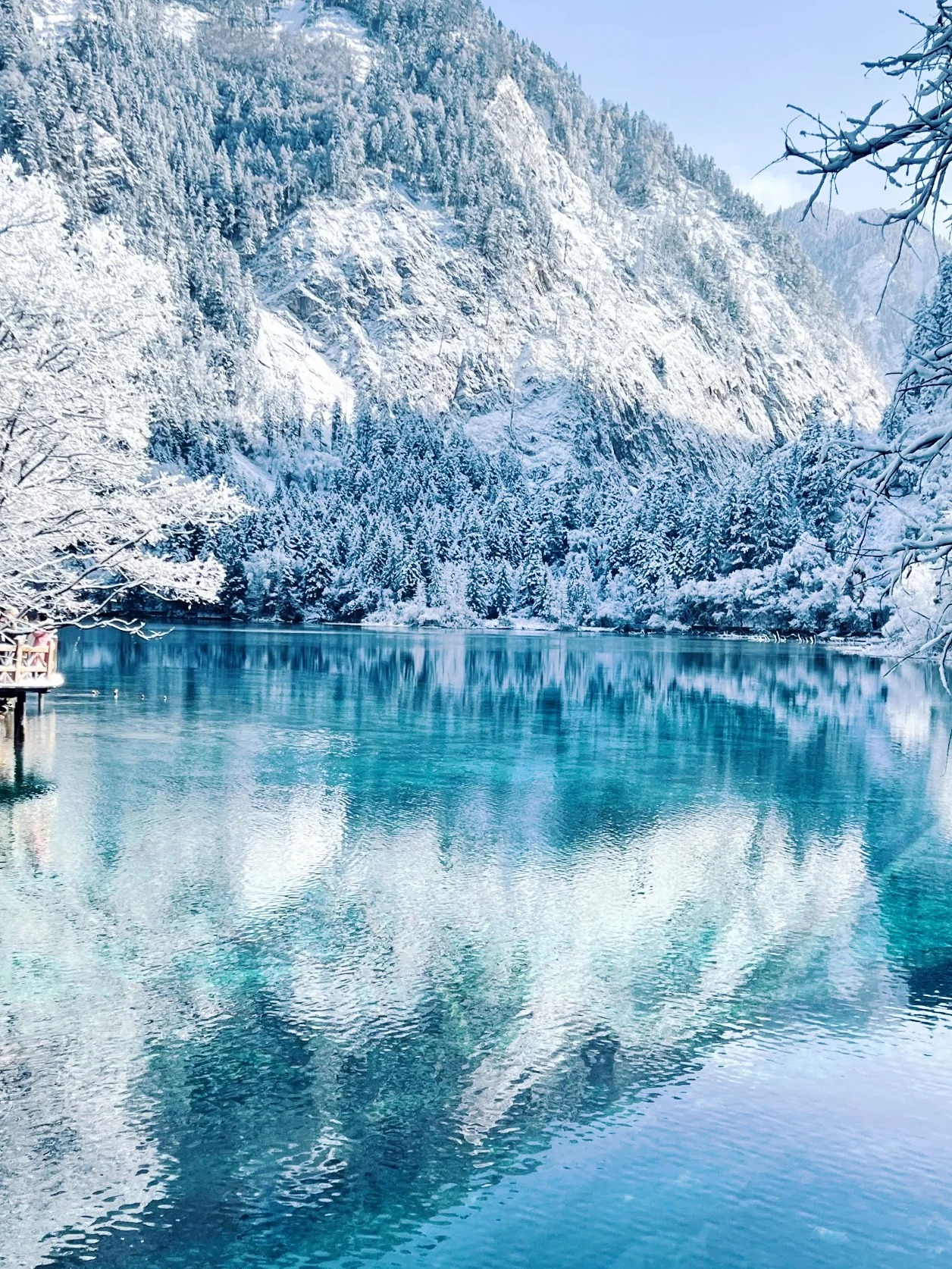
Western Sichuan Winter · Muslim Travel Guide
Packing for Jiuzhaigou, Mount Siguniang or
another snowy destination in Western Sichuan?
Here’s something worth knowing before you
buy a suitcase full of winter clothes:
what keeps you comfortable in Chengdu
city may not be enough in the mountains.
If you’re flying in from Malaysia, Indonesia
or Singapore, you may be preparing for your
first experience of snow.
And suddenly, there are a hundred questions.
Is one down jacket enough? Do you really
need snow boots? Can you wear an abaya
in the snow? What works best with hijab?
The good news is that you don’t need to
dress like a mountaineer for an ordinary
winter sightseeing trip.
You do need to understand the difference
between a cold city day and a freezing
mountain outing.
The Quick Answer
For winter sightseeing in Jiuzhaigou
and Western Sichuan, pack a thermal base
layer, a fleece or sweater, an insulated
jacket, warm trousers, gloves, thick socks
and footwear with good grip.
For snowy or wet conditions, choose
water-resistant outer clothing and
suitable winter boots.
If you wear hijab, a warm, comfortable
fabric and an insulated coat can work
well together. You don’t necessarily
need a special winter hijab.
Most importantly, check the forecast
for your actual mountain destination,
not just Chengdu.
What to Wear in Jiuzhaigou,
Mount Siguniang and Other Sichuan Destinations
Western Sichuan isn’t one single climate.
Even on the same itinerary, the weather
can feel completely different depending
on where you are, your elevation
and how much time you spend outside.
Chengdu City
A warm jacket, sweater, everyday trousers
and comfortable walking shoes are usually
a sensible starting point for winter
sightseeing in the city.
Don’t overpack:
Heavy snow boots are not normally necessary
for ordinary city walks.
Jiuzhaigou Valley
Bring thermal layers, an insulated coat,
warm trousers, gloves and winter footwear
with suitable grip.
Don’t overlook:
Cold mornings, icy walkways and long
outdoor photography stops.
Mount Siguniang
Choose warm layers with a wind-resistant
outer jacket, insulated trousers
and footwear suited to the conditions.
Don’t overlook:
Altitude, exposed viewpoints and changing
weather. Prepare for the specific valley
and activities on your itinerary.
Bipenggou
Thermal clothing, a fleece, warm jacket
and water-resistant footwear can make
a winter sightseeing day more comfortable.
Don’t overlook:
Snow, slippery paths and the temperature
difference between travelling in the
vehicle and stopping outdoors.
Huanglong is another high-elevation
destination where winter conditions
require careful preparation.
Check seasonal access, transport
arrangements and the areas you intend
to visit before planning your clothing.
Still deciding where to experience snow?
Our
Chengdu snow travel guide for Muslim families
compares different destinations and
helps you choose the right kind of trip.
The Three-Layer Rule:
How to Stay Warm Without Wearing Everything
One mistake I would avoid is simply
putting on as many thick sweaters as possible.
You might feel freezing outside,
then suddenly become too warm inside
a heated vehicle or restaurant.
Three adjustable layers are usually
more practical for winter sightseeing.
Layer 1: Thermal Base Layer
Start with a long-sleeved thermal top
and thermal leggings.
Look for moisture-managing materials,
such as suitable synthetic fabrics
or merino wool.
These are particularly useful when
you’re walking outdoors and later
resting in the cold.
Ordinary cotton clothing can hold
moisture, so it isn’t the best base
layer for active winter outings.
Layer 2: Fleece or Warm Sweater
Your middle layer helps retain warmth.
A fleece, warm sweater or lightweight
insulated jacket can all work.
The important detail is that you
should be able to take this layer off
when you’re indoors or travelling
in a heated vehicle.
Layer 3: Insulated Winter Jacket
For the outer layer, choose a warm
down or synthetic insulated jacket
suited to your forecast.
If you’re visiting exposed mountain
viewpoints, wind protection matters.
If rain or wet snow is expected,
water protection matters too.
A longer insulated coat can provide
additional coverage and works well
with modest winter outfits.
Put all three layers on at home.
Can you raise your arms comfortably?
Can you sit down, walk and move easily?
If everything feels too tight, you
may need a different combination
rather than another sweater.
Winter Hijab and Modest Outfit Tips
for Muslim Women
You absolutely can dress modestly
and stay comfortable on a snow trip.
The biggest challenge is usually
not modesty itself. It’s finding
clothing that stays warm, remains
comfortable and doesn’t become
inconvenient on icy ground.
Which Hijab Fabrics Work Best?
A comfortable jersey or suitable
warmer fabric can work well for
cold-weather sightseeing.
If you prefer chiffon, consider
a warmer underlayer or hood
when the weather requires it.
Avoid wrapping so many layers
around your head and neck that
you feel restricted.
A good winter hijab should work
with your jacket, not fight against it.
Can You Wear an Abaya in the Snow?
Yes, although the length and fabric
are worth thinking about.
You can wear thermal leggings
underneath an abaya and add
a warm winter coat.
But if the hem drags along snowy
or wet paths, it may become
uncomfortable or create a
tripping hazard.
For longer mountain sightseeing
days, loose-fitting insulated
trousers with a longer coat
may be easier to manage.
What Colours Look Good in Snow Photos?
Cream, chocolate brown, beige,
deep green and soft grey can
look lovely against snowy
mountains and blue alpine lakes.
You don’t need to buy an entirely
new wardrobe for the photographs.
A beautiful coat is only useful
if you’re warm enough to enjoy
the moment.
Do You Really Need Snow Boots
for Jiuzhaigou?
For ordinary sightseeing in Chengdu,
comfortable walking shoes may be enough.
For snowy or icy mountain conditions,
that’s a different story.
I’d pay attention to footwear
before spending money on an
extra fashionable winter jacket.
Look for These Features
- Good traction for slippery surfaces
- Water-resistant or waterproof materials
- Enough insulation for expected temperatures
- A comfortable fit with warm socks
- Support for extended sightseeing walks
Don’t choose boots that become
too tight when wearing thick socks.
Tight footwear can reduce comfort
and leave your feet feeling colder.
Even winter boots cannot guarantee
a safe grip on ice. Take extra care
on frozen steps and walkways,
use handrails and follow local
scenic-area safety instructions.
What About Wudu and Prayer
During a Winter Mountain Trip?
This is something Muslim travellers
should think about before departure,
especially when travelling into
remote scenic areas.
Not every mountain attraction
has a dedicated prayer room or
convenient washing facilities.
Choose Clothing That’s Easy to Adjust
Flexible cuffs and sleeves that
can be moved comfortably make
preparing for wudu easier.
Avoid an outfit that requires
removing several complicated
layers every time you need
to wash.
Bring a Compact Prayer Mat
A lightweight travel prayer mat
can be helpful when a suitable
clean and private space is available.
Ask about possible prayer stops
before heading into a large
scenic area.
Plan Halal Meals Before the Mountain Drive
Suitable halal restaurants can
be limited in remote mountain
areas, even when Chengdu itself
offers convenient dining options.
Planning your food and prayer
requirements together with the
day’s driving route usually
makes the trip more comfortable.
For further practical information,
see our
guide to finding halal food in China
.
What to Pack for a 5-Day Western Sichuan
Winter Trip
Here’s a simple starting list
for a four- to five-day sightseeing
trip that includes snowy destinations.
Adjust the quantities if you
have laundry access, expect
very cold conditions or plan
to spend more time playing
in the snow.
| Item | Suggested Quantity | Why Bring It? |
|---|---|---|
| Thermal tops and leggings | 2 sets | Warm, comfortable base layers |
| Fleece or warm sweater | 1–2 | Adjustable insulation |
| Insulated winter jacket | 1 | Cold-weather protection |
| Warm trousers | 2 pairs | Everyday winter sightseeing |
| Snow-appropriate winter boots | 1 pair | Warmth, traction and moisture protection |
| Warm socks | 3–5 pairs | Dry and comfortable feet |
| Warm gloves | 1–2 pairs | Hand protection; useful spares |
| Winter hijabs, if worn | 2 or more | Comfortable daily options |
| Scarf or neck warmer | 1 | Extra wind protection |
| Sunglasses and sunscreen | 1 set | Protection in bright mountain conditions |
| Travel prayer mat | 1, if needed | Convenience at suitable prayer stops |
| Lip balm and moisturiser | As needed | Comfort in dry winter air |
For Families With Young Children
I would add spare socks,
an extra pair of gloves
and a change of dry clothes.
Children can get wet surprisingly
quickly when they finally get
their hands on real snow.
A small bag for wet clothing
can also be useful on the
drive back.
Five Winter Clothing Mistakes
Worth Avoiding
1. Packing Only for Chengdu’s Weather
This is probably the most important
one. The weather outside your Chengdu
hotel doesn’t tell you what to expect
at Jiuzhaigou or Mount Siguniang.
2. Choosing Fashion Boots With Smooth Soles
Beautiful winter boots aren’t necessarily
suitable for icy scenic-area paths.
Check comfort and grip first.
3. Wearing Too Many Heavy Layers
More clothing isn’t always more
comfortable. If you overheat and
sweat while walking, damp clothing
can leave you cold later.
4. Forgetting Dry Socks and Gloves
Wet hands and feet can quickly
turn an exciting snow day into
an uncomfortable one.
5. Underestimating Mountain Conditions
Some western Sichuan destinations
are at substantial altitude.
Cold weather isn’t the only
consideration.
Give yourself time to adjust,
choose activities appropriate
for your group and pay attention
to any concerning symptoms
rather than trying to push through.
Check the forecast again shortly
before departure. You may need
to adjust your layers depending
on snow, wind, rain and the
activities you actually booked.
Frequently Asked Questions
What should I wear in Jiuzhaigou in December?
Start with thermal layers,
a warm fleece, an insulated jacket,
warm trousers and suitable footwear.
Check the current forecast and
adjust for snow, wind and ice.
Is Jiuzhaigou colder than Chengdu in winter?
Jiuzhaigou’s mountain environment
can be significantly colder than
central Chengdu, particularly during
early mornings and evenings.
Pack for the destination you’ll
actually be visiting.
Can I wear sneakers in Western Sichuan?
Comfortable sneakers can work
for dry city sightseeing,
but they may not provide
enough traction or warmth
in snowy or icy mountain areas.
Do Muslim women need special winter hijabs?
Not necessarily. Comfortable
warmer fabrics, a suitable
inner layer and a jacket hood
can provide flexible options.
Can I wear an abaya at Mount Siguniang?
Yes, provided you can move safely
and comfortably. Consider thermal
leggings, an insulated outer coat
and a hem length that won’t drag
on wet or icy ground.
Can I buy winter clothes after arriving in Chengdu?
Chengdu has shopping options,
but relying on last-minute purchases
may be inconvenient if your
mountain trip begins immediately.
Bring essential warm clothing
with you whenever possible.
Planning a Winter Trip to
Jiuzhaigou or Mount Siguniang?
Packing is much easier once you
know where you’re going and
what you’ll actually be doing.
A trip focused on skiing,
a family snow day and a quiet
photography holiday don’t
require exactly the same clothing.
And for Muslim families,
there’s more to plan than
just winter jackets:
halal meals, prayer stops,
driving distances and a
comfortable daily schedule.
Traverse China is a Chengdu-based
team specialising in private,
Muslim-friendly China journeys.
Planning Your First Sichuan Snow Holiday?
Tell us your travel dates, how many
people are coming and whether
you’re more interested in snow
activities, Jiuzhaigou’s scenery
or Mount Siguniang’s mountains.
We’ll help you explore a private
route that makes sense for your
family, with halal meals and
prayer requirements considered
in the planning.
Travel conditions vary with season,
weather, altitude and location.
Always check the latest forecast,
scenic-area access and personal
travel requirements before departure.