


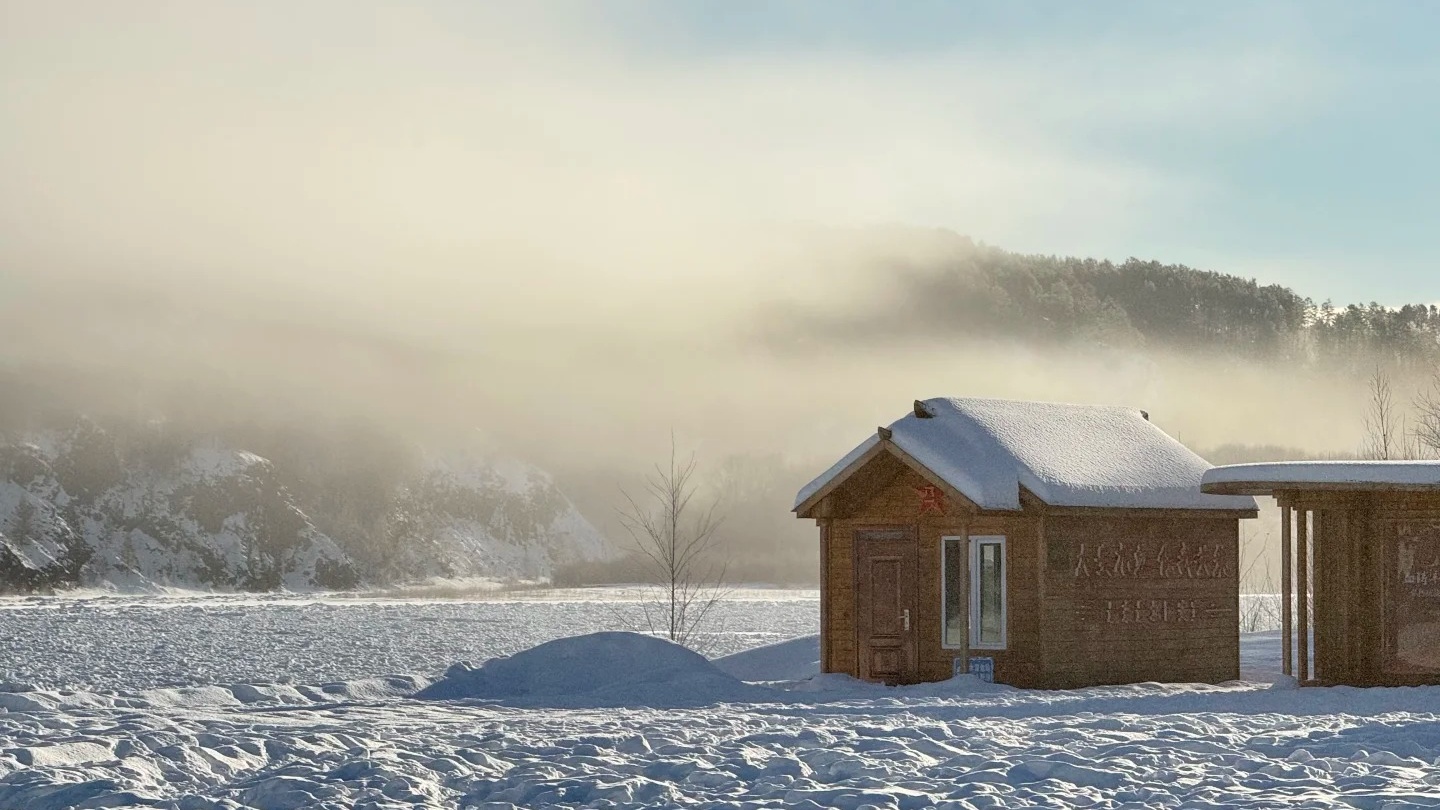
Mohe, in the far north of China’s Heilongjiang Province, offers a winter experience very different from Harbin’s illuminated ice attractions. Think snowy border villages, quiet forests, a frozen river landscape and some of China’s most severe winter cold.
This Mohe winter travel guide explains how to choose between Arctic Village and Beihong Village, get there from Harbin and prepare for very short days. It also covers northern lights expectations and practical meal and prayer planning for Muslim travelers.
1. Where to Go in Mohe: Arctic Village, Beihong and the First Bay
Arctic Village (北极村): The More Convenient First Visit
Arctic Village, also called Beiji Village, is a managed scenic area about 77 km from Mohe town. It is known for northernmost-themed landmarks, the North Pole Sandbar, a post office and snowy streets beside the Heilongjiang (Amur) River, with Russia on the opposite bank.
Best for: Visitors who want a recognised scenic area and more established guesthouse and visitor facilities. The government-approved standard admission price is RMB 88 per person under the published policy; scenic transport and activities may cost extra. Confirm current ticketing arrangements before arrival.
Beihong Village (北红村): Quieter Rural Winter Scenery
Beihong has a smaller village atmosphere, snowy courtyards and simpler accommodation. It may appeal to photographers and travelers who prefer a slower stay, but food choices, bathrooms and transport can be less convenient.
Best for: Travelers comfortable with basic village services and prearranged transfers. Confirm heating, hot water, room facilities and meals directly with the property.
Longjiang First Bay and Wusuli Shoal (龙江第一湾 / 乌苏里浅滩)
These more remote sights are associated with a dramatic bend in the border river, forest viewpoints and northernmost-point landmarks. Reaching them involves longer winter road travel; some viewpoints have stairs or icy paths, and access depends on local conditions.
Best for: Landscape photography if the roads and viewing areas are open. Do not assume you can walk freely onto the frozen river.
2. When to Visit: Severe Cold, Short Daylight and the Aurora
December to February generally provides the deepest winter atmosphere. January can be particularly cold, with temperatures below −30°C and occasional severe cold spells below −40°C. Actual conditions depend on the day, wind and location.
A detail international visitors often miss is the short daylight. Near the December solstice, the Mohe area gets only about seven hours of daylight. Reserve those hours for forest viewpoints and village photography, and leave evening time for warm accommodation and rest.
3. How to Reach Mohe and Travel Between the Villages
| Transport | What to know |
|---|---|
| Flight to Mohe Gulian Airport (OHE) | Regional flights may connect through Harbin or other Chinese cities. Operating days and winter delays vary; confirm your actual flight and onward pickup. |
| Train to Mohe Station (漠河站) | Conventional rail from Harbin generally takes a long overnight journey, roughly 15–18 hours depending on service. There is no high-speed train directly to Mohe. |
| Mohe town to Arctic Village | About 77 km by road. The station or airport is not at the scenic-area entrance. |
| Between remote villages and viewpoints | Public transport may be limited. A licensed local driver and winter-ready vehicle can be more practical for several countryside stops. |
Check rail services on China Railway 12306. For road transfers, confirm the pickup address in Chinese, luggage space, driver arrangements, entry and parking charges, and what happens if a road closes. Do not rely on finding ride-hailing cars on demand in remote villages.
How much time should you allow? Around three to four days in the Mohe area can work if you want to see more than one village. The overnight train or connecting flight adds travel time on top of those days. Mohe is not a comfortable day trip from Harbin.
4. Where to Stay and What to Check Before Booking
| Accommodation base | Why choose it | Trade-off |
|---|---|---|
| Mohe town / Xilinji (西林吉镇) | More practical for train or flight connections, shops and supplies | Less snowy village atmosphere |
| Arctic Village (北极村) | Northern landmarks and established scenic-area services | Separate admission and local transport arrangements |
| Beihong Village (北红村) | Quieter village stay and winter countryside | Fewer lodging and dining choices |
At any property, prioritise dependable heating, hot water, bathroom privacy, breakfast arrangements and a reliable transfer. Some rural guesthouses use traditional heated kang beds; ask what the room and sleeping arrangements actually look like. Foreign passport holders should also confirm the property’s check-in and guest-registration procedure.
5. Muslim-Friendly Travel: Meals, Prayer and Winter Comfort
Mohe’s villages have fewer dining options than China’s major cities. Do not assume that a guesthouse can provide certified halal meals, or that a pork-free or vegetarian dish automatically meets your requirements. Before booking, ask whether your host can verify ingredients and preparation, including meat sourcing, lard and cooking wine. If suitable food cannot be arranged, plan appropriate packaged food or meals in advance; remote delivery services may be unreliable.
Dedicated prayer rooms should not be assumed at rural attractions or lodgings. Ask whether a clean, private and heated indoor space is available, and plan prayer breaks around short daylight hours and road travel. Avoid depending on outdoor prayer stops in extreme cold.
For modest winter clothing, thermal base layers, insulated full-length trousers, a long windproof coat and close-fitting head and neck protection can provide coverage. Keep scarves secure and dry, particularly during snow activities. For more general guidance, see Traverse China’s Muslim travel guide.
6. Extreme Cold and Border Safety: Essential Rules
- Dress for long outdoor stops: Wear moisture-wicking thermals, insulating middle layers, a wind-resistant outer coat, insulated trousers, mittens, face protection and winter boots with reliable grip. Bring dry spare gloves and protect phone batteries.
- Warm up regularly: Take indoor breaks and watch for numbness, unusually pale skin, confusion or extreme fatigue. Seek medical attention promptly if frostbite or hypothermia is suspected.
- Respect the international border: The Heilongjiang River separates China and Russia. Even when frozen, it is not a place to cross or explore outside authorised visitor areas. Follow official border signs and local instructions.
- Use legitimate winter transport: Snow, ice and poor visibility can disrupt rural roads. Avoid unlicensed vehicles and leave extra time before onward trains or flights.
If you are still deciding where to see snow, compare other destinations in Traverse China’s guide to the best places to see snow in China.
Is Mohe Right for Your Winter Trip?
Choose Mohe for quiet snow villages, northern forest scenery and the feeling of reaching China’s far north—not for guaranteed auroras or a convenient urban holiday. With realistic travel times, dependable heating, confirmed meals and winter-safe transport, it can be a rewarding addition to a longer China journey.
If you would like help coordinating remote transfers, accommodation and Muslim-friendly meal planning, share your travel preferences with Traverse China.
Information reviewed: 10 November 2026. Admission policies, flights, train schedules and winter road access can change. Official references: Arctic Village admission policy and Mohe government’s visitor and border safety guidance.