


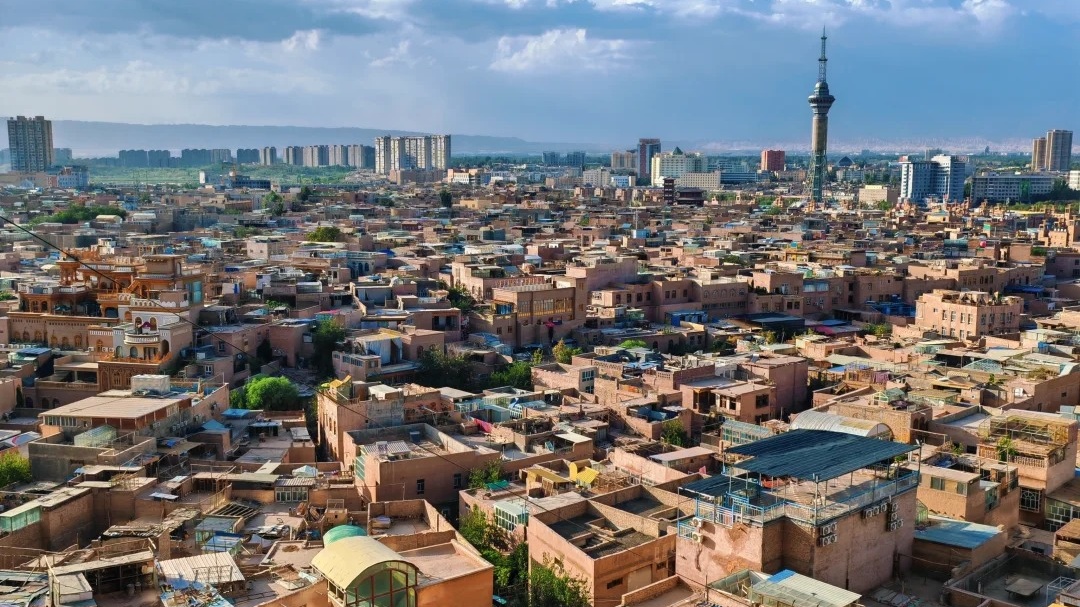
In Kashgar Old City, you may pass a bakery pulling naan from an oven, a copperware workshop and a teahouse within a few narrow streets. This corner of western Xinjiang offers a vivid introduction to Uyghur culture and the long history of trade along the Silk Roads.
For international visitors, the most useful preparation is simple: know which streets are freely walkable, which landmarks have separate admission rules, where to look for local crafts and food, and how to explore respectfully. Here is a practical guide to Kashgar’s Old City, bazaars and nearby travel connections.
1. Kashgar’s Silk Road Story—and the Old City Today
Kashgar (喀什, also written Kashi) stands near the western edge of the Tarim Basin, where routes once connected oasis settlements with Central Asia and the Pamir Mountains. The Silk Roads were a network of trading and cultural connections, not one single road. Food, ideas, languages and craftsmanship moved along these routes as well as goods.
The Old City reflects Uyghur architectural and cultural traditions alongside contemporary life. Decorative brickwork, wooden doors, courtyard entrances, shops and homes share the same streets. The area has also undergone substantial restoration and redevelopment, so it would be misleading to describe every building as an untouched medieval structure.
2. Exploring Kashgar Old City on Foot
General access to the public streets of Kashgar Old City (喀什古城) is usually free. Some museums, historic residences and individual attractions charge separately or require a reservation. The best way to explore the pedestrian lanes is on foot, with breaks for tea and food rather than a hurried sequence of photo stops.
East Gate and Residential Streets
The East Gate is a popular meeting point, sometimes used for scheduled visitor welcome performances. Check the actual performance calendar locally; a published summer time should not be assumed valid in winter or on every weekday.
Beyond the busier streets, some attractive doorways open into private homes. Ask before photographing residents, particularly children, and do not enter courtyards or workshops without an invitation. Kashgar is a living neighbourhood, not an open-air film set.
Id Kah Mosque and the Apak Khoja Mausoleum
Id Kah Mosque (艾提尕尔清真寺), near the Old City’s western side, is a major religious and architectural landmark. Tourist access, prayer-area restrictions, tickets and opening times can change, especially around worship. Dress modestly, follow posted guidance and do not interrupt anyone praying. Visitors wishing to pray should check the current access rules with mosque staff rather than assume tourist entry includes worship access.
Apak Khoja Mausoleum (阿帕克霍加麻扎) is outside the core Old City and has its own entry arrangements. It is associated with local religious history and, in tourism literature, the “Fragrant Concubine” legend. Treat historical accounts and popular storytelling as different kinds of information.
3. Bazaars, Workshops and What to Buy
Look for copperware, wood carving, embroidered textiles, traditional hats, musical instruments and everyday household goods. Some shops are aimed at visitors; others primarily serve local residents. Ask whether a piece is handmade locally instead of assuming every souvenir was produced in Kashgar.
In some market stalls, bargaining is possible. Compare workmanship and materials first, agree on the price before paying, and check whether fragile or sharp objects can travel safely in your luggage.
About the famous Sunday Bazaar: Kashgar’s livestock trading and other markets have changed locations and schedules over time. A livestock market is not the same place as the souvenir streets inside the Old City, and it should not be assumed to operate daily. Verify its present location, trading day and whether visitors are admitted before travelling specially for it.
4. Uyghur Food and Muslim-Friendly Dining
Kashgar is particularly rewarding for its bakeries, teahouses and everyday food stalls. Here are a few regional foods to recognise:
| Food | What it is | What to ask |
|---|---|---|
| Naan / nang (馕) | Oven-baked flatbread | Ingredients and toppings |
| Polo / zhua fan (抓饭) | Rice with carrots and often meat | Meat source and cooking method |
| Laghman / la tiao zi (拉条子) | Pulled noodles with vegetables and sometimes meat | Meat, sauce and wheat allergens |
| Samsa / kao bao zi (烤包子) | Baked pastry, often filled with meat and onion | Filling and preparation |
| Grilled skewers (烤肉) | Seasoned grilled meat | Type of meat and price per skewer |
| Tea and dried fruit | Teahouse drinks and market snacks | Added ingredients and allergens |
For Muslim travelers, Kashgar offers many places to look for 清真 (qīngzhēn, halal) food. However, the name of a dish or the presence of lamb does not establish the sourcing or preparation standards of a specific restaurant. Check the business’s halal arrangements if you require particular certification or separation of ingredients and utensils.
Useful searches on Amap (高德地图) include 喀什清真餐厅 (Kashgar halal restaurants) and 清真寺 (mosque). For detailed guidance on signs and verification, see Traverse China’s halal food guide.
5. Getting to Kashgar, Hotels and Practical City Tips
Airport, Railway Station and Local Transport
Kashgar Laining International Airport (喀什徕宁国际机场) serves the city with domestic connections, including services through Urumqi depending on the date. Kashgar Railway Station (喀什站) connects to Xinjiang’s rail network, although train journeys across the region can be long. Compare the full journey time with available flights.
For the Old City, a licensed taxi or ride-hailing vehicle can take you to a suitable entrance, followed by walking through pedestrian lanes. Save the Chinese name of your hotel and its nearest accessible pickup point; the front door may not be reachable by car.
Where to Stay and What Time Is It?
A hotel near the Old City is practical for food, evening walks and returning for a rest. Check recent reviews, soundproofing, air conditioning or heating by season, and whether the property can register foreign passports. Keep your passport available for hotels and intercity transport.
Official flight, rail and ticket times follow Beijing Time (UTC+8). Some residents also use an informal local “Xinjiang time” approximately two hours behind Beijing Time. When arranging a driver or meeting someone, confirm the clock being used.
Prayer and Respectful Visits
Mosque access is subject to each site’s current arrangements, and tourist visits should not interfere with worship. If you need a private prayer space during the day, check with your accommodation or an appropriate venue. When visiting religious or residential areas, follow local rules and seek consent before photography.
6. Best Time to Visit—and What About the Pamir Mountains?
Spring and autumn are often comfortable for long Old City walks. Summer can be hot, while winter is cold and generally better suited to food, architecture and city culture than to guaranteed snow scenery. Daylight comes relatively late on winter mornings by Beijing Time, so check actual sunrise and business hours.
Kashgar is also a gateway to Karakul Lake (喀拉库勒湖), Tashkurgan (塔什库尔干) and the Pamir Mountains. These are separate high-altitude road journeys, not nearby Old City attractions. Conditions can include snow, altitude-related illness and route-specific border-area permits or checks. Requirements may vary by route and nationality; verify them before booking, particularly for foreign passport holders.
You do not need to add a mountain excursion to appreciate Kashgar. If your main interest is the city’s food, craftsmanship and streets, spending more time in the city can be a better use of your visit.
Discover Kashgar Beyond the Photo Spots
Kashgar is most rewarding when you treat its Old City as a place where people live and work. A bakery visit, a thoughtful conversation in a shop and time spent understanding the city’s different layers can reveal more than a checklist of landmarks.
For broader Muslim travel planning, read Traverse China’s Muslim travel guide. If you would like help arranging a private Xinjiang journey, including cultural visits, transport and suitable meals, plan your trip with Traverse China.
Information reviewed: 11 November 2026. Individual attraction access, performances, market locations and transport schedules may change. For the UNESCO distinction, see the World Heritage Centre’s Silk Roads listing. For train schedules, check China Railway 12306.