


Eight days in Sichuan sounds like plenty of time. Then you start adding places to your wish list: Jiuzhaigou’s impossibly blue lakes, the mountain peaks around Mount Siguniang, Bipenggou’s forests, Dagu Glacier and Huanglong’s colourful pools.
Suddenly, eight days don’t feel quite so long.
The good news is that these places can be connected in one journey. The part most itineraries don’t explain is how much driving, altitude and changing mountain weather come with that decision.
This 8-day, 7-night Chengdu–Jiuzhaigou itinerary follows a scenic road trip through western and northern Sichuan. It’s a rewarding route for travellers who genuinely enjoy mountains and don’t mind long days on the road. For families who would rather spend less time travelling, there’s a simpler option further down.
The Route: 8 Days, 7 Nights
Chengdu → Mount Siguniang area → Gulgou → Bipenggou → Heishui → Dagu Glacier → Chuanzhusi → Huanglong → Jiuzhaigou → Chengdu
Overnight stays: Chengdu (2 nights), Gulgou (1 night), Heishui (1 night), Chuanzhusi (1 night) and Jiuzhaigou entrance area (2 nights).
Travel style: Private mountain road trip. This is not a fixed-departure group tour and not an all-inclusive quotation.
Worth knowing before you book: The second, fourth and seventh days involve substantial travel or mountain activity. The exact driving route must be checked against current road conditions and the driver’s scheduled working hours.
Day 1 — Arrive in Chengdu and Settle In
After landing in Chengdu, head to your hotel rather than trying to squeeze in several attractions before dinner. Depending on your flight, you’ll arrive at either Tianfu International Airport (TFU) or Shuangliu Airport (CTU), so make sure your transfer is arranged for the correct airport.
For Muslim travellers, your first evening is a good opportunity to enjoy a proper meal in the city before the mountain journey begins.
The streets around Huangcheng Mosque, near Tianfu Square, are a useful starting point when looking for established Muslim food businesses. If you’re interested in halal Sichuan hotpot, ask specifically about the meat, broth and cooking ingredients rather than assuming that every hotpot restaurant is suitable.
Overnight: Chengdu.
Day 2 — From Chengdu Towards Mount Siguniang, Then Gulgou
Today the scenery changes quickly. The city gives way to deep valleys, winding mountain roads and the high peaks of the Mount Siguniang region.
Mount Siguniang, also known as the Four Sisters Mountains, is one of western Sichuan’s most memorable mountain areas. But here’s an important distinction: passing through the region and actually exploring Shuangqiao Valley are not the same experience.
Shuangqiao Valley deserves several hours of its own. Trying to visit it properly and still reach Gulgou on the same day may create a demanding schedule, particularly if there are road delays or frequent photography stops.
For this eight-day version, treat the Mount Siguniang section primarily as a scenic mountain journey unless a specific valley visit and the resulting transport schedule have been separately confirmed.
The onward route towards Gulgou may use the mountain road connecting the Mount Siguniang and Li County areas, subject to current access conditions. This connection has experienced winter restrictions in previous seasons; it should never be assumed to be open simply because a map shows a road.
Overnight: Gulgou, subject to the final road and driving-time arrangements.
Day 3 — Bipenggou: Forests, Lakes and Mountain Views
Bipenggou has a different atmosphere from Mount Siguniang. Instead of focusing on one dramatic line of peaks, you move through a valley of forests, streams and mountain scenery that changes noticeably with the seasons.
In autumn, the colours can be spectacular. In winter, the same landscape may be covered with snow and ice, with some paths or activities restricted by conditions. Outside those seasons, the valley has its own appeal, but don’t expect photographs from October and January to show the same experience.
Allow time for the park’s internal transport and the viewpoints you actually want to visit. Scenic-area buses don’t eliminate all walking, and optional transport services may cost extra.
After the visit, continue towards Heishui. This is another reason not to overload the morning with unnecessary stops.
Overnight: Heishui.
Day 4 — Dagu Glacier: The Day That Needs the Most Careful Decision
There’s something extraordinary about travelling from a forested valley to a high mountain viewpoint above the clouds. That’s much of Dagu Glacier’s appeal.
But the most famous upper viewing area sits at approximately 4,860 metres above sea level. Reaching it by cable car doesn’t remove the effects of altitude. In fact, the rapid ascent can make those effects harder to ignore.
This is not a stop I would describe as automatically suitable for every family. Travellers with medical concerns, a history of altitude illness or doubts about their ability to tolerate high elevation should seek appropriate medical advice before including the summit.
Anyone developing concerning symptoms should not push on just to complete the itinerary. A lower-altitude visit, a shorter day or a different attraction may be the better decision.
The cable car and summit access also depend on weather and operating conditions. After sightseeing, continue towards Chuanzhusi only if the confirmed route, daylight and service hours allow a safe transfer.
Overnight: Chuanzhusi.
Day 5 — Huanglong’s Colourful Pools, Then Jiuzhaigou
Huanglong is famous for its remarkable terraces of mineral-rich pools. Seen from above, the landscape can look like a series of blue, green and golden pools winding down a mountain valley.
It’s very different from Jiuzhaigou, despite the two destinations often appearing together in tour packages.
Huanglong is another high-altitude attraction, and the amount of walking depends on the route, current facilities and transport selected. The cableway can reduce part of the climb, but it shouldn’t be treated as a guarantee of effortless sightseeing.
Season matters here. Water levels, colours, snow and access conditions change throughout the year. The bright photographs taken in one month may not reflect what you see on your own dates.
After the visit, continue to the Jiuzhaigou entrance area, commonly called Goukou. Staying close to the entrance makes tomorrow’s full sightseeing day much easier.
Overnight: Jiuzhaigou entrance area.
Day 6 — Give Jiuzhaigou a Full Day
This is the day I wouldn’t compromise on.
Jiuzhaigou isn’t somewhere you want to arrive at lunchtime, take a few photographs and leave. Its lakes, waterfalls and forested valleys are spread across a large protected area, and the scenery deserves time.
Five-Flower Lake, Five-Coloured Pond, Nuorilang Waterfall and other accessible viewpoints offer very different perspectives on the landscape. The exact sequence depends on the operating sightseeing buses, visitor numbers and any temporary closures.
It’s tempting to make a long list of every famous stop. A better approach is to choose the places you most want to experience, use the park buses efficiently and leave enough time to enjoy the views without constantly checking the clock.
One practical detail: Jiuzhaigou requires real-name ticket reservations. During busy periods, tickets can sell out before the intended visit date. Bring the identity document used when booking.
The park’s published standard admission and sightseeing-bus prices are RMB 280 combined during the main season and RMB 160 combined during the off-season, before applicable concessions or optional charges. Seasonal entry hours and accessible areas may differ, so confirm the current information through the official Jiuzhaigou ticket page.
For winter visitors, some scenic areas and boardwalks may close for ecological protection or safety. If you’re choosing between December, January and February, our Jiuzhaigou winter guide explains how the scenery changes.
Overnight: Jiuzhaigou entrance area.
Day 7 — Return to Chengdu
After several days of mountain scenery, it’s time to head back to Chengdu.
The original route uses a private vehicle for the return journey. Allow much of the day for the road transfer, rest stops and possible traffic delays. I wouldn’t add another major sightseeing attraction simply to make the day look fuller.
There’s another option worth considering: a road transfer to Huanglongjiuzhai Railway Station, followed by a high-speed train to Chengdu. The rail journey itself is commonly around two hours, but the station is not next to Jiuzhaigou’s entrance. You still need to allow for the road connection, check-in and waiting time.
Which return option makes sense depends on your group size, luggage, railway availability and the rest of the itinerary. A train is not automatically cheaper or more convenient for every private group.
Overnight: Chengdu.
Day 8 — Giant Pandas, Chengdu and Departure
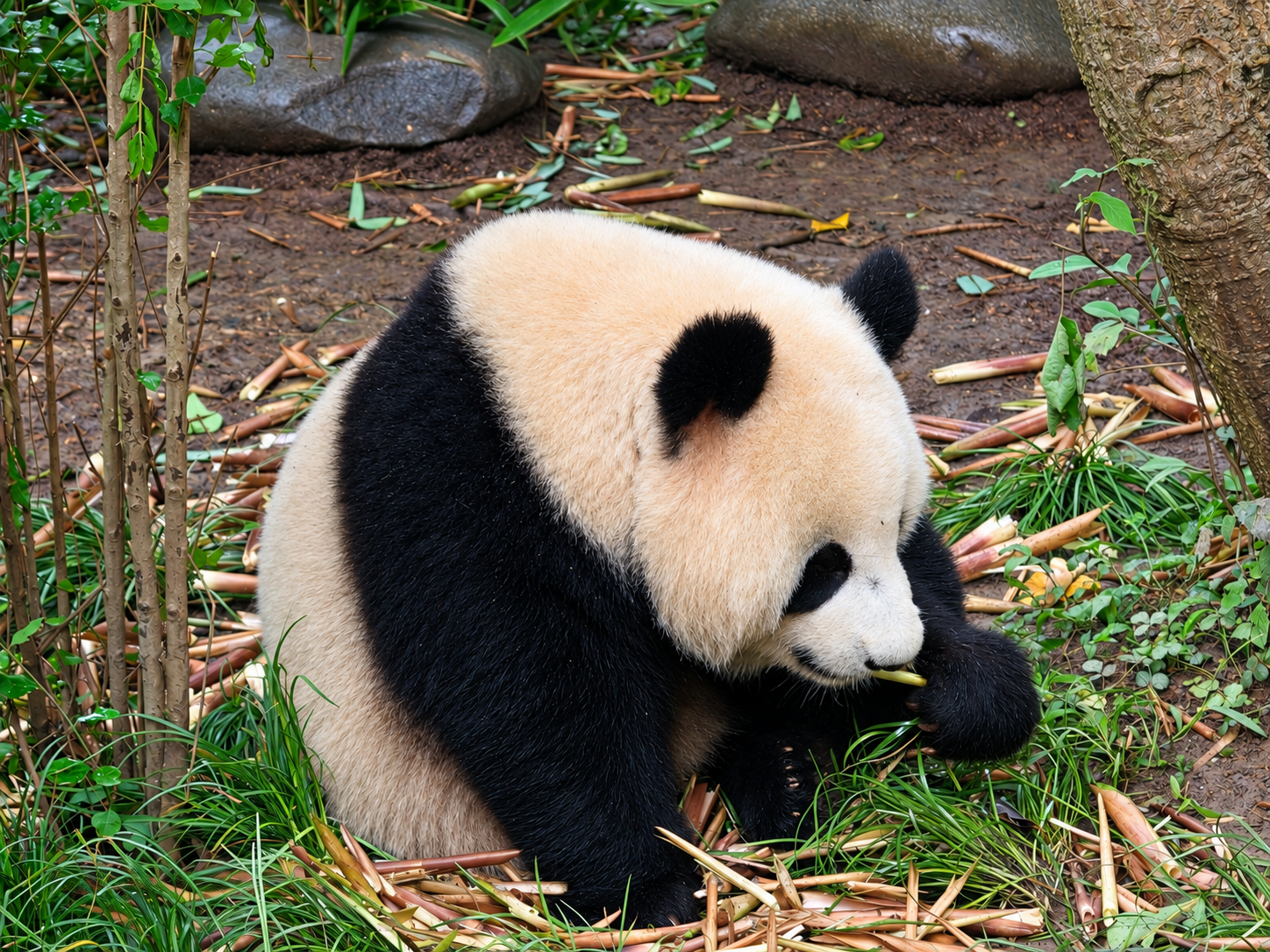
If your flight leaves in the late afternoon or evening, there’s a lovely way to finish the trip: a morning visit to the Chengdu Research Base of Giant Panda Breeding.
Earlier visits often offer a better chance of seeing active pandas, although their behaviour is never guaranteed.
Depending on the flight schedule, you may also have time for a short walk around Kuanzhai Alley or a final meal in Chengdu. I wouldn’t promise both sightseeing stops and the Panda Base to someone with an early departure.
Tianfu and Shuangliu are different airports, with different transfer times. The airport journey and international check-in buffer come before any optional final attraction.
End of trip: Departure from Chengdu.
Is This 8-Day Route Actually Right for Your Family?
Here is the decision I would make before paying for hotels or tickets.
Choose the full scenic road trip if: you love mountain landscapes, enjoy the journey as much as the destinations, are comfortable with frequent hotel changes and are prepared for high-altitude conditions.
Consider a gentler Chengdu–Jiuzhaigou itinerary if: you’re travelling with young children, older parents or anyone who prefers shorter journeys and fewer changes of accommodation.
Since the opening of the railway to Huanglongjiuzhai Station, a simpler trip has become much more practical. You can spend a few days enjoying Chengdu, take the train towards Jiuzhaigou, allow a full day in the national park and return without attempting every mountain attraction along the way.
That gentler version won’t include everything in this eight-day loop. But if Jiuzhaigou and the pandas are your two main reasons for visiting Sichuan, you may not miss the extra road travel.
Halal Food: Plan the Meals Around the Route, Not the Other Way Around
Chengdu has established Muslim food businesses, and the area around Huangcheng Mosque is a useful place to begin. Once the journey moves into the mountains, however, finding a suitable restaurant becomes less predictable.
I’d check three things before confirming this trip:
- Dinner near each overnight hotel. Check the actual restaurant and its current availability, particularly in Gulgou, Heishui, Chuanzhusi and around Jiuzhaigou.
- Lunch during scenic-area visits. Don’t assume the food sold inside mountain parks meets your requirements. Discuss suitable packed food or other arrangements in advance, subject to the attraction’s rules.
- Hotel breakfasts. A hotel serving breakfast is not the same as a hotel offering halal-certified food. Confirm what is available and whether an alternative is needed.
Look for the Chinese term 清真 (qīngzhēn), but don’t treat a menu photograph or a beef dish as proof of halal certification. For stricter requirements, confirm the meat source, cooking ingredients and preparation arrangements directly.
Our Halal Food in China guide explains useful Chinese search terms and what to check before eating.
What Should Be Included in Your Private Tour Quote?
Two eight-day tours can visit the same places and still be quite different in price. Before comparing quotations, ask what you’re actually paying for.
- Seven nights of accommodation, including room type and breakfast arrangements
- Private vehicle services and the driver’s daily working hours
- English-speaking guide services, including which days have a guide
- Entrance tickets and required scenic-area buses
- Optional cableways, including Dagu Glacier and Huanglong where applicable
- Airport transfers and any high-speed train tickets
- Lunch, dinner and halal dining assistance
- Arrangements if mountain roads close or a scenic area suspends operations
For this route especially, don’t assume that every cable car, meal or additional driving hour is included simply because an attraction appears on the itinerary.
So, Is Eight Days Enough for Chengdu and Jiuzhaigou?
Yes — if you’re clear about what kind of trip you want.
Eight days can give you an extraordinary journey through Sichuan’s mountains, glaciers and lakes. But this particular loop is ambitious. It works best when the mountain travel is part of the experience rather than something you hope to get through as quickly as possible.
If your priority is simply to see Jiuzhaigou’s beautiful lakes, enjoy Chengdu’s pandas and travel comfortably with family, a shorter mountain circuit with a high-speed rail connection may suit you better.
At Traverse China, we plan private journeys according to the people travelling, rather than asking every family to follow the same route. Share your dates, group size, preferred experiences and any dietary or altitude concerns, and we can help compare the possibilities before preparing a quotation.
Plan Your Chengdu & Jiuzhaigou Trip
Travel note: This is a suggested eight-day route, not a guarantee of specific road access, hotels, tickets or attraction operations. Mountain-road restrictions, altitude conditions and seasonal access must be checked for the confirmed travel dates.