

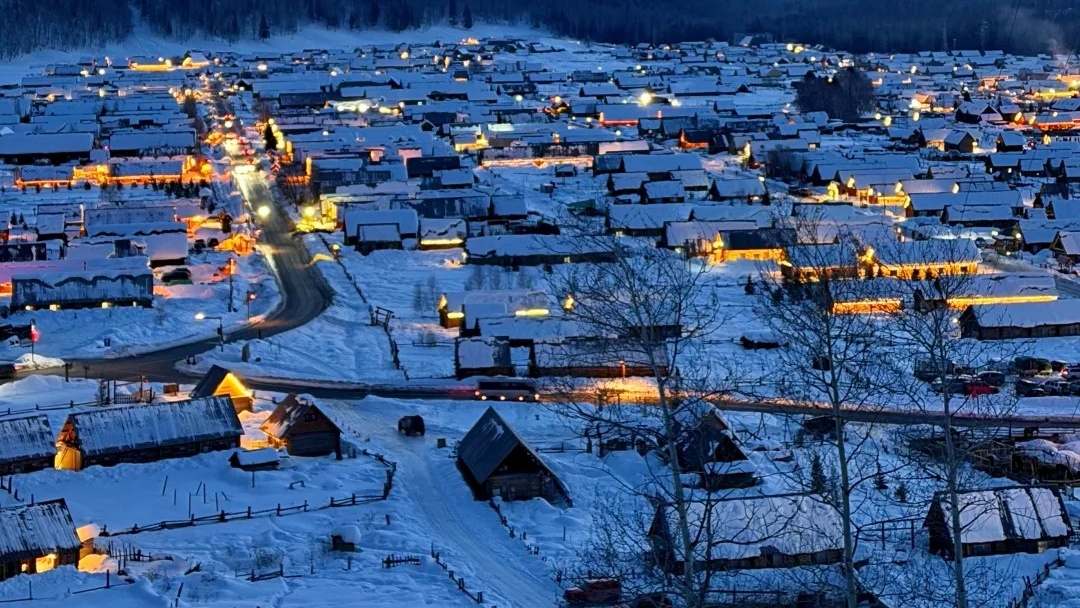
Snow-covered wooden cabins, quiet valleys and forested mountains make Kanas and Hemu two of northern Xinjiang’s most memorable winter destinations. Yet they are not the same place. Hemu is a mountain village where staying overnight is part of the experience; Kanas is a larger scenic area known for its lake, rivers and snowy forest landscapes.
For international visitors, the biggest challenge is not choosing a photograph-worthy viewpoint. It is understanding the winter ticket, vehicle rules, mountain-road conditions and where your accommodation actually sits. This guide explains what to check for the 2026–2027 season, including meal and prayer arrangements for Muslim travelers.
1. Kanas Lake or Hemu Village: Which Should You Visit?
| Destination | What you will experience | Most useful planning detail |
|---|---|---|
| Hemu Village (禾木村) | Wooden cabins, deep snow, a village valley and winter photography | Stay overnight for morning scenery; confirm your guesthouse and village shuttle |
| Kanas Scenic Area (喀纳斯景区) | Kanas Lake, snowy forests, river bends and mountain viewpoints | Check which viewpoints, paths and internal transport are open that day |
Hemu: Snowy Cabins and Village Life
Hemu’s winter appeal comes from thick snow resting on wooden rooftops, smoke rising from heated buildings and soft light across the surrounding hills. An overnight stay makes it easier to enjoy a morning view without a long drive from a distant town. Snow depth, sunrise colors and access to viewpoints still depend on the weather.
Hemu is a living village with Tuvan and other local communities, not simply a set for travel photographs. Follow designated walking routes and ask before photographing residents or private courtyards. The nearby Jikepulin ski resort is a separate attraction requiring its own tickets and operating arrangements.
Kanas: Lake, Forests and Mountain Views
Kanas is better for travelers drawn to wide natural landscapes. Well-known sights include the lake and bends in the river valley, but winter snow and ice can close boardwalks, viewing platforms and some scenic shuttle routes. Never assume that a summer viewpoint can be reached in January or that frozen lake ice is safe to walk on.
If your main interest is photography and quiet village atmosphere, give Hemu more attention. If you prefer open mountain scenery, make Kanas the priority. Visiting both is possible when roads are open, but it should not be planned as a hurried same-day checklist.
2. Winter 2026–2027 Tickets and Vehicle Entry Rules
The Kanas Scenic Area announced its winter operating period as 16 October 2026 to 30 April 2027. Its published winter regional admission ticket costs RMB 100 per person, is valid for three days and covers admission to Kanas, Hemu and Baihaba. This does not mean every location is accessible on every date, and it does not automatically include sightseeing shuttles, accommodation or skiing.
Tickets and current notices are provided through the official WeChat accounts 喀纳斯景区 and 原行网. Foreign passport holders should verify the accepted identity-document process before payment rather than entering someone else’s Chinese ID information.
Self-drive sightseeing vehicles within the Kanas scenic area must meet the published winter safety requirement of four-wheel drive with winter tyres. Designated parking and temporary road controls still apply. Baihaba is in a border management area and may require an additional permit or eligibility check, particularly for non-Chinese passport holders; the combined scenic ticket does not replace border-area permission.
3. How to Reach Kanas and Hemu in Winter
Urumqi is a common gateway to northern Xinjiang. Depending on actual seasonal schedules, travelers can reach the region via Altay Xuedu Airport, Burqin Kanas Airport, Altay Railway Station or Beitun City Railway Station, followed by road transport. None of these arrival points is the entrance to your Hemu guesthouse.
For Kanas, the usual visitor-service gateway is Jiadengyu (贾登峪); Hemu has its own visitor centre. Confirm where your vehicle stops, whether you must change to an internal shuttle and how your luggage reaches the hotel.
Special Rules for the Altay–Hemu (Ahe) Road
The Ahe Road (阿禾公路) entered winter traffic management on 16 October 2026. The published arrangement permits only four-wheel-drive off-road vehicles with winter tyres and no more than seven seats. Its Altay–Hemu two-way travel window is 10:00–14:00, with vehicles required to leave the road by 20:00. These rules can be tightened or access closed because of snow, so check the latest traffic notice rather than relying on these hours alone.
Winter routes through Burqin may be more appropriate depending on the day’s access conditions. For visitors without mountain snow-driving experience, a properly equipped, licensed winter transfer is preferable to an improvised self-drive. A driver cannot legally bypass a road closure to meet a photography schedule.
Before confirming a transfer, ask:
- Which airport or railway station is the pickup point?
- Which visitor centre and exact hotel will the driver serve?
- Does the booking include any required vehicle reservation and scenic shuttle?
- Who handles luggage if the vehicle cannot reach the cabin entrance?
- What happens to the booking if snow closes a road?
4. Where to Stay: Hemu, Kanas or a Gateway Town?
Hemu Village: Best for enjoying snow-covered cabins at dawn and dusk. Confirm reliable heating, hot water, private bathroom facilities, breakfast and the distance from the shuttle drop-off. Deep snow can make even a short luggage walk difficult.
Accommodation near Kanas: Useful if open viewpoints and nature sightseeing are your main interest. Check which guesthouses operate in winter and how meals and internal transport are arranged.
Burqin or Altay: Better for a broader choice of shops, restaurants and transport connections, but too far away to treat a Hemu sunrise as an effortless early-morning visit. Hotels in gateway towns are not substitutes for an overnight village stay when village photography is your priority.
For any property, ask about foreign-passport check-in, the complete Chinese address and cancellation terms if mountain roads become impassable. Allow extra time for winter transfers rather than booking tight onward connections.
5. Muslim-Friendly Travel: Halal Meals and Prayer
Although Xinjiang has many Muslim food traditions, it is not safe to assume that every guesthouse or restaurant in a remote village serves verified halal meals. Hemu accommodation may offer limited set menus, and late-night food delivery cannot be relied upon in severe weather.
Before booking, ask the hotel whether it can provide suitable halal meals, explain meat sourcing and avoid ingredients that do not meet your requirements. If you need a specific certification or separation from non-halal preparation, request confirmation directly. Bring suitable snacks for long road transfers, subject to applicable travel and customs rules.
Dedicated prayer rooms should not be assumed at scenic viewpoints or mountain lodgings. Ask whether a clean, private, heated space is available at your accommodation and allow time for prayer around long drives and short winter daylight. More general advice is available in Traverse China’s Muslim travel guide.
6. Best Time, Winter Clothing and Safety
December to February is usually the most attractive period for a classic deep-snow village appearance. November and March can be beautiful too, but the amount of snow and the availability of activities vary. The official October–April operating calendar is not a guarantee of a full snow cover or open roads throughout that period.
Sunrise occurs relatively late by China Standard Time in northern Xinjiang winter. Check the actual local sunrise time for your dates, and do not walk onto an icy or closed viewpoint trail before daylight simply to photograph the village.
- Dress for severe cold: Bring moisture-wicking thermal layers, insulated outerwear, warm gloves, a hat and waterproof winter boots with reliable grip. Temperatures can fall below −20°C in parts of the region.
- Keep essentials accessible: Carry drinking water, appropriate snacks, medication, spare dry gloves and a protected phone or power bank during transfers.
- Stay on open routes: Avoid unmarked lake or river ice, closed forest trails, unstable snow slopes and independent off-piste activities in protected areas.
- Respect local rules: Check restrictions before flying a drone, avoid disturbing wildlife and follow staff instructions when roads or viewpoints close.
Enjoy Northern Xinjiang Without Rushing the Snow
Choose Hemu for wooden houses and a mountain-village stay, and Kanas for forests, river valleys and lake scenery. Both can be remarkable in winter, but the right hotel, approved road access and realistic weather flexibility matter more than collecting every viewpoint.
For a privately coordinated northern Xinjiang journey, including transport and Muslim-friendly meal planning, contact Traverse China. Travelers wanting to see how the region can fit into a longer holiday can also explore the Altay, Hemu and Kanas winter tour.
Information reviewed: 11 November 2026. Admission, vehicle reservations and mountain-road hours can change. References: 2026–2027 Kanas scenic-area winter notice and Ahe Road winter traffic announcement. Always check official current notices before departure.