


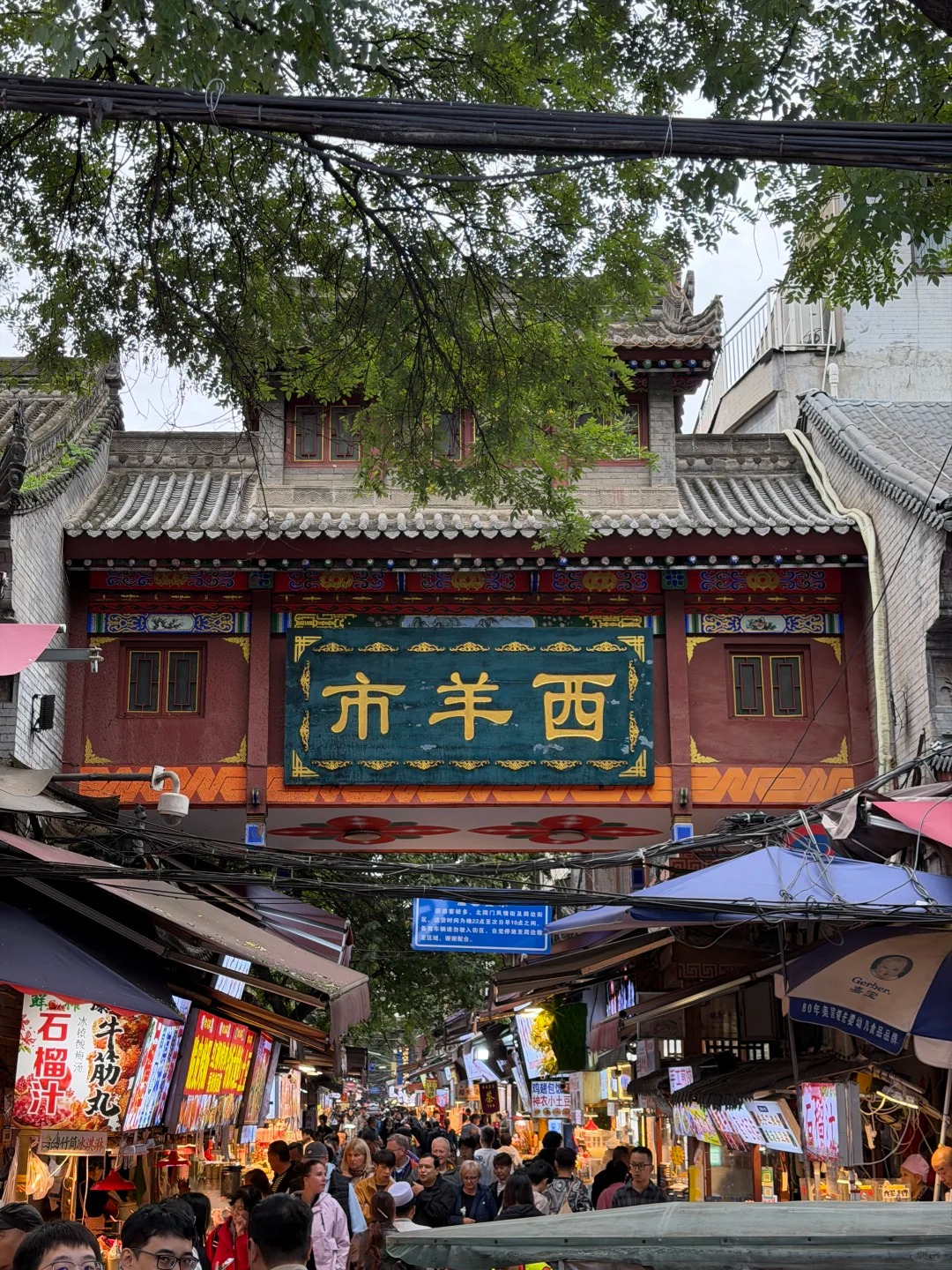
If you have one evening to eat in Xi’an, don’t spend all of it on Beiyuanmen, the busy food street behind the Drum Tower. Walk through it once, enjoy the atmosphere, then turn into Xiyangshi and Dapiyuan. You’ll find long-established Hui Muslim restaurants, proper sit-down meals and some of the food that makes this neighbourhood worth visiting.
And if you can come back the next morning, go to Sajinqiao. The breakfast stalls offer a different side of Xi’an’s Muslim food culture, from hot meatball pepper soup to freshly steamed sticky rice with dates.
My first recommendation? Try beef or lamb paomo, order a portion of Jia San’s soup dumplings, and don’t leave without tasting sesame-dressed niangpi. If you’re travelling as a family, share dishes rather than ordering a full portion at every stop. Xi’an’s food is generous, and you’ll enjoy more of it that way.
This guide covers the streets worth exploring, four established restaurants you can search for by their Chinese names, what to order, how to plan a two- to three-hour food walk, and what Muslim travellers should check before eating.
What to Eat in Xi’an Muslim Quarter: Start with These
For your first visit, these are the dishes I’d prioritise:
- Beef or lamb paomo (牛羊肉泡馍): Flatbread broken into small pieces and cooked in a rich meat broth. One of Xi’an’s defining Hui Muslim dishes.
- Beef or lamb soup dumplings (牛羊肉灌汤包): Delicate steamed dumplings filled with meat and hot broth. Jia San is an established name to look for.
- Sesame niangpi (麻酱酿皮): Chewy wheat-based noodle sheets dressed in sesame sauce, vinegar and chilli. A local favourite that’s easy to overlook.
- Beef roujiamo (腊牛肉夹馍): Sliced or chopped seasoned beef in a flatbread. Make sure you’re ordering from a suitable halal establishment.
- Beef xiaosurou (牛肉小酥肉): Beef that is fried and then steamed until tender, commonly served with rice and chilli oil.
- Meatball pepper soup (肉丸胡辣汤): A substantial, peppery breakfast soup with beef meatballs and vegetables.
- Hot-and-sour dumplings (酸汤水饺): Dumplings served in a tangy broth with vinegar and chilli, with beef or lamb fillings at suitable Muslim restaurants.
- Zenggao (甑糕): Sweet steamed glutinous rice with dates and often beans. Look for it in the morning.
You don’t need to try all eight in one visit. I’d choose one substantial dish, share two or three smaller plates and leave room for something sweet.
Where to Eat: The Muslim Quarter Is More Than One Street
When visitors search for the Muslim Quarter, their map often takes them to Beiyuanmen (北院门), immediately north of the Drum Tower.
That’s a good place to begin. It’s lively, easy to find and full of food stalls. But the wider Hui neighbourhood, known locally as Huifang (回坊), extends through a network of streets and lanes.
Four areas are particularly useful to understand.
Beiyuanmen (北院门): Best for the atmosphere
This is the famous main pedestrian street. Expect grilled skewers, steamed buns, persimmon cakes, souvenir shops and plenty of visitors.
It’s worth walking through, particularly in the evening. But I wouldn’t buy everything from the first row of stalls near the Drum Tower.
Look at the menu and the prices before ordering. The main street can be more crowded and tourist-focused than the smaller lanes nearby.
Xiyangshi (西羊市): Best for paomo and established restaurants
Turn west from the main tourist area into Xiyangshi. This is a useful place to look for traditional beef and lamb paomo restaurants, including Lao Mi Jia Dayu.
You’ll find more sit-down dining here, which makes it a good option if you want a proper meal instead of eating everything while standing.
Dapiyuan (大皮院): Best for traditional Hui snacks
Dapiyuan is one of the streets I’d make time for, even if I had only a few hours.
Two established food businesses are close to one another here: Dingjia Xiaosurou and Sheng Zhiwang Sesame Niangpi. Their published addresses are at the western end of Dapiyuan.
That makes it easy to try two distinctly different foods without crossing the whole neighbourhood.
Sajinqiao (洒金桥): Best for a morning food walk
Further west, Sajinqiao has its own food stalls, small restaurants and neighbourhood atmosphere.
Come in the morning if you want meatball pepper soup, zenggao or other breakfast dishes. Some popular breakfast stalls sell out early, so don’t assume they’ll still be serving in the afternoon.
If you have time for only one evening, concentrate on Beiyuanmen, Xiyangshi and Dapiyuan. If you have a second morning in Xi’an, Sajinqiao is worth a separate visit.
Four Restaurants Worth Looking For
Rather than giving you an endless list of unverified recommendations, I’ve focused on four identifiable businesses with published Chinese names and locations.
Important: These are established restaurants and food businesses, not a promise that every branch is operating today or that every product meets every traveller’s individual certification requirements. Check the current listing and shopfront before visiting.
1. Jia San Guantang Baozi (贾三灌汤包子)
Look for: 贾三清真灌汤包子馆
Published branch: 北院门93号 — 93 Beiyuanmen
What to order: Beef or lamb soup dumplings.
Jia San is more than a shop that became popular through travel videos. The business appears in China’s Ministry of Commerce Time-Honoured Brand records, which document its Muslim-style soup dumplings and established presence in the neighbourhood.
The dumplings are known for their thin wrappers and hot broth. The filling may be beef or lamb, depending on what you order.
How to eat them: Lift a dumpling carefully with your chopsticks, place it on your spoon, make a small opening and let some of the hot broth cool before eating. Biting straight into one can be unpleasant if the soup is still very hot.
I’d order one steamer to share if you’re planning to try several other dishes afterward.
Jia San has had more than one location in the Muslim Quarter, including a branch on Xiyangshi. Check the exact branch on your map rather than navigating using the English name alone.
2. Lao Mi Jia Dayu Paomo (老米家大雨泡馍)
Look for: 清真·老米家大雨泡馍
Published address: 西羊市127号 — 127 Xiyangshi
What to order: Beef or lamb paomo.
Paomo is one of those Xi’an dishes that makes more sense once you sit down and eat it properly.
You may be given dense flatbread to break into small pieces yourself. The kitchen then prepares it with meat broth, noodles and other ingredients.
The texture is part of the experience: the bread absorbs the broth while retaining some bite.
Different shops and different styles produce noticeably different bowls. Some are richer and soupier; others contain less liquid.
For a first visit, I’d start with the ordinary beef or lamb paomo rather than automatically ordering the most expensive version.
You may also see 小炒泡馍 (xiǎochǎo pàomó) on menus. This is a different, more strongly seasoned preparation, commonly incorporating vinegar and chilli. It’s worth trying if you enjoy bolder, tangier flavours.
Ordering tip: Ask whether the restaurant offers hand-torn bread or a prepared version. If you want to experience the traditional process, choose the hand-torn option and allow some extra time.
3. Dingjia Xiaosurou (定家小酥肉)
Look for: 清真·定家小酥肉
Published address: 大皮院西口223号 — 223 Dapiyuan West Entrance
What to order: Beef xiaosurou with rice.
This is a dish that English translations don’t always explain well.
The Chinese name xiaosurou is often translated as “crispy meat”, but the Muslim Quarter’s version at Dingjia is commonly prepared by frying beef and then steaming it until tender.
So don’t expect a plate of dry, crunchy fried beef. The finished dish is softer and richer, with seasoning and juices that work particularly well with plain rice.
Add chilli oil according to your preference. If you’re travelling with children who don’t like spicy food, ask for the chilli separately.
When to go: I’d consider this a lunch stop rather than leaving it until late in the evening. Check current opening hours and availability, as popular dishes can sell out.
4. Sheng Zhiwang Sesame Niangpi (盛志望麻酱酿皮)
Look for: 西安清真盛志望麻酱酿皮
Published address: 大皮院西口225号 — 225 Dapiyuan West Entrance
What to order: Sesame niangpi.
Sheng Zhiwang has a long-established history in Xi’an’s Hui food culture. Its business is documented in the Ministry of Commerce’s Time-Honoured Brand archive, which describes a tradition dating back to 1896.
The dish is simple, but distinctive. Thick, chewy wheat-based noodle sheets are dressed with sesame paste and seasonings that can include vinegar and chilli.
Compared with the sharper vinegar-based cold noodles you might find elsewhere in Xi’an, sesame niangpi has a richer, nuttier flavour.
It can be a refreshing contrast to paomo and beef dishes, particularly during a food walk where you’re sharing several plates.
Allergy note: This dish contains sesame and may contain wheat gluten. Check ingredients if anyone in your group has food allergies.
Dingjia and Sheng Zhiwang are listed almost next door to one another, which makes the western end of Dapiyuan a particularly useful place to stop.
What Else Should You Try? The Dishes I’d Make Room For
Beef Roujiamo — 腊牛肉夹馍
Roujiamo is often described as a Chinese hamburger, but that translation doesn’t tell you much about the actual dish.
The bread is usually toasted or baked, then filled with seasoned meat. In Hui Muslim restaurants, look for versions made with suitable beef or lamb.
One important warning: Roujiamo sold elsewhere in Xi’an is frequently made with braised pork. The dish name alone is not a halal guarantee.
Look for a suitable 清真 restaurant and confirm the meat preparation.
Hot-and-Sour Dumplings — 酸汤水饺
If you enjoy vinegar, chilli and dumplings, look for a Muslim restaurant serving beef or lamb sour-soup dumplings.
They are quite different from the soup dumplings at Jia San. Instead of broth sealed inside a thin wrapper, the boiled dumplings are served in a separate tangy soup.
They’re especially satisfying on a cold evening. Ask for less chilli if your family prefers milder food.
Meatball Pepper Soup — 肉丸胡辣汤
For breakfast, this is one of the most distinctive dishes to look for in Hui neighbourhoods.
The Xi’an version is a thick, peppery soup made with beef meatballs and vegetables such as cabbage, potatoes or carrots, depending on the shop.
It’s often eaten with flatbread and makes a substantial breakfast before a full day of sightseeing.
Search for 清真肉丸胡辣汤 around Sajinqiao and check morning opening hours.
Zenggao — 甑糕
Zenggao is made by slowly steaming glutinous rice with dates and often beans. It’s dense, sweet and filling.
You’ll see it sold in portions from large steamers, particularly during the morning.
I’d buy a small portion first. It’s much heavier than it looks, especially if you’ve already had a bowl of soup for breakfast.
Persimmon Cakes — 柿子饼
These small fried cakes are made with persimmon-based dough and may contain sweet fillings.
They’re best enjoyed hot, when the outside has just been fried and the centre is still soft.
Check the filling and frying ingredients if you have strict dietary requirements.
Grilled Lamb Skewers — 羊肉串
The smell of cumin and grilled lamb is part of the Muslim Quarter’s evening atmosphere.
Look for a suitable halal stall cooking skewers to order. Ask about the price per skewer or per portion before ordering, especially when larger cuts of meat are displayed.
What about drinks?
Sour plum drink (酸梅汤), fresh pomegranate juice and other non-alcoholic beverages can be useful choices while exploring the food streets.
But don’t confuse ordinary sour plum drink with sweet fermented rice drinks such as certain forms of 稠酒 or 醪糟. Fermented products may contain alcohol.
If you avoid alcohol, ask about the exact ingredients and production process rather than assuming a sweet traditional drink is alcohol-free.
A Two- to Three-Hour Muslim Quarter Food Walk
If you’re visiting for the first time, this is the order I’d use. It gives you the main street atmosphere, some proper restaurant food and a reason to explore beyond the busiest shops.
Before dinner: Visit the Great Mosque
If the Great Mosque is part of your plans, visit during its permitted opening hours rather than leaving it until the end of a late-night food walk.
The mosque is in Huajue Lane, within the wider Muslim Quarter. Its architecture and history make it a meaningful stop, especially for Muslim travellers interested in China’s Islamic heritage.
Stop 1 — Drum Tower and Beiyuanmen
Start around the Drum Tower (鼓楼) and walk north into Beiyuanmen (北院门).
Take in the atmosphere, browse a few stalls and look at the different foods before deciding what to buy.
If you’re hungry, consider a small portion of Jia San’s soup dumplings, but don’t fill up immediately.
Stop 2 — Xiyangshi for Paomo
Move into Xiyangshi (西羊市) and look for Lao Mi Jia Dayu Paomo or another suitable halal paomo restaurant.
This is the main sit-down meal of the walk. Allow enough time to enjoy the food rather than rushing from one stall to another.
If you’re travelling as a couple and want to try several dishes, consider sharing a bowl where the restaurant permits it.
Stop 3 — Dapiyuan for Xiaosurou and Niangpi
Continue through the connected neighbourhood lanes towards Dapiyuan (大皮院).
Look for Dingjia Xiaosurou and Sheng Zhiwang Sesame Niangpi near the western end.
These two dishes make an interesting combination: one warm, rich and meaty, the other cool and sesame-flavoured.
You don’t need full portions of both if you’ve already eaten paomo.
Stop 4 — Finish with a Snack
Choose a freshly prepared persimmon cake, a suitable drink or a few grilled skewers if you’re still hungry.
There is no need to walk the whole district or keep eating simply to complete a checklist.
Time to allow: Around two to three hours for a relaxed food walk, excluding an extended mosque visit. Queues, weather and weekend crowds can make it longer.
With young children or older parents: I’d choose one restaurant for a proper meal, one smaller snack stop and a shorter walk. Busy pedestrian lanes can be tiring, especially during holiday evenings.
Have Another Morning? Go to Sajinqiao
If your schedule allows a second visit, don’t repeat exactly the same evening food route.
Go to Sajinqiao (洒金桥) in the morning instead.
This is where I’d look for meatball pepper soup, zenggao, beef flatbreads and small neighbourhood breakfast shops.
A useful approach is to arrive around breakfast time, choose one hot dish and explore a few stalls on foot.
Some famous vendors sell out early, so treat individual shop opening hours as something to check rather than a guarantee.
You can reach the area using Sajinqiao Metro Station or by walking through the wider Hui neighbourhood, depending on where your hotel is located.
The benefit of coming in the morning isn’t just fewer tourists. You get to experience a different kind of food culture: quick breakfasts, working neighbourhood shops and dishes that aren’t always available during the evening market.
The Great Mosque of Xi’an: More Than a Stop Between Restaurants
Chinese name: 西安化觉巷清真大寺
Address: 西安市莲湖区化觉巷30号
The Great Mosque is one of the strongest reasons to spend time in the Muslim Quarter beyond its food.
Xi’an’s official local-history records date its founding to 742, during the Tang dynasty. The complex developed through later dynasties, and much of its surviving architecture reflects traditional Chinese courtyard design alongside Islamic religious functions and decoration.
For international Muslim visitors, that combination is particularly interesting. It demonstrates how Muslim communities developed distinctive local architectural traditions within China.
The mosque is also a place of worship, not simply an attraction for photographs.
Tourist visiting hours, admission arrangements and access to prayer areas may differ. Non-Muslim visitors should not assume they can enter the prayer hall, and Muslim visitors should confirm current arrangements if they intend to pray.
Dress respectfully, follow the posted rules and avoid photographing worshippers without permission.
If Friday prayer is important to your visit, confirm the local arrangements before scheduling sightseeing around it.
Planning tip: The mosque is easier to include before or during a daytime visit to the quarter. Don’t assume you can explore it after a late dinner when visitor admission may already have closed.
Is Everything in Xi’an Muslim Quarter Halal?
The Muslim Quarter is a historic Hui Muslim neighbourhood, and many of its established restaurants serve traditional halal food. That makes it one of the most useful areas in Xi’an for Muslim travellers.
But I wouldn’t tell you that every single stall, shop or packaged snack in the entire district is guaranteed to meet your personal halal requirements.
The practical approach is to check the individual establishment, especially if you require formal certification or particular food preparation standards.
Look for 清真 — Qingzhen
清真 is the Chinese term commonly used for halal.
You’ll see it on restaurants, food shops and some packaged products.
It’s a useful starting point, but Arabic writing or a green shopfront alone does not prove that a business holds a particular formal certification.
Three things worth checking
- The meat: Is the beef, lamb or chicken sourced and prepared according to your halal requirements?
- The ingredients: Does the dish contain pork fat, pork-bone broth or cooking wine?
- The preparation: Are the utensils, frying oil and cooking equipment suitable for your requirements?
These questions become particularly important when eating outside an established halal restaurant.
Chinese phrases you can show the staff
请问这家店是清真餐厅吗?
Is this a halal restaurant?
请问这里的牛羊肉是清真的吗?
Is the beef and lamb here halal?
这个菜里有猪油、猪骨汤或者料酒吗?
Does this dish contain lard, pork-bone broth or cooking wine?
请问有清真认证或相关证明吗?
Do you have halal certification or relevant documentation?
For more detailed guidance on identifying halal restaurants elsewhere in China, read our Halal Food in China guide.
How Much Should You Budget for Food?
Xi’an’s Muslim Quarter can be reasonably priced, but it depends on where and what you eat.
Here’s a broad planning guide rather than a fixed price list:
- Small street snacks: Often around RMB 5–20 each, depending on the food and portion.
- Beef roujiamo or similar filled bread: Commonly around RMB 10–25.
- Sesame niangpi: Often around RMB 10–20 per portion.
- Paomo or another substantial restaurant meal: Commonly around RMB 25–50 or more.
- Shared street-food tasting: Roughly RMB 60–120 per person can be a reasonable starting budget, depending on how many dishes you order.
These are indicative ranges, not guaranteed current menu prices. Larger portions, premium cuts of meat and busy tourist-area restaurants can cost more.
My advice: Don’t order everything at one stall simply because it sells ten famous Xi’an snacks. Try the dish that shop specialises in, then move on.
For a family of four, sharing a selection of dishes may be more enjoyable and cost-effective than ordering four full portions at every stop.
How do you pay?
Alipay and WeChat Pay are widely used in Xi’an, including by small food stalls.
If you’re visiting China from overseas, set up a supported mobile payment method before arriving where possible.
Carry some RMB cash as a backup. Foreign bank cards may not be accepted directly by small street vendors, and a busy stall may not have much change available.
How do you find the right shop?
Save the Chinese names and use a Chinese map app such as Amap (Gaode Maps), or check the most recent restaurant listing.
English translations can vary, and businesses with similar names may have multiple branches.
When navigating, the Chinese street name and house number are more reliable than a loosely translated English restaurant name.
Five Mistakes Worth Avoiding
1. Eating only on Beiyuanmen
The main street is worth visiting, but it isn’t the whole neighbourhood. Walk into Xiyangshi and Dapiyuan before deciding where to have your main meal.
2. Assuming every roujiamo contains beef
Outside suitable Muslim restaurants, Xi’an roujiamo is frequently made with pork. Check the shop and filling rather than the dish name alone.
3. Treating every century-old sign as proof of quality
Many restaurants use traditional-looking signs and similar names. A more useful approach is to check the actual business, speciality and recent customer experience. We have included identifiable establishments rather than relying on attractive shopfronts.
4. Going too late for breakfast foods
Some zenggao and pepper-soup vendors work mainly in the morning. A food walk at 8 p.m. won’t give you the same selection as a visit at 8 a.m.
5. Planning the mosque visit after dinner
The food streets remain lively into the evening, but tourist access to the Great Mosque follows a different schedule. Plan religious and heritage visits around confirmed access hours.
How to Fit the Muslim Quarter into a Xi’an Trip
I’d normally keep the Muslim Quarter for an afternoon or evening spent in central Xi’an, rather than trying to combine it with a full day of distant sightseeing stops.
A good central Xi’an afternoon
Explore the Bell Tower and Drum Tower area, visit the Great Mosque if access is available, then spend the late afternoon and evening eating through the Muslim Quarter.
This avoids unnecessary travel and gives the food walk enough time to be enjoyable.
What about the Terracotta Warriors?
The Terracotta Warriors are outside central Xi’an, near Lintong.
If you’re visiting them in the morning, allow for the journey back to the city before planning an evening meal in the Muslim Quarter.
Don’t assume there will be the same concentration of halal restaurants near every attraction as there is in the central Hui neighbourhood.
If the day involves a long excursion, decide where lunch will be arranged rather than relying on a suitable restaurant appearing beside the attraction.
Where should Muslim families stay?
Accommodation around the Bell Tower, Drum Tower or western side of the old city can be convenient for visiting the Muslim Quarter.
But don’t choose a hotel based only on walking distance to food.
Check the actual room location, traffic access, railway transfers and the comfort of moving through the pedestrian streets with luggage or older family members.
Also remember that a hotel close to halal restaurants does not necessarily provide a halal-certified breakfast.
If you’re considering a longer journey combining Xi’an with other cities, explore our private Xi’an and Silk Road journeys.
Frequently Asked Questions
Is the Xi’an Muslim Quarter worth visiting?
Yes, particularly for food and Hui Muslim heritage. I’d visit the busy main street briefly, then make time for Xiyangshi and Dapiyuan. Come back to Sajinqiao in the morning if you want a different food experience.
What is the best halal food in Xi’an?
Beef or lamb paomo, Hui-style soup dumplings, sesame niangpi, beef roujiamo, xiaosurou and sour-soup dumplings are all worth considering at suitable halal establishments.
Is every restaurant in the Muslim Quarter halal?
The neighbourhood has a strong Hui Muslim food tradition, and many establishments are halal-oriented. However, check individual restaurants if you need particular certification, meat-sourcing or preparation standards. Don’t treat the district name as a universal guarantee.
Is roujiamo halal in Xi’an?
It depends on the restaurant and filling. Suitable Hui Muslim restaurants make beef or lamb versions, but pork-filled roujiamo is common elsewhere in Xi’an. Look for 清真 and verify the specific shop.
Where do locals eat in the Muslim Quarter?
Xiyangshi, Dapiyuan and Sajinqiao are useful areas to explore beyond the main Beiyuanmen tourist street. Restaurant quality and opening hours still vary, so check current information rather than assuming every side-lane shop is automatically better.
How long do I need for the Muslim Quarter?
Allow around two to three hours for a relaxed food walk. If you’re also visiting the Great Mosque, allow additional time and check its visitor schedule.
Can Muslim travellers pray at Xi’an Great Mosque?
It is an active mosque, but visitors should confirm current prayer access and any specific facilities they require. Tourist admission rules may differ from arrangements for worshippers.
Is Xi’an Muslim Quarter expensive?
It can be reasonably priced. Smaller snacks are often inexpensive, while substantial dishes and tourist-area restaurants cost more. Sharing a few carefully selected dishes is a good way to sample more food without overspending.
Is the Muslim Quarter suitable for children?
Yes, although busy evening streets can be crowded. For young children, choose a shorter route with a sit-down meal and fewer stops. Be especially careful around hot soup dumplings, grills and narrow lanes with delivery traffic.
If You Only Have One Meal in Xi’an…
I’d choose a proper bowl of beef or lamb paomo in the Muslim Quarter.
Not because it’s the most fashionable dish, but because it belongs so naturally to the neighbourhood. The flatbread, the broth, the way people sit down and prepare the meal — they tell you something about Xi’an’s Hui food culture that a quick snack doesn’t.
If you have another hour, try soup dumplings or sesame niangpi. And if you have another morning, go to Sajinqiao for breakfast.
There’s no need to finish a list of twenty famous foods. A few well-chosen stops, enough time to enjoy them and a visit to the Great Mosque will give you a much better understanding of the area.
Planning a Muslim-Friendly Trip to Xi’an?
Xi’an is an excellent place to combine Islamic heritage, Chinese history and local food. But restaurant locations, prayer arrangements and sightseeing schedules still need to work together, especially if you’re travelling with children or older family members.
Our China-based team can help plan a private Xi’an itinerary around the Muslim Quarter, the Great Mosque, the Terracotta Warriors and other places you’d like to visit, with suitable halal dining stops considered in advance.
Plan Your Private Xi’an Journey →
You can also read our Muslim-Friendly China Travel Guide if you’re visiting several cities.
Useful references: Restaurant heritage and published addresses were cross-checked against the Ministry of Commerce record for Jia San, the Ministry of Commerce record for Sheng Zhiwang, and current restaurant and map listings. Historical information about the Great Mosque was checked against the Xi’an Local Chronicles Office. Restaurant hours, prices, individual halal documentation and mosque visitor arrangements may change; verify them before your visit.