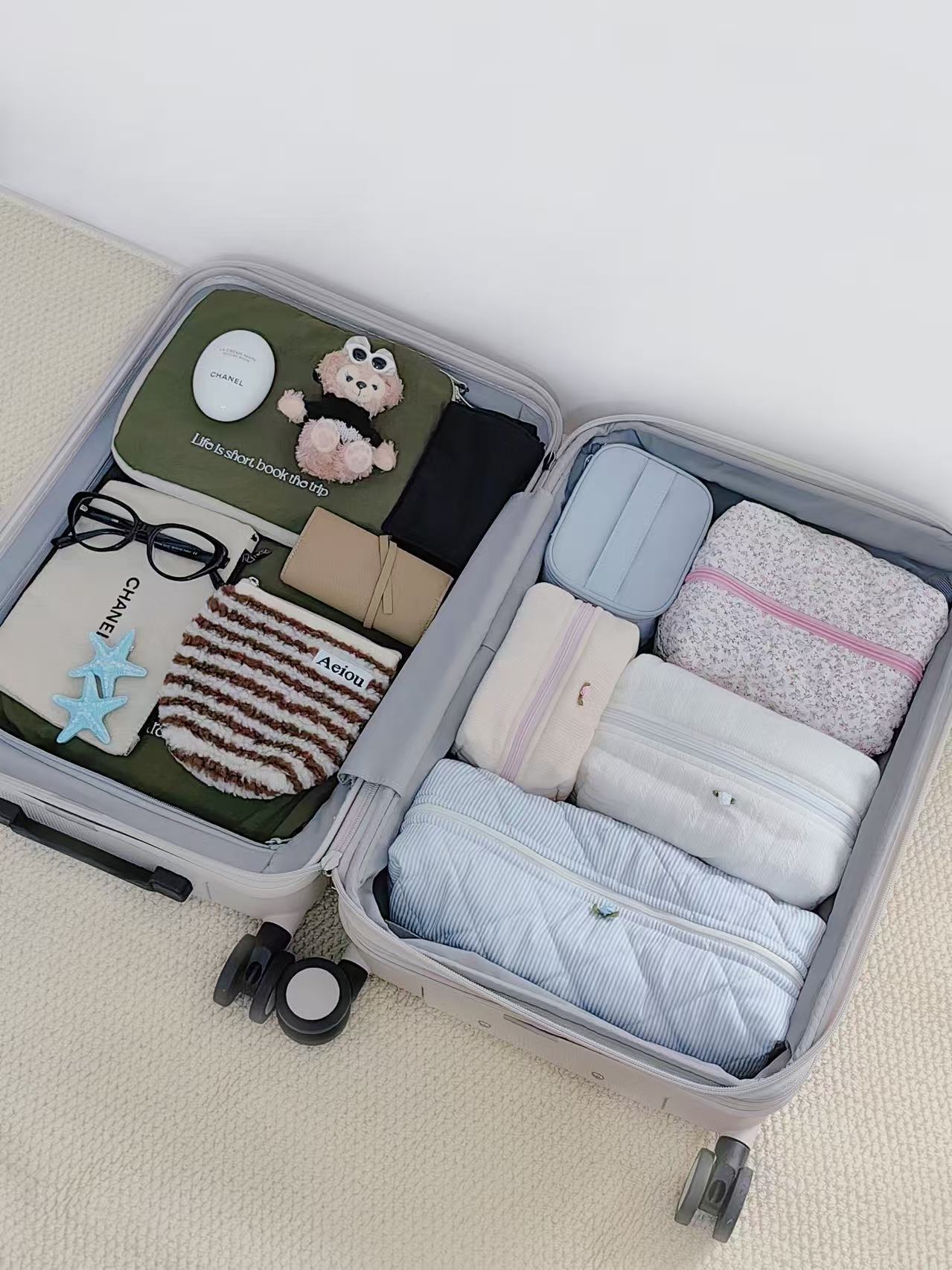
Packing for China this winter?
Before you close your suitcase,
check three things.
That halal beef jerky you’re bringing
from home may not be allowed through
Chinese customs. Your hotel might
not have the bathroom washing facilities
you’re used to. And the power bank
you normally travel with might not
meet China’s domestic flight rules.
None of these needs to spoil your trip.
They’re simply easier to sort out
before you leave.
If you’re travelling from Malaysia,
Indonesia, Singapore or another
warm-weather country, there’s also
the small matter of packing for
temperatures you may never have
experienced before.
Here’s a practical Muslim winter
packing guide for China from
December to February, covering
halal food, prayer arrangements,
personal hygiene, winter clothing,
medication and the airport rules
worth checking before you fly.
And yes, there’s a seven-day
packing checklist you can screenshot
further down.
The Short Version — Save This First
Halal food:
Don’t assume that halal-certified
meat products can enter China.
Check the customs rules before packing.
Prayer:
A compact prayer mat may be useful,
but knowing where you can pray
during long sightseeing days
matters more than the mat itself.
Bathrooms:
Water-cleansing facilities vary.
Ask about your hotel bathroom
before booking if this matters to you.
Winter clothing:
Pack for the coldest place
on your itinerary, not just
the city where your flight lands.
Airport rules:
Check medication, food
and power bank requirements.
Different items have different rules.
Family travel:
Keep children’s spare gloves,
suitable medication and
meal arrangements easy to manage.
First, Let’s Sort Out the Things
Ordinary Packing Guides Forget
China has a rich Muslim food heritage,
historic mosques and established
Muslim communities.
But facilities and services
differ between cities, hotels
and tourist attractions.
Preparing for those differences
doesn’t mean expecting a difficult trip.
It simply means knowing
what matters to you.
Save a Few Chinese Halal Food
Phrases on Your Phone
This takes about two minutes,
weighs absolutely nothing
and may be one of the most
useful things you prepare.
English restaurant searches
aren’t always the easiest way
to find suitable food in China.
Learning the characters
清真,
meaning halal, can help.
Save these phrases
before your trip.
清真餐厅
Halal restaurant
我是穆斯林,只吃清真食品。
I’m Muslim and only eat halal food.
这个菜有猪肉、猪油或料酒吗?
Does this dish contain pork,
lard or cooking wine?
你们有清真认证吗?
Do you have halal certification?
Take a screenshot.
You can show the Chinese text
to restaurant staff
instead of trying to
pronounce everything.
Amap (高德地图) can also help
you search for 清真餐厅
near your hotel.
Of course, a map listing
or a restaurant sign
doesn’t independently verify
every halal requirement.
If you follow particular
certification or preparation
standards, check those directly.
Confirm Your First Few Halal Meals
Before Arriving
This isn’t really
something you pack.
But it’s worth putting
on the checklist anyway.
After a long flight,
you probably won’t feel
like spending an hour
comparing restaurant listings.
Before leaving home,
save a couple of suitable
dining options near your hotel.
Check recent opening information,
restaurant location
and the halal requirements
that matter to you.
For a winter trip involving
remote destinations such as
Snow Town or mountain attractions,
meal planning is even more important.
A major city may have several
suitable restaurants.
A remote ski resort
might not offer the same choice.
Find out where lunch will
come from before leaving
for a full-day snow excursion.
If you’re using a travel agency,
ask how restaurants are selected,
not just whether the itinerary
says “halal meals included.”
Familiar Snacks — But Check
What China Allows Through Customs
This is an easy mistake
to make when packing
for an unfamiliar destination.
You see your favourite
halal rendang, beef jerky
or chicken floss
and think:
“I’ll bring some, just in case.”
The problem?
Halal-certified does not
automatically mean
customs-approved.
China’s passenger-entry
quarantine restrictions
include raw and cooked meat
and meat products.
Various animal-derived
dairy and egg products
are also restricted.
Being cooked, vacuum-packed
or labelled halal doesn’t
create an automatic exemption.
Be careful with meat-based
instant meals and seasonings, too.
Check the complete ingredient list
rather than assuming an instant
noodle packet is fine.
If you’d like familiar snacks
for children or long journeys,
check the current customs rules
for the exact product
before packing.
Don’t assume all packaged
plant-based products are
automatically permitted either.
When in doubt,
ask customs in advance
and declare items where required.
The distinction to remember:
Halal certification concerns
religious dietary requirements.
Customs clearance concerns
the country’s import rules.
One doesn’t replace the other.
A Foldable Prayer Mat,
If You Find It Useful
A lightweight travel prayer mat
can be convenient during
a multi-city holiday.
It fits easily into a day bag,
takes little suitcase space
and is simpler to carry
than a thick household mat.
A mat is a practical accessory,
not a requirement we’re
suggesting for every traveller.
More importantly,
carrying one doesn’t guarantee
that every tourist attraction
has a suitable place to pray.
If your schedule includes
long sightseeing days,
speak with your guide
or check the available
facilities beforehand.
Keep the mat clean and dry,
especially during snow excursions.
Your Prayer-Time Information
and a Realistic Daily Schedule
China covers a large area,
so prayer times vary
between destinations.
Before departure,
check that your preferred
prayer-time app works
with the locations
you’ll be visiting.
Confirm its calculation
settings and Qibla information
using a reliable method.
If you’re travelling between
cities or spending a long day
in the mountains,
save the information
for offline access.
And don’t leave your
prayer arrangements until
you’re already halfway
through a sightseeing tour.
Ask about suitable places
and available facilities
before the day begins.
For Friday prayer,
confirm mosque access
and transport arrangements
in advance.
Individual religious practices
and travel considerations differ,
so plan according to
your own requirements.
A Portable Cleansing Bottle —
Especially If Water-Friendly
Bathrooms Matter to You
If you’re used to bathrooms
with a handheld bidet sprayer,
it’s worth checking
your hotel facilities.
Some hotels provide
water-cleansing facilities.
Others may not.
A compact, refillable
cleansing bottle can be
a useful personal hygiene item.
Keep it empty when
passing through airport security,
then refill it where permitted
and appropriate.
Follow local bathroom rules
and avoid leaving floors wet
or creating a slipping hazard.
One important distinction:
personal cleansing after
using the toilet and wudu
are not the same practice.
For wudu, check whether
your hotel or planned prayer
stops have suitable washing
facilities and water access.
It’s better to find out
beforehand than to rely
on an unsuitable public bathroom.
Tissues, a Quick-Drying Towel
and a Waterproof Pouch
These three items take
almost no luggage space.
Keep some tissues handy,
especially when visiting
public washrooms or
travelling between cities.
A small quick-drying towel
is useful when washing
facilities are available.
And a waterproof pouch
helps keep damp items
separate from the rest
of your day bag.
Nothing particularly exciting,
but practical enough
to earn their place
in the suitcase.
Now, What Should You Actually Wear
in China from December to February?
Before buying winter clothes,
check your destinations.
Chengdu, Shanghai and Harbin
don’t experience the same
kind of winter.
Neither does downtown Chengdu
compared with the snow mountains
outside the city.
The easiest approach is to
pack for the coldest part
of your itinerary and
use removable layers
elsewhere.
Comfortable Winter Layers
for Women Who Wear Hijab
If you wear hijab,
winter layering is worth
thinking through before
you start buying clothes.
The aim is to stay warm
while feeling comfortable
in the clothing you prefer.
A breathable hijab,
a suitable undercap
if you use one,
and a warm outer layer
can work well together.
You may also prefer
a longer insulated coat
for additional coverage
during sightseeing.
Try the full outfit
at home before travelling.
Can you move comfortably?
Does the hood fit properly?
Is the fabric too bulky
around your neck?
If you’re skiing,
follow the resort’s
helmet-fitting guidance.
Bulky layers underneath
a helmet can interfere
with a safe fit.
For snow and icy pathways,
make sure long clothing
doesn’t interfere with
your footing or movement.
There isn’t one winter outfit
that suits every Muslim woman.
Choose what works for
your comfort, preferences
and activities.
Two or Three Good Thermal Sets
Beat a Suitcase Full of Sweaters
If you’re travelling
from a tropical country,
thermal base layers
are worth prioritising.
They sit underneath
your everyday clothing
and help you stay comfortable
without adding unnecessary bulk.
For a week-long trip,
two or three sets
can be a practical starting point
if you can rotate or wash them.
If you’re skiing,
choose moisture-managing
base layers suitable
for active winter use.
Cotton that becomes damp
can feel uncomfortable
in cold conditions.
The idea is simple:
adjust the layers,
not the entire outfit,
whenever the temperature changes.
One Proper Winter Jacket
That Suits Your Coldest Destination
You probably don’t need
three enormous winter coats.
One suitable outer jacket,
combined with good layers,
is often more practical.
If you’re visiting Harbin
in January, you’ll need
significantly more cold-weather
protection than you would
for a mild southern-China trip.
Look for appropriate
insulation, wind protection
and water resistance
for your activities.
If your itinerary includes
several hours of snow play,
consider suitable outer trousers
as well.
For everyday city sightseeing,
clothing you can adjust
between heated buildings
and cold streets
will be much more comfortable.
Proper Winter Shoes —
Please Don’t Choose Them
Just for the Photos
Imagine getting to
a beautiful snow village,
then spending the afternoon
worrying about slipping.
That’s not the experience
you’re travelling for.
For icy or snowy conditions,
choose footwear with
suitable traction,
insulation and protection
against moisture.
Smooth-soled fashion boots
can be uncomfortable
and unsafe on slippery paths.
Make sure your winter shoes
fit comfortably with warm socks.
But don’t automatically
buy heavy snow boots
for every China trip.
If you’re mainly visiting
milder cities,
comfortable walking shoes
may be more useful.
Spare Gloves and Socks —
Especially for Children
Kids can have a brilliant
time playing in snow.
They can also get
their gloves wet
remarkably quickly.
Keep a spare pair
in your day bag.
Extra warm socks
can be useful too,
particularly if your
family is spending
several hours outdoors.
Choose gloves designed
for the weather and activity,
rather than relying
only on thin fashion gloves.
And plan time to warm up.
A comfortable family
winter holiday shouldn’t
depend on everyone
staying outside
until they’re miserable.
Lip Balm, Moisturiser,
Sunscreen and Sunglasses
Cold air and heated
hotel rooms can be
uncomfortable for your skin.
Bring a lip balm
and moisturiser
you already know
work well for you.
If you’re visiting
sunny snow destinations,
sunglasses with UV protection
and sunscreen are useful.
Bright sunlight reflecting
off snow can be intense,
especially at higher elevations.
These are small things,
but they’re easy
to forget when packing.
Two Things to Check Before
You Get to the Airport
They’re not exciting
packing-list items.
But unlike forgetting
an extra sweater,
getting these wrong
can cause real problems.
Your Regular Medication
and the Right Medical Documents
If you take regular medication,
check the applicable
Chinese entry rules
before you travel.
Ordinary personal-use medicines
that don’t contain controlled
narcotic or psychotropic substances
are generally subject
to reasonable-quantity
requirements and customs checks.
Controlled medications
may have additional
documentation, quantity
and declaration requirements.
Keep medicines in
their original packaging
where possible.
Bring prescriptions
or relevant medical documents
when appropriate.
If you’re unsure
whether a particular medicine
is permitted, confirm it
with the relevant authorities
before departure.
A small first-aid kit
can also be useful.
Consider items such as
adhesive bandages,
blister plasters
and personal medication
suitable for your needs.
For children, consult
a healthcare professional
about age-appropriate medicines.
If your itinerary includes
high-altitude destinations,
seek medical advice
when appropriate.
Important:
A medicine being sold
without a prescription
in your home country
does not automatically
mean the same rules
apply when entering China.
Check Your Power Bank,
Then Set Up Your Phone for China
A power bank is useful
during winter sightseeing.
Cold weather can reduce
usable battery performance,
especially when your phone
is exposed to low temperatures
for long periods.
But there’s an important
aviation rule to know.
Since June 28, 2025,
China’s civil aviation authority
has prohibited passengers
from carrying power banks
without clear CCC (3C) markings,
with unclear markings,
or from recalled models
or batches on domestic flights.
This is particularly relevant
if you’re flying between
Chinese cities during your trip.
Check your power bank
before leaving home,
not when you’re standing
at airport security.
Battery capacity and
airline safety requirements
also apply.
Power banks should be carried
in cabin baggage,
not checked luggage,
subject to the current rules.
While you’re checking
your electronics,
prepare your mobile data,
payment apps
and offline travel details.
Eligible international cards
can be linked to supported
Chinese mobile payment services,
including Alipay
and WeChat Pay.
Compatibility and individual
transactions may vary,
so keep a backup.
Save hotel addresses
in Chinese,
your travel bookings
and important contact details
somewhere you can access offline.
Before flying:
Check the CCC marking,
battery rating,
recall status
and your airline’s
current battery policy.
Save These Chinese Questions
Before Booking Your Hotel
This might be the most useful
part of the entire guide
if you’re planning
your accommodation yourself.
You can copy the Chinese
and send it directly
to your hotel.
Asking About Halal Breakfast
请问酒店可以提供清真早餐吗?
Can the hotel provide
halal breakfast?
A hotel may offer
suitable options,
but don’t assume
every breakfast buffet
meets your dietary requirements.
If breakfast is important,
ask what can actually
be provided.
Asking About Nearby Halal Restaurants
请问酒店附近有清真餐厅吗?
Are there halal restaurants
near the hotel?
Sometimes a hotel
near suitable restaurants
is more convenient
than a luxury hotel
with limited dining options.
Asking About Bathroom Facilities
请问房间卫生间有马桶旁边的
手持冲洗喷头吗?
Does the room bathroom
have a handheld bidet sprayer
next to the toilet?
This wording asks
about the specific fixture
rather than assuming
every hotel uses
the same term.
Asking About Prayer Arrangements
请问酒店有没有适合礼拜的
安静、干净的空间?
Does the hotel have
a quiet, clean space
suitable for prayer?
A hotel may or may not
have a dedicated prayer room.
This question allows
the staff to explain
what’s available.
Asking About Washing Facilities
请问酒店有没有方便礼拜前
净礼的用水设施?
Are there suitable water
facilities for washing
before prayer?
Ask for clarification
if the hotel isn’t familiar
with your requirements.
A useful habit:
If particular bathroom
or meal facilities are essential
to your stay, ask the hotel
to confirm them before payment.
Hotel star ratings
do not independently guarantee
halal meals or
water-friendly bathrooms.
What I’d Put on a 7-Day
Muslim Winter Travel Packing List
Let’s make this practical.
Imagine a seven-day trip
with city sightseeing
and one dedicated snow day.
You probably don’t need
seven entirely different
winter outfits.
Here’s a reasonable
starting point.
| Item | Suggested Amount | Worth Knowing |
|---|---|---|
| Thermal tops | 2–3 |
Adjust for laundry access and outdoor activity |
| Thermal bottoms | 1–2 |
More may be needed for severe cold |
| Sweaters or fleece | 2 |
Choose layers you can mix |
| Winter jacket | 1 main jacket |
Match the coldest destination |
| Everyday trousers | 2–3 |
Based on preference and weather |
| Snow trousers | 1 if needed |
Especially for extended snow play |
| Warm socks | 5–7 pairs |
Include spare socks for wet snow days |
| Gloves | 1–2 pairs |
Spare pair especially useful for children |
| Winter headwear | As preferred |
Include suitable hijab layers if worn |
| Walking shoes | 1 pair | For city sightseeing |
| Snow footwear | 1 pair if needed |
For icy or snowy conditions |
| Prayer mat | 1 if useful | Foldable travel size |
| Cleansing bottle | 1 if useful |
Keep empty through security |
| Medicine | Personal needs |
Check entry rules and documents |
| Travel documents | As required |
Keep important details accessible offline |
This is a sample list,
not a fixed requirement.
A seven-day trip to
Shanghai and Chengdu
needs different clothing
from a week in Harbin
and China Snow Town.
If your trip includes
extreme cold,
extended snow activities
or limited laundry facilities,
adjust accordingly.
For more detailed
destination-specific clothing advice,
see our
Chengdu & Sichuan Winter
Clothing and Packing Guide
.
Five Packing Mistakes
Worth Avoiding Before Flying to China
1. Assuming Halal-Certified Meat
Can Automatically Enter China
Religious food certification
doesn’t override
import restrictions.
Check meat-based foods,
animal-derived ingredients
and other restricted products
before packing.
Don’t rely on
vacuum packaging
as proof that
an item is permitted.
2. Booking a Hotel Without
Checking Important Facilities
A beautiful room photo
won’t tell you everything.
If halal breakfast,
water-friendly bathroom
facilities or particular
prayer arrangements matter,
confirm them directly.
Don’t assume that
every hotel offers
the same facilities.
3. Bringing a Power Bank
Without Checking Domestic Flight Rules
Your usual power bank
may be fine for one journey
but not comply with
the rules for
a Chinese domestic flight.
Check the CCC marking,
battery capacity
and current airline requirements
before you fly.
4. Packing for Chengdu City
When You’re Actually Going
to a Snow Mountain
This is an easy
mistake to make.
Chengdu may feel
relatively mild compared
with the snow attractions
in the surrounding mountains.
Check the weather
for every destination,
not just the city
where you’re staying.
Bring suitable shoes
and clothing
for the actual
snow activity.
5. Assuming Your Regular Medicine
Needs No Special Documentation
Some medicines
are subject to
additional restrictions
when entering China.
Confirm the rules
for your particular medication,
including any required
documents or declarations.
Don’t wait until
airport security
or customs inspection
to find out.
Visiting China During Ramadan?
Add These Questions to Your Planning List
If your winter travel dates
overlap Ramadan,
food and sightseeing schedules
may need additional planning.
For example, your hotel’s
normal breakfast hours
may not suit suhoor.
And a full-day sightseeing
excursion may affect
where you can arrange
a suitable iftar meal.
Before booking,
ask about available
meal arrangements,
prayer facilities
and schedule flexibility.
You may also want
to consider the physical
demands of winter activities
and seek individual medical
advice where appropriate.
Religious observance
and travel circumstances
vary between individuals.
This guide doesn’t prescribe
how you should observe
Ramadan while travelling.
It simply recommends
planning the practical
arrangements that matter
to you and your family.
A Few Questions Travellers
Usually Ask Before Packing
Can I bring halal food
from Malaysia or Indonesia to China?
It depends on the product
and its ingredients.
Chinese customs restrictions
include raw and cooked meat
and meat products,
along with several
other animal-derived products.
Halal certification
doesn’t create an exemption.
Check the current regulations
for the exact item.
Do Chinese hotels usually
have handheld bidet sprayers?
Bathroom facilities
vary between properties.
Some hotels offer
water-cleansing fixtures,
while others don’t.
If this matters to you,
contact the hotel
before confirming your booking.
Do I need a different packing list
for Harbin and Chengdu?
Yes, especially for winter clothing.
Harbin can experience
severe freezing temperatures,
while Chengdu city
generally has a milder winter.
Snow mountains near Chengdu
can be much colder
than the city itself.
Should I buy all my snow equipment
before travelling to China?
Not necessarily.
Some ski resorts rent
specialist equipment.
Check what’s included
before purchasing items
you’ll use only once.
Essential personal clothing
and suitable footwear
are worth arranging
before a remote snow excursion.
Screenshot This Before
Closing Your Suitcase 📱
Here’s the short checklist
to keep on your phone.
Faith & Food
- ☐ Chinese halal food phrases
- ☐ Confirmed dining options near hotels
- ☐ Customs-checked snacks, if needed
- ☐ Foldable prayer mat, if useful
- ☐ Prayer times and Qibla information
- ☐ Suitable prayer-stop planning
- ☐ Bathroom facilities checked
- ☐ Portable cleansing bottle, if useful
- ☐ Tissues and quick-drying towel
Winter Clothing
- ☐ Thermal base layers
- ☐ Suitable winter coat
- ☐ Winter-friendly hijab or headwear, if worn
- ☐ Warm trousers or snow trousers
- ☐ Shoes appropriate for snow and ice
- ☐ Warm socks and spare gloves
- ☐ Lip balm and moisturiser
- ☐ Sunscreen and UV-protective sunglasses
Travel Essentials
- ☐ Permitted medication and documents
- ☐ Power bank checked against flight rules
- ☐ Travel adapter and charging cables
- ☐ Mobile data arranged
- ☐ Payment method and backup
- ☐ Passport and travel bookings
- ☐ Hotel addresses saved in Chinese
- ☐ Travel insurance information
One last check:
make sure your packing list
matches the actual destinations
and weather conditions
on your itinerary.
Pack What Matters.
Enjoy the Trip.
A winter holiday in China
doesn’t have to mean
travelling with an
enormous suitcase.
And it shouldn’t mean
spending your holiday
worrying about where
to eat or how to manage
your daily arrangements.
The more you can confirm
before your trip,
from halal meals
to prayer stops
and hotel facilities,
the less you’ll need
to sort out after arrival.
Pack for the weather,
bring what matters
to you and your family,
and leave some room
for the things
you’ll discover in China.
If you’re sharing
the packing duties
with someone else,
send them this guide.
It’s much easier
when everyone knows
what’s actually needed.
Planning Your First Winter Trip to China?
Maybe it’s your family’s
first time seeing snow.
Perhaps you’re choosing
between Harbin and
the snow mountains
around Chengdu.
Or you simply want
to know how halal meals,
hotel arrangements
and prayer stops
can work during
a multi-city trip.
At Traverse China,
we help international
Muslim travellers plan
private journeys
with attention to
accommodation,
local transport,
halal dining preferences
and realistic daily schedules.
Tell us your travel dates,
group size and the places
you’re interested in.
You can also let us know
which arrangements matter
most to your family.
We’ll help you work
through the practical details
before you arrive.