

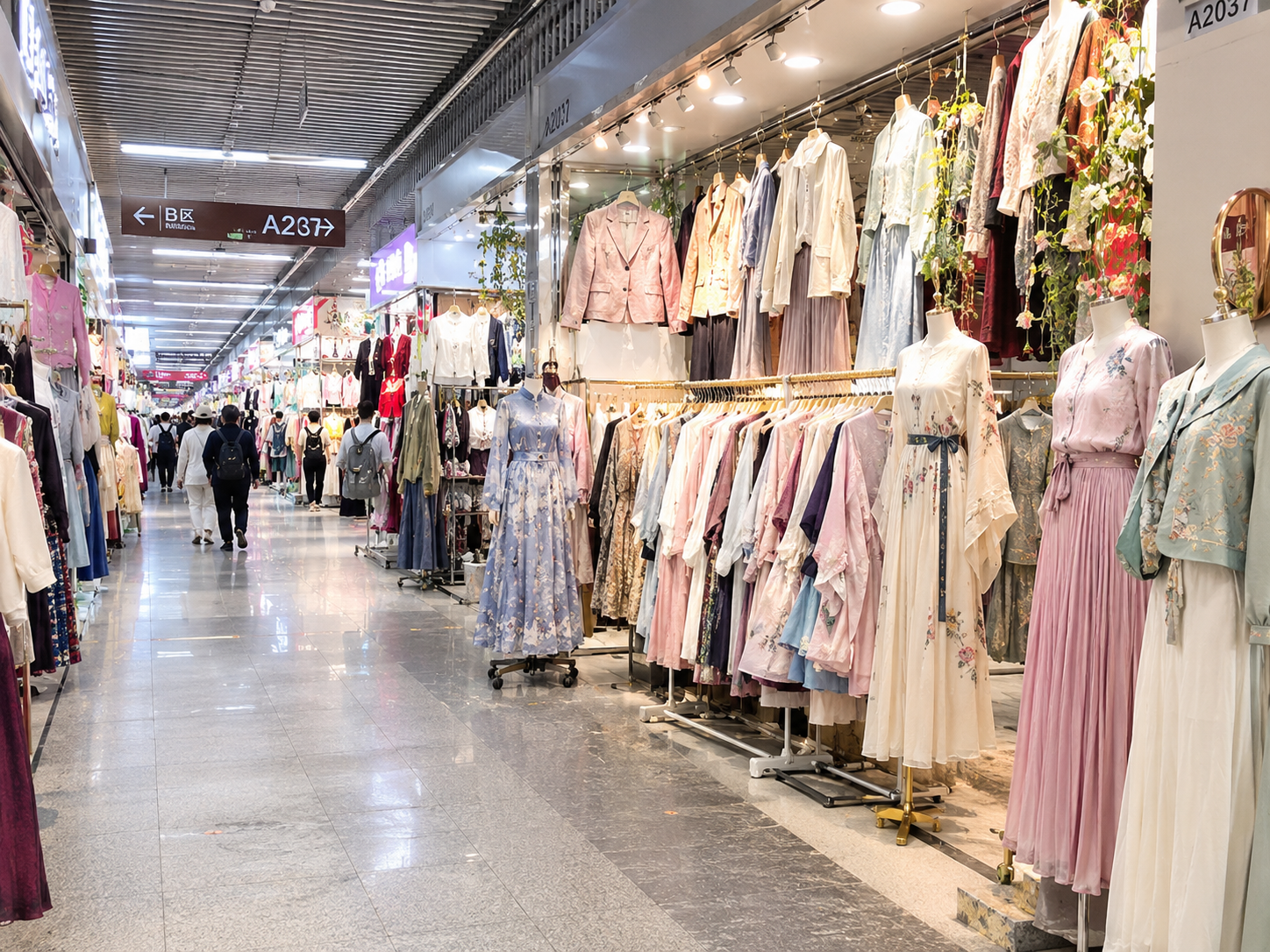
Fashion shopping in China goes well beyond large shopping malls and international brands. Guangzhou’s wholesale clothing districts, Chengdu’s local fashion markets and Hangzhou’s garment trading hubs offer a wider variety of styles and prices.
Many of these markets serve both boutique owners and individual shoppers. You can find everyday clothing, trendy women’s fashion, long dresses, loose-fitting outfits and accessories. However, some vendors sell only in bulk, certain markets close earlier than regular malls, and product quality and return policies vary.
This China fashion shopping guide covers where to go and how local buyers compare products, ask about prices and shop more efficiently.
1. Three Chinese Cities Worth Exploring for Fashion Shopping
Guangzhou: Wholesale Clothing and Trend-Led Fashion
Guangzhou is a major clothing trading city with several wholesale districts catering to different budgets and styles. It is a useful starting point if you want to compare designs, fabrics and prices.
Shahe Clothing Wholesale District (沙河服装批发商圈)
Shahe is known for affordable everyday clothing, basic women’s wear, T-shirts, trousers and casual styles. Many stalls focus on wholesale customers, and some operate mainly in the morning.
Best for: Budget clothing, basic pieces and small boutique sourcing.
Local tip: Save pictures of the styles you want. Compare fabric, stitching and minimum order quantities at several stalls before buying.
Shisanhang Clothing Wholesale District (十三行服装批发商圈)
Shisanhang, including New China Mansion and nearby buildings, is one of Guangzhou’s best-known women’s fashion trading areas. Expect trendy clothing, office wear, dresses and youthful styles.
Best for: Fashion-focused shoppers and buyers looking for current women’s styles.
Local tip: Browse your target floors first, then record stall numbers, item codes and prices. Popular styles change quickly, so ask whether repeat orders are possible.
Guangzhou Baima Clothing Market (广州白马服装市场)
Located near Guangzhou Railway Station, Baima is a long-established garment market where shoppers can compare tailoring, fabrics and different clothing price ranges.
Best for: Quality-conscious shoppers and boutique clothing buyers.
Local tip: Check actual garment measurements and available colors, and ask whether the same design can be restocked later.
Chengdu: Local Fashion Markets and Youthful Styles
Chengdu’s clothing markets combine wholesale and retail shopping. They are useful for travelers seeking everyday fashion, footwear, bags and an experience closer to how local residents shop.
Hehuachi Wholesale District (成都荷花池批发商圈)
In Chengdu’s Jinniu District, Hehuachi is an established commercial area. Jinhehua International Fashion City and surrounding trading buildings offer women’s and men’s clothing, footwear and accessories across different price ranges.
Best for: Affordable clothing, everyday outfits and accessories.
Local tip: Choose a specific market building based on what you want to buy. Some sellers accept individual purchases; others set wholesale minimums.
Chengdu Jiulong Plaza (成都九龙广场)
Jiulong Plaza is in the Qingnian Road shopping area, close to Chunxi Road. It is known locally for fashion clothing, younger women’s styles and accessories.
Best for: Individual shopping, trendy women’s clothing and smaller purchases.
Local tip: Compare styles and prices on different floors. Nearby Chunxi Road is also useful for seeing how local market fashion compares with branded retail shops.
Chengdu International Trade City (成都国际商贸城)
This large wholesale complex sells various categories, including clothing, children’s wear, shoes, hats and household goods. It is better suited to buyers with a clear product list than to visitors looking for only a few outfits.
Best for: Buyers sourcing several product categories or purchasing for a small business.
Hangzhou: Urban Womenswear and Minimalist Styles
Hangzhou Sijiqing Garment Market (杭州四季青服装市场)
Sijiqing is a major clothing trading district in Hangzhou, particularly known for its variety of women’s wear. Look for office clothing, knitwear, dresses, coordinated sets and seasonal urban styles.
Best for: Minimalist outfits, smart casual clothing and everyday women’s fashion.
Local tip: Sijiqing is a group of markets rather than one building. Identify the specific market that carries your preferred clothing category before going.
2. Modest Fashion Shopping for Muslim Travelers
China’s mainstream fashion markets can offer clothing suitable for modest dressing, although most items are not specifically designed as Muslim apparel.
Long Dresses and Loose-Fitting Sets
Look for long-sleeved maxi dresses, ankle-length skirts, oversized shirts, wide-leg trousers and two-piece sets. Check necklines, sleeve coverage, slits and fabric transparency; a loose-looking garment may still cling when worn.
Long Outerwear and Layering Pieces
Long cardigans, relaxed blazers, trench coats and lightweight jackets can work well for layered outfits. Travelers from Malaysia, Singapore and Indonesia may prefer breathable cotton, linen and other lightweight fabrics, while checking that they provide enough coverage.
Hijabs, Scarves and Accessories
Some markets sell lightweight scarves, shawls and plain-colored fabrics that may work for hijab styling. Check the dimensions, opacity and fit: not every fashion scarf is suitable as a hijab.
Abayas, Jubah and Specialized Modest Wear
If you are specifically sourcing abayas, jubah or other traditional Muslim garments, contact specialist suppliers in advance using reference photos and Chinese search terms. General womenswear markets cannot be assumed to have dedicated Muslim clothing stalls.
3. Five Local Buying Tips for China’s Clothing Markets
1. Research Styles Using Chinese Apps
Use Xiaohongshu (小红书) to look up clothing styles, market information and shopping experiences before your visit. Useful search phrases include:
- 广州十三行女装 — Guangzhou Shisanhang women’s clothing
- 广州沙河服装批发 — Guangzhou Shahe clothing wholesale
- 成都荷花池女装 — Chengdu Hehuachi women’s clothing
- 成都九龙广场穿搭 — Chengdu Jiulong Plaza outfits
- 杭州四季青女装 — Hangzhou Sijiqing women’s clothing
- 长袖连衣裙 / 宽松套装 / 长款衬衫 — Long-sleeved dresses / loose sets / long shirts
Save pictures to show vendors. Social media is useful for inspiration, but confirm current prices and stock directly with the seller.
2. Compare Products Before Buying
Browse similar stalls before making a larger purchase. Compare prices, fabric quality, seams, zippers, buttons and fit. Chinese S, M and L sizes do not always match international sizing, so ask for actual measurements in centimeters, especially bust, shoulders and garment length.
3. Save These Useful Chinese Shopping Phrases
| Chinese phrase | Meaning |
|---|---|
| 这件多少钱? | How much is this? |
| 可以零售吗? | Can I buy just one piece? |
| 几件起批? | What is the minimum wholesale quantity? |
| 可以混批吗? | Can I mix styles, colors or sizes? |
| 有其他颜色吗? | Do you have other colors? |
| 可以试穿吗? | Can I try it on? |
| 有现货吗? | Is it in stock? |
| 可以补货吗? | Can I reorder later? |
| 可以寄到酒店吗? | Can you deliver it to my hotel? |
If a vendor does not speak English, showing the Chinese text in a translation app is often the easiest approach.
4. Ask About Quantity Discounts
Some wholesale stalls offer different prices depending on how many pieces you buy, but bargaining is not possible everywhere. Ask for the single-item price first, then the bulk price. For personal shopping, quality and comfort may matter more than finding the lowest possible price.
5. Keep Seller and Product Details
Save stall numbers, item codes, prices and contact information. For repeat orders, sellers may communicate through WeChat. On a first order, confirm the sample, quantities, delivery date and return terms before paying a large amount.
4. Payment, Delivery and International Shipping
Paying With Alipay or WeChat Pay
Alipay and WeChat Pay are widely used in Chinese clothing markets. Eligible overseas bank cards can be linked to these apps, but limits, fees and merchant compatibility vary. Set up mobile payment before shopping and keep a small amount of Chinese yuan (RMB) in cash as a backup.
Small Purchases and Hotel Delivery
You can carry a few purchases yourself or ask whether the vendor can deliver to your hotel. Confirm delivery charges, arrival time and whether your hotel accepts parcels on behalf of guests.
Shipping Commercial Orders Overseas
For goods intended for resale in Malaysia, Singapore, Indonesia or another country, consult a reputable international freight provider. Confirm:
- Shipping charges and chargeable weight
- Packaging and estimated transit time
- Customs documents, clearance responsibilities and import taxes
- Procedures for lost or damaged goods
Commercial stock may require import declarations, duties and labeling compliance. It should not automatically be treated as ordinary personal luggage.
Confirm Return Policies Before Paying
Wholesale sellers may not follow the same return rules as retail malls. Ask whether returns or exchanges are accepted, how defects are handled and who pays shipping costs if the wrong size or color is sent. Avoid counterfeit branded clothing or products with uncertain trademark authorization.
5. Practical Tips for Muslim Travelers
Finding Halal Food
Search for 清真餐厅 (halal restaurant) or 清真面馆 (halal noodle restaurant) on Amap (高德地图) to find possible places to eat near the market. Vegetarian or pork-free dishes are not automatically halal; verify preparation standards if required.
Planning Prayer Breaks
Do not assume an ordinary clothing wholesale market has a prayer room. Check nearby mosques or other suitable places to pray before setting out.
Checking Market Hours
Some wholesale markets are most active in the morning and close earlier than shopping malls. Confirm the hours of the specific building you plan to visit, especially around Chinese New Year when some markets close or operate on reduced schedules.
6. Frequently Asked Questions
Can I take photos inside Chinese clothing wholesale markets?
Policies vary by market and individual stall. Some vendors do not allow photography of their designs, displays or prices, so ask for permission first.
Can I find plus-size clothing in Chinese fashion markets?
Some vendors carry extended sizes, but availability varies. Search for 大码女装 (plus-size women’s clothing) or 宽松女装 (loose-fit women’s clothing), and choose items by their actual measurements in centimeters.
Do individual tourists need a sourcing agent?
Usually not for a few personal purchases. If you are managing large orders, several suppliers, quality inspections or international shipping, a professional sourcing agent may be useful. Agree on fees and responsibilities before hiring one.
When should I shop for next season’s clothing?
Wholesale markets often offer next-season styles in advance. Timing varies by market and vendor, so ask when new collections arrive if you are looking for a particular season.
Final Thoughts
From Guangzhou’s specialized wholesale districts to Chengdu’s local fashion markets and Hangzhou’s varied womenswear hubs, China offers many ways to explore fashion shopping beyond major malls. Knowing which market suits your needs, how to inspect garments and what to confirm before paying can make the experience more efficient and rewarding.