

When booking a trip in China, you may come across private tours, private groups, customized tours and car hire with a driver. The labels sound similar, but they describe different arrangements. A travel agency-organized inbound tour is not the same service as hiring a car for independent sightseeing.
There’s also an important legal distinction: Chinese law requires travel agencies organizing or receiving inbound tour groups to arrange guide accompaniment as prescribed. Here’s how to understand the booking terms and compare what you’re being offered.
1. What Do the Different Booking Terms Mean?
| Term | What it usually describes | What to check |
|---|---|---|
| Private group tour (私家团) | A tour arranged for your own family or companions, without unrelated travelers joining your group | Guide language, itinerary, hotels and inclusions |
| Independent group (独立成团) | Your own party forms a separate group, sometimes using a ready-made itinerary | Minimum group size and how much can be changed |
| Customized tour (私人定制游) | A trip designed or adjusted around your interests and requirements | Scope of customization and change fees |
| Car hire with driver (包车) | Transportation with a vehicle and driver under agreed terms | Route, hours, mileage, vehicle charges and whether other services are included |
These are common commercial descriptions, not four legally defined quality grades. They can overlap: a family might book a customized private group tour with its own vehicle and an English-speaking guide. What matters is the actual service agreement.
2. Are Guides Required for Foreign Tourist Groups in China?
Yes, for the inbound tour groups covered by the law. Article 36 of the Tourism Law of the People’s Republic of China requires travel agencies that organize or receive inbound tour groups to arrange a tour guide to accompany the group throughout the tour, as prescribed. Under the Regulations on Travel Agencies, guides assigned by travel agencies must hold the required tour guide credential.
A driver alone should not be presented as a substitute for the guide required for such an organized inbound group. If you’re booking a private tour through a travel agency, ask how guide services are arranged, including the language, dates and locations covered.
3. Does a Private Tour Mean a Fully Flexible Itinerary?
Not necessarily. A private group tells you who is traveling together, while customized describes how the trip is planned. You can book an existing route for your family alone, or ask an operator to design something around your interests, budget and pace.
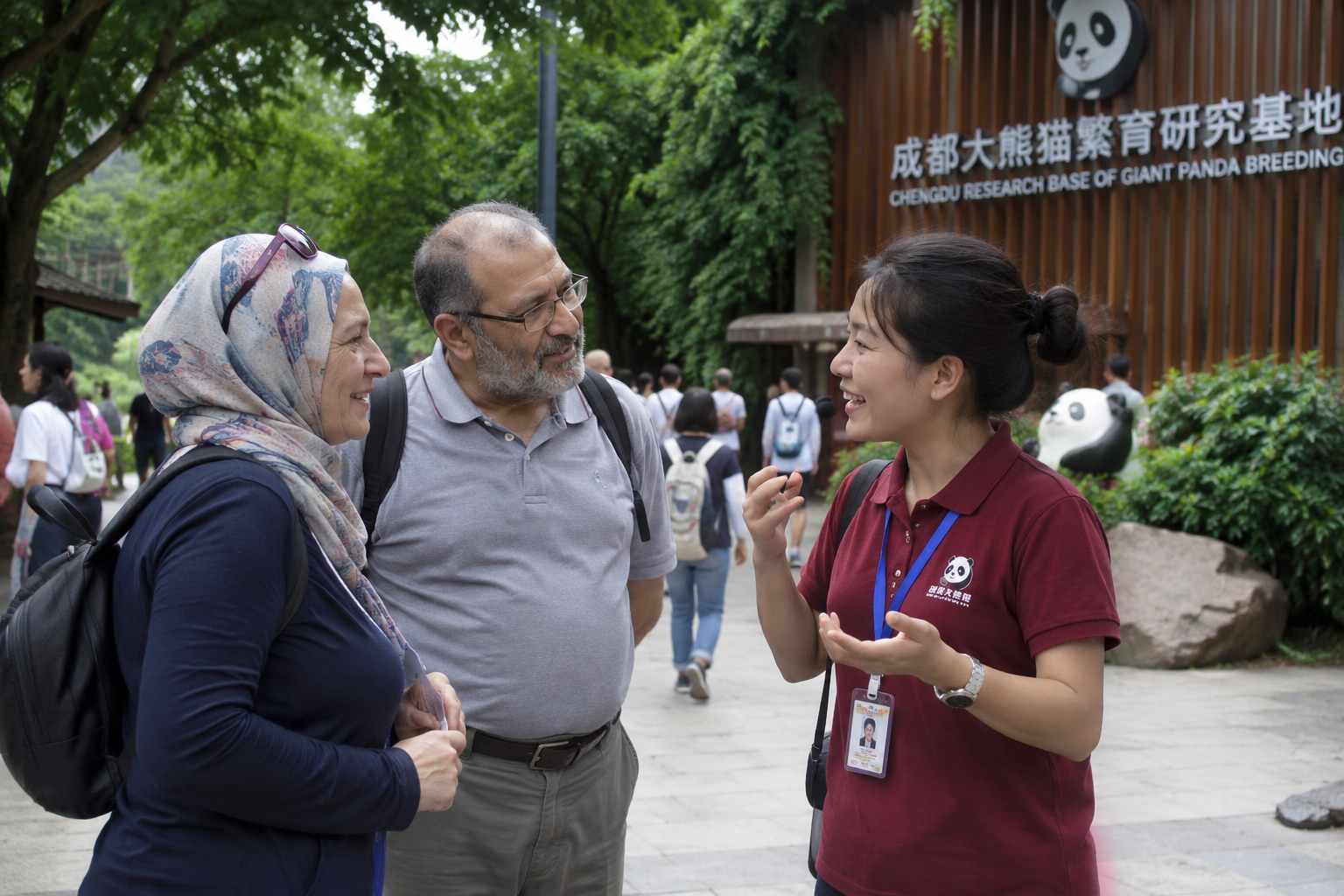
For example, one family visiting Chengdu may want a ready-made city and mountain itinerary with private transport. Another may prefer shorter driving days, specific hotel locations and more time for food or cultural activities. Both can be private trips, but only the second may need substantial customization.
Once accommodation, train tickets or attraction reservations are confirmed, changes may involve fees or availability limits. A private booking does not automatically mean unlimited free changes.
4. Why Do Similar Private-Tour Quotes Cost Different Amounts?
Two operators can quote for the same number of travelers and days yet include different services. Compare an itemized total, not only the headline price.
| Check | Questions worth asking |
|---|---|
| Guide | Which language? Which dates and cities? Who provides the guiding? |
| Transport | What vehicle and luggage capacity? Are airport transfers, tolls, parking and overtime included? |
| Accommodation | Which hotels or agreed standards? Breakfast and room configuration? |
| Sightseeing | Are admission tickets, cable cars and scenic-area shuttles included? |
| Food and other costs | Which meals are included? Are optional activities charged separately? |
| Price basis | Is the quote per person, per group or per vehicle? What is the final cost for your party? |
What About a “No-Shopping Tour”?
Chinese listings sometimes use chunwan tuan (纯玩团), broadly meaning a tour marketed without scheduled shopping stops. This says nothing about whether the group is private. China’s Tourism Law also regulates shopping arrangements and separately paid activities. Look at the actual itinerary and terms rather than relying on the marketing label.
5. What to Confirm Before Paying
- Group arrangement: Is the tour exclusively for your party, and is there any minimum number of travelers?
- Guide coverage: Which guide services and languages are included, and how are they arranged throughout the trip?
- Written inclusions: Are accommodation, transportation, meals, tickets and optional activities listed clearly?
- Changes and cancellations: What happens if you change plans or weather closes an attraction?
- Special requirements: Can the operator actually accommodate halal meals, prayer breaks, accessibility needs or other requests?
Article 58 of China’s Tourism Law requires package-tour contracts to be in writing and to specify matters including itinerary, transport, accommodation, meals, fees and responsibilities. This requirement should not be confused with the contract terms for every standalone transport booking.
If all you need is a vehicle and driver, compare legitimate transport services on their own terms. If you’re booking a travel agency-organized inbound tour, check the guide arrangements and the complete travel-service agreement. To discuss a coordinated private trip, you can contact Traverse China. For Muslim-specific planning, see our Muslim travel guide.
Information reviewed: 12 November 2026. Legal references: Tourism Law of the People’s Republic of China (Articles 35, 36, 58 and 96); Regulations on Travel Agencies (Article 31). The terms used in tour listings and the services included vary by provider.