

Travel around China and you’ll see attractions advertised as “5A” or “AAAAA”. Elsewhere, you’ll see the UNESCO World Heritage label. Both sound prestigious, but they tell you different things about a place.
Mount Huangshan carries both labels. Shanghai’s Oriental Pearl Tower is a 5A attraction but not a UNESCO World Heritage Site. And the Grand Canal is UNESCO-listed without being one single ticketed attraction. Here’s why.
1. What Does 5A Mean in China?
China grades tourist attractions from 1A to 5A, with 5A (AAAAA) the highest level. It is a Chinese tourism quality rating, not an international heritage designation.
The current national standard, GB/T 17775-2024, took effect on 1 March 2025. It covers the value of the tourism resources as well as matters visitors encounter on the ground, including access, visitor facilities and services, safety, environmental protection and management.
A mountain with excellent scenery does not receive 5A status for its views alone. The attraction must also meet the applicable standards for operating as a tourist destination.
However, a 5A label does not promise an English-speaking guide, step-free access to every path or a single ticket that covers every cable car and shuttle. Those details still need checking.
2. What Does UNESCO World Heritage Mean?
A UNESCO World Heritage Site is recognised for its Outstanding Universal Value—cultural or natural significance considered important to humanity as a whole.
To be inscribed on the World Heritage List, a nominated property must meet at least one of UNESCO’s ten selection criteria, together with requirements concerning protection, management and, where relevant, integrity and authenticity. The World Heritage Committee makes the inscription decision.
The list includes cultural, natural and mixed properties. It does not award stars or A-levels. More importantly for visitors, UNESCO inscription does not measure the quality of a ticket office, the convenience of public transport or the availability of tourist services.
3. Three Places That Show the Difference
Mount Huangshan: Both Labels
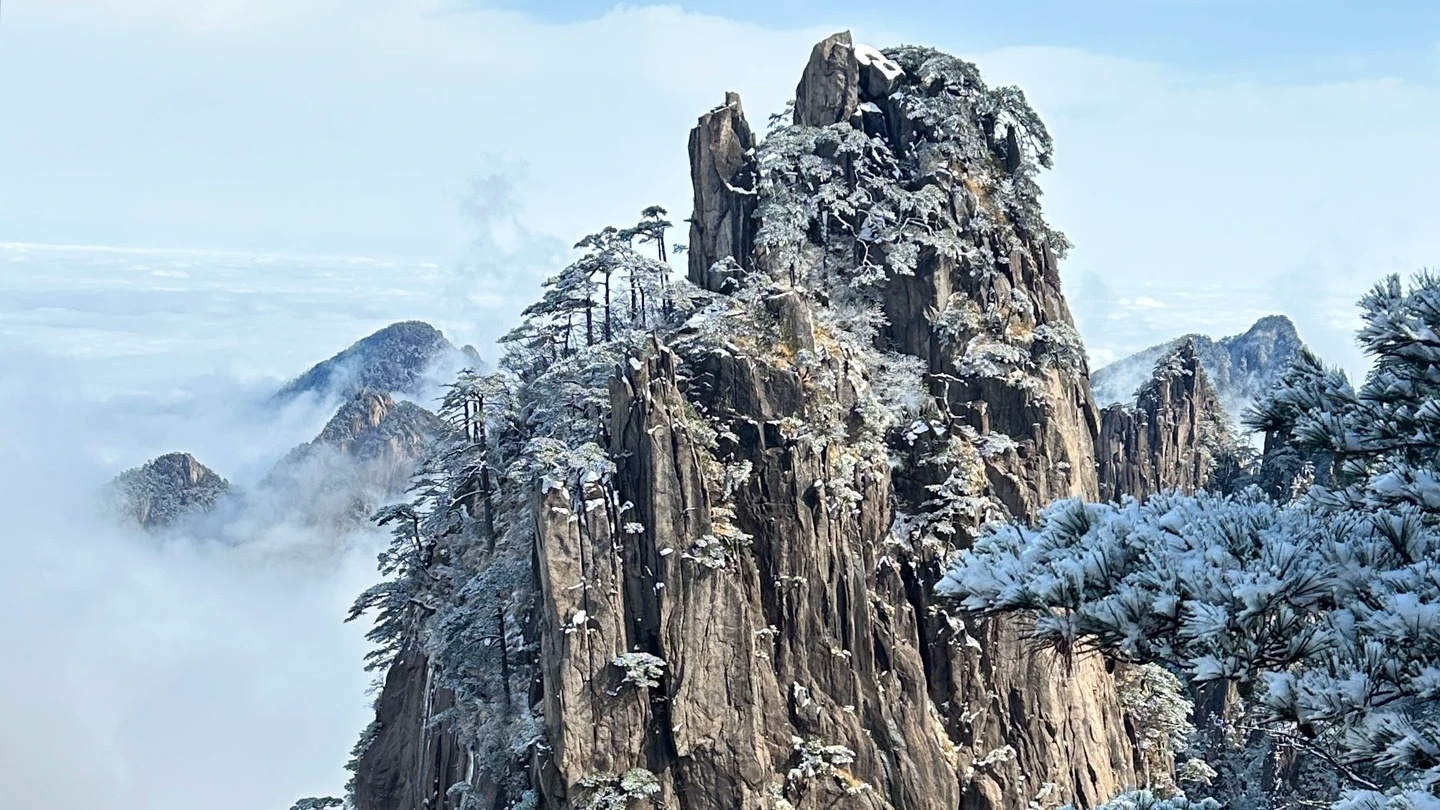
Mount Huangshan (黄山) in Anhui Province joined the UNESCO World Heritage List in 1990 as a mixed cultural and natural property. Huangshan Scenic Area was recognised as a national 5A attraction in 2007.
Its World Heritage listing relates to its exceptional landscape, ecological value and cultural influence. The 5A rating concerns the attraction’s status under China’s tourism quality system.
Oriental Pearl Tower: 5A, Not UNESCO
Shanghai’s Oriental Pearl Tower (东方明珠) was among China’s first 5A-rated attractions in 2007. It is a modern landmark with observation facilities and visitor services, but it is not on the UNESCO World Heritage List.
A modern sightseeing attraction can qualify for 5A without being an internationally recognised heritage property.
The Grand Canal: One UNESCO Property, Many Locations
The Grand Canal (大运河) was inscribed by UNESCO in 2014. It is a serial heritage property made up of historic canal sections and related sites spread across different regions.
There is no single entrance ticket for “the whole Grand Canal”. Individual attractions along it may have their own operating rules, tickets and Chinese tourism ratings. Those are not ratings of the entire World Heritage property.
4. Which Label Is Useful When Planning a Visit?
| Question | China’s 5A rating | UNESCO World Heritage |
|---|---|---|
| Who decides? | Chinese culture and tourism authorities | UNESCO World Heritage Committee |
| What is assessed? | Tourism resources, services, facilities, safety and management | Outstanding Universal Value and protection requirements |
| Is there a ranking? | 1A to 5A; 5A is highest | No stars, diamonds or A-levels |
| What does it help you understand? | The attraction’s standing in China’s tourism quality system | Why a place has international heritage significance |
If you’re interested in a site’s cultural or natural importance, look up its UNESCO listing and the reasons for inscription. If you want a reference for an attraction’s visitor infrastructure and management, the Chinese A-rating is more relevant.
Neither label tells you exactly what your ticket includes. Before booking, check the official entrance or visitor centre, reservation requirements, opening areas, and separate charges for shuttles, cable cars or boats. For a large UNESCO property, identify the specific section you actually want to visit.
Muslim travelers should also confirm halal meals and prayer arrangements independently; neither designation guarantees these services. See Traverse China’s Muslim travel guide for practical advice.
Information reviewed: 12 November 2026. References: China’s GB/T 17775-2024 national standard; UNESCO selection criteria; Mount Huangshan; Oriental Pearl Tower; The Grand Canal.