Short answer: Xinjiang is the easiest region in China for a Muslim traveler. Here, halal food is not something you search for — it is the everyday norm across Uyghur, Kazakh and Hui communities. Add the grand mosques, Silk Road old cities, mountain scenery and buzzing bazaars, and it is one of the most rewarding Muslim-friendly destinations in the country.
Why Xinjiang feels so natural for Muslim travelers
Xinjiang, in China’s far northwest, is the historical heart of the Silk Road. Islam has been part of life here for over a thousand years, and the culture is built around it:
- Halal food is everywhere — almost every local restaurant is halal, with no pork or alcohol in the food culture.
- Mosques are part of the city fabric, and the call to prayer and daily worship are a familiar part of life.
- Warm hospitality towards fellow Muslim visitors, with shared food, tea and customs.
- Stunning variety — desert oases, snow-capped peaks, grasslands and ancient trading cities.
North vs south, and the best time to visit
Xinjiang is vast — about the size of Western Europe — so it helps to understand its two halves:
- Southern Xinjiang (Kashgar, Turpan, Hotan) is the Silk Road heartland: old cities, bazaars, Islamic architecture and desert oases. It is arid, with hot summers and cold winters.
- Northern Xinjiang (Urumqi, the Ili Valley, Altai and the Tian Shan) is cooler and greener, famous for grasslands, lakes and mountains.
The best time for classic scenery is mid-March to early November. For southern Xinjiang, the most pleasant windows are April–May (spring blossoms) and September–October (cool, clear and golden). September is widely considered the single best month. Winter is cold, but the old city of Kashgar under snow is quietly magical for travelers who don’t mind the chill.
Kashgar: the jewel of the Silk Road
Kashgar (Kashi), in the far west, is one of the oldest continuously inhabited cities in Central Asia and the spiritual and cultural center of the region.
- Id Kah Mosque — founded in 1442, it is the largest mosque in China and the center of religious life, set around a peaceful courtyard in the heart of the city.
- Kashgar Old City — a maze of mud-brick alleys, carved wooden doors, teahouses and workshops, preserved for centuries.
- The Grand Bazaar and Sunday Market — among the most famous markets on the Silk Road, piled with spices, dried fruit, naan, crafts and livestock.
- Apakh Hoja Mausoleum — a beautiful example of Islamic architecture with tiled domes and gardens.
Turpan: the desert oasis
Turpan, set in a low-lying basin below sea level, is an ancient oasis city famous for grapes and ingenious irrigation:
- Flaming Mountains — the vivid red sandstone range made famous by the Monkey King legend.
- Grape Valley — vineyards and trellised walkways producing some of China’s sweetest grapes and raisins.
- The Karez irrigation system — an underground network of canals that has carried water for two thousand years.
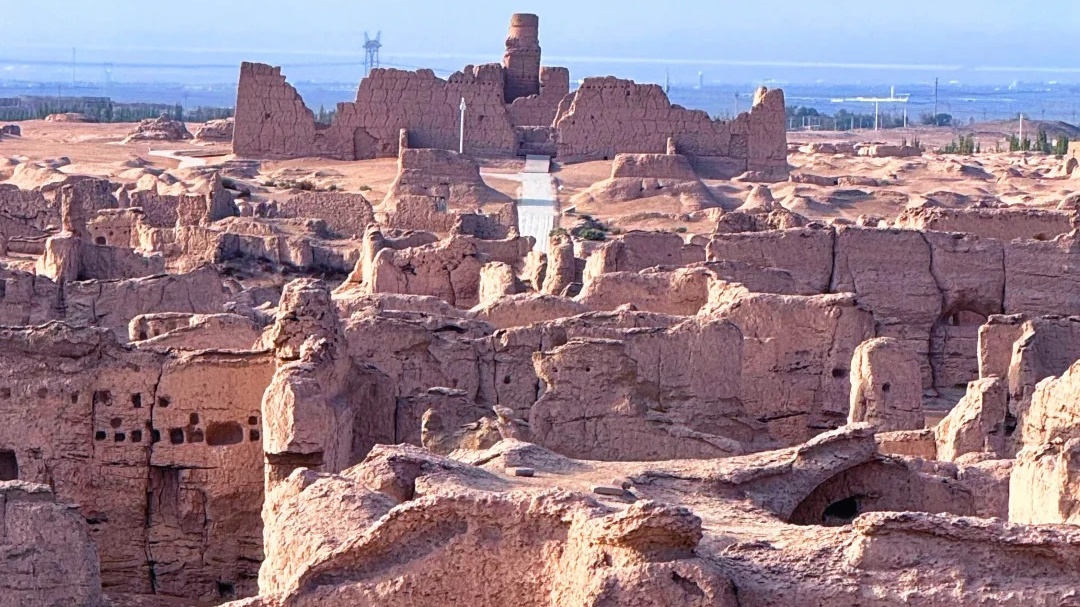
- Jiaohe and Gaochu ancient cities — the weathered ruins of Silk Road settlements carved into the land.
Urumqi: the modern gateway
Urumqi is Xinjiang’s capital and the usual starting point, with flights connecting across China:
- The Grand Bazaar (Xinjiang International Grand Bazaar) — a grand Islamic-style market of food, spices, textiles, musical instruments and souvenirs.
- City mosques and halal restaurants for easy daily worship and dining.
- Museums introducing the region’s Silk Road history and ethnic cultures.
Halal food you must try
The food alone is reason enough to visit. Look for:
- Lamb skewers (kao yangrou chuan) — char-grilled with cumin and chili.
- Polo (zhuafan) — hand-pressed rice with lamb, carrots and onions.
- Hand-pulled noodles (laghman / latiaozi) with meat and vegetables.
- Naan — fresh baked flatbread in many styles.
- Big-plate chicken (dapanji) — a hearty shared dish served with noodles.
- Samsa baked meat pastries, sweet desserts, and endless tea.
Prayer and daily worship
Worship is straightforward in Xinjiang. Mosques are found in every city and neighborhood, halal dining requires no special searching, and a private tour can align each day’s driving and sightseeing with the five prayer times. Your guide can also confirm current mosque visiting arrangements and Friday prayer times.
How many days do you need?
Because distances are large, a relaxed trip is far better than a rushed one:
- 5 days — Urumqi, Turpan and a taste of the region.
- 7–8 days — add Kashgar and the southern Silk Road; the most popular choice.
- 10–12 days — a fuller southern loop, or north and south combined with grasslands and lakes.
Frequently asked questions
Is Xinjiang Muslim-friendly?
Yes — it is the most Muslim-friendly region in China. Halal food is the norm, mosques are widespread, and the local culture is built around Islamic practice and hospitality.
What is the largest mosque in China?
The Id Kah Mosque in Kashgar, founded in 1442, is the largest mosque in China and the center of Uyghur Islamic culture.
When is the best time to visit Xinjiang?
Mid-March to early November offers the best scenery. For southern Xinjiang, April–May and September–October are the most pleasant; September is the standout month.
How many days should I spend in Xinjiang?
At least 5 days, but 7–8 days is ideal to include Kashgar and Turpan without rushing. A 10–12 day trip allows a fuller Silk Road journey.
Is all the food in Xinjiang halal?
Nearly all local Uyghur, Kazakh and Hui cooking is halal, with pork and alcohol absent from the traditional food culture — making it easy for Muslim travelers to eat with confidence.
Do I need a visa to visit Xinjiang?
Many travelers can enter China visa-free, and a private tour handles the planning from there. See our guide to China’s visa-free rules for Muslim travelers. See Xinjiang routes.
Plan your Muslim-friendly Xinjiang journey
Xinjiang offers a rare combination for a Muslim traveler — total ease with halal food and prayer, alongside some of the Silk Road’s greatest cities and scenery. Traverse China is a licensed Chengdu-based agency (License No. L-SC-A00577) that builds private, Muslim-friendly Xinjiang trips with local guides, halal meals and thoughtfully paced routes.
Ready to walk Kashgar’s old city, pray at Id Kah Mosque and taste your way along the Silk Road? Tell us your travel dates and group size, and we will design a private halal Xinjiang itinerary for you. Plan my China trip with our Chengdu team today.