


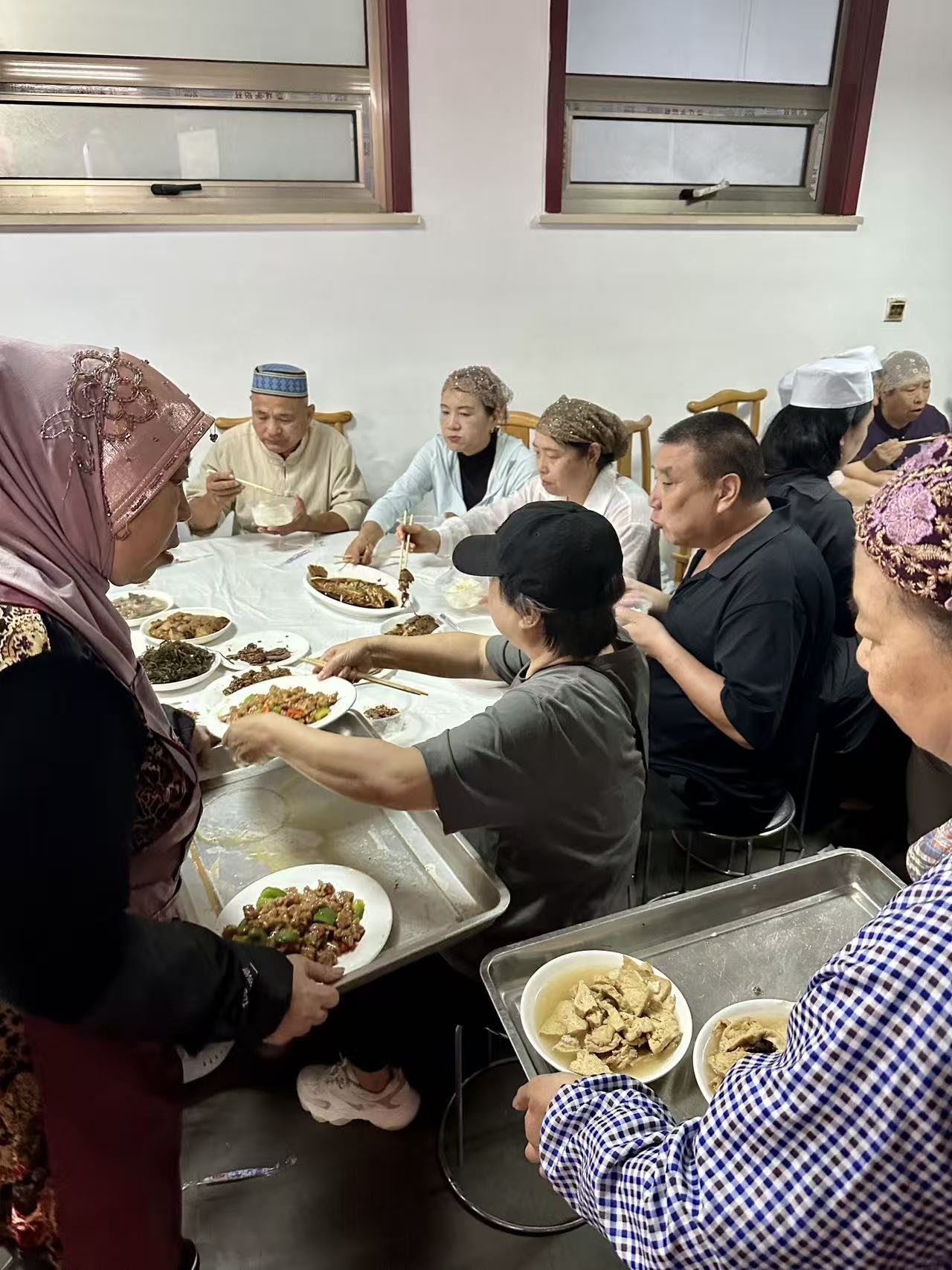
Most visitors discover China’s Muslim heritage in Xi’an. They walk through the Muslim Quarter, try a bowl of lamb paomo and visit the Great Mosque, where traditional Chinese courtyards meet Islamic architecture.
It’s a wonderful introduction. But travel farther into northwestern China, and the story changes with almost every city.
In Wuzhong, breakfast can fill an entire table. In Linxia, centuries of Hui craftsmanship are reflected in old streets and intricate brickwork. Lanzhou has its famous beef noodles, while Kashgar and Yining reveal different cultural traditions shaped by the Silk Road and the communities of Xinjiang.
These places aren’t simply destinations with mosques and halal restaurants. They show how Muslim communities have influenced China’s food, architecture, craftsmanship and everyday life in different ways.
Here are eight places worth exploring, what makes each one special and how to choose a route that actually works.
Where Should You Start?
If you don’t have time to visit every destination, here’s how I’d narrow down the choices:
- First time exploring Chinese Muslim heritage: Start with Xi’an. It combines an established Hui neighbourhood with major historical attractions.
- Travelling for food: Choose Wuzhong for its morning tea culture or Lanzhou for hand-pulled beef noodles.
- Interested in traditional neighbourhoods and crafts: Linxia is particularly rewarding.
- Want Hui food culture alongside wider regional history: Explore Yinchuan and Ningxia.
- Curious about several cultural traditions in one region: Consider Xining and Qinghai.
- Dreaming of Silk Road streets, Uyghur culture and traditional markets: Kashgar deserves a few days.
- Prefer colourful neighbourhoods and a wider nature journey: Look at Yining and the Ili region.
These eight places are spread across several provinces and autonomous regions. They’re not intended to be visited in one continuous trip. For most travellers, choosing two or three connected destinations makes far more sense.
1. Xi’an — More Than the Famous Muslim Quarter
西安 · Shaanxi Province · Suggested stay: 2–3 days
Xi’an is one of the easiest places to begin exploring Muslim culture in China, especially if this is your first visit.
The Muslim Quarter near the Drum Tower is famous for its food. You’ll find shops preparing flatbread, steaming bowls of beef and lamb broth, grilled meats, traditional sweets and countless snacks.
One of the dishes to try is yangrou paomo (羊肉泡馍), lamb broth served with pieces of flatbread. At some restaurants, you’re given the bread to break into small pieces yourself before the kitchen prepares the dish.
But there’s more to the neighbourhood than the main tourist street.
Walk through Beiyuanmen (北院门) for the lively atmosphere, then explore Xiyangshi (西羊市) and Dapiyuan (大皮院) for established food businesses and smaller streets. If you have another morning, Sajinqiao (洒金桥) is worth visiting for local breakfast dishes.
For history and architecture, visit the area around Huajue Lane (化觉巷) and the Great Mosque of Xi’an.
Its courtyards, rooflines and decorative details are distinctly Chinese, while its religious purpose and history are Islamic. The combination is one of the most memorable expressions of Chinese Muslim heritage.
The mosque remains a religious site, so check current visitor access and respect any restrictions on photography or entry during worship.
Why visit: Xi’an combines Hui neighbourhood culture, local food and Islamic history with the Terracotta Warriors, ancient City Wall and other major attractions. It’s a particularly practical choice for a first China trip.
For specific food streets and restaurants, see our Xi’an Muslim Quarter food guide.
2. Wuzhong — The City Where Breakfast Is an Experience
吴忠 · Ningxia Hui Autonomous Region · Suggested stay: 1 day or 1 night
Some cities are known for a monument or a skyline. Wuzhong deserves attention for something much more ordinary: breakfast.
Search for Wuzhong Morning Tea (吴忠早茶), a local dining tradition that brings people together around a table filled with food.
A typical morning tea experience may include beef noodles, freshly prepared breads, small side dishes, beef or lamb specialities and a pot of eight-treasure tea.
Known as babao cha (八宝茶), the tea commonly contains ingredients such as dates, goji berries and other fruits or seeds. The exact recipe varies between establishments.
This is not necessarily a quick breakfast before sightseeing. It’s a chance to experience the food traditions and social rhythms associated with Wuzhong’s Hui community.
The city also has a distinctive population history. According to its 2020 census, Hui residents accounted for 54.61% of Wuzhong’s population. That figure describes ethnic identity, not individual religious practice.
When visiting, choose an established restaurant that meets your own halal requirements rather than assuming every dining business in the city follows the same standards.
My planning suggestion: Arrive in time for breakfast. Wuzhong works well with a wider Ningxia journey based around Yinchuan. If food culture is a priority, one unhurried morning here may be more memorable than adding several ordinary sightseeing stops.
3. Linxia — Hui Heritage, Old Alleys and Traditional Craftsmanship
临夏 · Gansu Province · Suggested stay: 1–2 days
Linxia is one of the places I’d put higher on the list for travellers who enjoy discovering a destination on foot.
Its best-known historic neighbourhood is Bafang Shisanxiang (八坊十三巷), often translated as Eight Blocks and Thirteen Alleys.
The area is closely associated with the city’s Hui community. Traditional streets, courtyards, decorative architecture, food businesses and cultural spaces make it an interesting place to explore.
Look closely at the buildings rather than walking through the neighbourhood simply to take photographs.
Linxia is known for its traditional brick carving, an art form used in architectural decoration. Floral patterns, geometric designs and finely worked surfaces reveal the skill involved in a craft that has developed over generations.
The area has undergone conservation and tourism redevelopment, so it shouldn’t be described as an untouched ancient neighbourhood. Some streets are visitor-oriented, while others remain connected to everyday local life.
That mixture is part of the experience.
Linxia also offers regional noodles, breads, lamb dishes and tea traditions. As elsewhere, check individual restaurants against your halal requirements.
Why visit: Linxia is particularly rewarding for travellers interested in Hui history, traditional architecture and craftsmanship rather than a conventional sightseeing checklist.
Travel tip: Linxia City and Linxia Hui Autonomous Prefecture are not the same administrative area. Check the precise location of any attraction or workshop before planning your transport.
4. Lanzhou — Beef Noodles and Life Along the Yellow River
兰州 · Gansu Province · Suggested stay: 1–2 days
If you’ve ever wondered why Lanzhou beef noodles are so popular across China, eating a freshly prepared bowl in Lanzhou itself is a good place to start.
The dish is deceptively simple: hand-pulled noodles, a fragrant broth, sliced beef and chilli oil, with variations in noodle thickness and seasoning.
In an established Muslim-run noodle shop, the preparation can be as interesting as the meal. Watching the dough being stretched into noodles is part of the experience.
For halal dining, search for 清真牛肉面 (qīngzhēn niúròumiàn) rather than relying on the general name 兰州牛肉面. The name of a dish alone does not prove that an individual restaurant meets halal requirements.
Once you’ve eaten, head towards the Yellow River.
The Zhongshan Bridge (中山桥) and the nearby waterfront offer a good introduction to the city’s geography and everyday atmosphere.
You can also try sanpaotai (三泡台), a regional covered-bowl tea preparation commonly associated with northwestern Chinese hospitality.
Why visit: Lanzhou makes a worthwhile food stop and a practical gateway to Gansu and Qinghai. Instead of changing trains and leaving immediately, allow at least enough time for a proper meal and a walk beside the river.
5. Yinchuan — Hui Food Culture Meets the History of Western Xia
银川 · Ningxia Hui Autonomous Region · Suggested stay: 2–3 days
Yinchuan is a useful base for discovering Ningxia, especially if you want regional food, historical sites and wider landscapes in the same journey.
As the capital of the Ningxia Hui Autonomous Region, the city is closely associated with Hui cultural traditions. But its history is much broader than a single community.
One of the region’s major attractions is the Western Xia Imperial Tombs (西夏陵), near the Helan Mountains.
The tombs belonged to the rulers of the Western Xia kingdom and were inscribed on the UNESCO World Heritage List in 2025.
They are not Islamic monuments. Their importance lies in a different chapter of northwestern China’s history, one that helps explain the region’s cultural complexity.
That’s part of what makes Yinchuan worth exploring. Travellers can enjoy regional Hui food traditions while discovering archaeological sites and landscapes from a different historical period.
Best way to plan it: Stay in Yinchuan, allow time for the Western Xia Tombs and include Wuzhong if you’re particularly interested in its morning tea culture.
A trip focused on both cities is much more manageable than trying to cover the whole of Ningxia in a day.
6. Xining — Where Qinghai’s Cultures Meet
西宁 · Qinghai Province · Suggested stay: 1–2 days
Xining offers a different perspective on China’s cultural diversity.
Located on the northeastern edge of the Qinghai-Tibet Plateau, the city reflects histories connected with Hui, Tibetan, Han, Tu and other communities.
The Dongguan Mosque (东关清真大寺) is an important landmark associated with Xining’s Muslim heritage. Check current visitor and prayer arrangements before going, as access to religious sites can change.
Food is another part of the experience. Established halal restaurants serve regional noodles, breads and lamb dishes, though individual establishments should still be checked according to your requirements.
For a broader cultural journey, travellers may also consider Kumbum Monastery (塔尔寺) near Xining.
This is an important Tibetan Buddhist site, not a Muslim attraction. Including it offers an opportunity to understand how different religious and cultural traditions have contributed to Qinghai’s history.
One practical detail matters here: Xining sits at more than 2,000 metres above sea level. Travellers arriving from low-altitude cities should consider their own health and allow time to adjust, especially before continuing to higher destinations.
Why visit: Xining works well for travellers interested in cultural diversity and as part of a wider Gansu–Qinghai journey.
7. Kashgar — A Different World of Silk Road Heritage
喀什 · Xinjiang Uyghur Autonomous Region · Suggested stay: 2–3 days
Kashgar feels quite different from the Hui cultural destinations farther east.
The city’s history as a Silk Road trading centre is closely connected with Uyghur traditions, regional commerce, food and craftsmanship.
In the old-city area, look for traditional copperware, woodwork, musical instruments and workshops where local crafts are presented or practised.
The food deserves time too. Depending on the restaurant, visitors may find baked samsa, naan, grilled lamb and polo, a regional rice dish prepared in different styles.
Rather than assuming every restaurant in the old city follows identical halal practices, choose establishments that meet your own dietary standards.
The Id Kah Mosque (艾提尕尔清真寺) is an important historical and religious landmark associated with Kashgar.
Before visiting, check current access, prayer arrangements and photography rules. A mosque’s historical importance does not automatically mean every area is open to tourists.
Kashgar also deserves more than a hurried photography stop. If you’ve travelled across China to get there, give yourself time to explore the streets, food and cultural experiences rather than rushing onward the following morning.
Travel note: Carry the required identification and confirm current access arrangements for your specific Xinjiang route. Certain locations may have additional travel or photography restrictions.
8. Yining — Colourful Streets and the Cultural Diversity of Ili
伊宁 · Xinjiang Uyghur Autonomous Region · Suggested stay: 2 days or more
Yining offers yet another side of Xinjiang.
Located in the Ili region, the city reflects cultural influences associated with Kazakh, Uyghur, Hui and other communities.
One of its best-known neighbourhoods is Six Star Street (六星街), notable for its unusual street layout, colourful buildings, small shops and local cultural spaces.
The appeal is less about one famous monument and more about walking through the neighbourhood, noticing its architecture and discovering the businesses and everyday details along the streets.
Another area to explore is Kazanqi (喀赞其), associated with local residential architecture and Uyghur cultural traditions.
Parts of these neighbourhoods are geared towards tourism, while others remain residential. Visiting respectfully is just as important as finding the best photography spot.
Yining can also serve as a base for a wider journey into the Ili region’s mountain and grassland landscapes.
Important planning detail: Yining and Kashgar are in very different parts of Xinjiang. They should not be treated as neighbouring stops simply because they’re in the same autonomous region.
If you have limited time, choose the part of Xinjiang that interests you most and explore it properly.
How to Combine These Destinations Into a Real Trip
Eight destinations make an interesting reading list. They don’t automatically make a sensible itinerary.
For a first trip focused on Chinese Muslim culture, I’d consider one of these routes.
Route 1: Xi’an and Lanzhou — 4 to 6 Days
Best for: First-time visitors who want famous historical sites and regional Muslim food traditions.
Spend two or three days in Xi’an exploring the Muslim Quarter, Great Mosque, Terracotta Warriors and ancient City Wall. Continue to Lanzhou for its beef noodles, tea culture and Yellow River scenery.
This is a practical combination because the cities have established rail connections. Confirm the actual service and stations for your travel dates.
Route 2: Yinchuan and Wuzhong — 3 to 4 Days
Best for: Hui food culture, local history and a more focused Ningxia experience.
Use Yinchuan as your base, visit the Western Xia Tombs and arrange a morning or overnight visit to Wuzhong.
It’s a good choice for travellers who enjoy exploring regional traditions rather than moving between famous attractions every few hours.
Route 3: Lanzhou, Linxia and Xining — 5 to 7 Days
Best for: Cultural depth, historic neighbourhoods and traditional craftsmanship.
Begin in Lanzhou, continue to Linxia for the Eight Blocks and Thirteen Alleys neighbourhood, then travel onward towards Xining.
Allow time for the road journey around Linxia and check the best transport connections before finalising the order.
Planning a Trip to Xinjiang?
I’d build a separate itinerary around Kashgar or the Ili region instead of adding Xinjiang as a brief extension to a Gansu or Ningxia trip.
Kashgar offers Silk Road history, old-city streets and Uyghur crafts. Yining is a good base for Ili’s neighbourhood culture and wider natural scenery.
Both are worthwhile, but they require different routes and enough time to travel between destinations.
Save These Chinese Names for Your Trip
When searching Chinese map apps, the Chinese place name is often more useful than the English translation. These links open location searches on Amap:
- Wuzhong Morning Tea — 吴忠早茶
- Linxia Eight Blocks and Thirteen Alleys — 八坊十三巷
- Xi’an Muslim Quarter — 西安回民街
- Lanzhou Zhongshan Bridge — 中山桥
- Western Xia Imperial Tombs — 西夏陵
- Xining Dongguan Mosque — 东关清真大寺
- Kashgar Old City — 喀什古城
- Yining Six Star Street — 六星街
These are location searches, not confirmation of current opening hours, religious-site access or restaurant certification.
What Muslim Travellers Should Check Before Booking
A destination with a long Muslim history isn’t automatically convenient for every Muslim traveller. The details matter, especially when your journey includes several cities.
Halal Food
Look for the Chinese characters 清真 (qīngzhēn) and verify the individual establishment. Depending on your requirements, that may mean confirming its local halal operating arrangements, meat sourcing, cooking ingredients and preparation methods.
A dish made with beef or lamb isn’t automatically halal. The restaurant and kitchen arrangements matter.
Our halal food guide for China explains useful Chinese search terms and the questions worth asking before eating.
Mosques and Prayer Arrangements
The Chinese word for mosque is 清真寺 (qīngzhēnsì).
Search the specific mosque using its Chinese name, then check current access and prayer arrangements. Historic mosques may have different rules for tourists and worshippers, including during religious services.
Accommodation and Transport
Choose hotels with the actual itinerary in mind. Staying near suitable restaurants may be more useful than booking a higher-rated hotel far from the places you intend to visit.
Standard hotel breakfast does not necessarily mean halal-certified breakfast.
And before combining cities, check real travel time. Ningxia, Gansu, Qinghai and Xinjiang cover enormous distances, so a route that looks simple on a map may involve long road journeys or flights.
Where Would I Go First?
For a first journey, Xi’an would be my starting point. It offers a rewarding introduction to Chinese Muslim history alongside some of the country’s most famous cultural landmarks.
If you’ve already visited Xi’an, try somewhere with a different story to tell: Wuzhong for its food traditions, Linxia for old neighbourhoods and craftsmanship, or Kashgar for Silk Road culture.
You don’t need to visit all eight places to come away with a richer understanding of Muslim culture in China. A few carefully chosen destinations, explored at a comfortable pace, will usually be more rewarding.
Traverse China creates private, Muslim-friendly journeys based on each group’s interests, dates and travel requirements. If you’re planning a cultural trip, we can help bring the right destinations together while considering halal dining, transport, accommodation and the pace of your journey.
Plan Your Private Muslim-Friendly China Journey
Travel note: Suggested stays and itineraries are planning recommendations. Confirm current attraction access, mosque arrangements, transport availability and local travel requirements for your specific dates before booking.